






Some exhibitions feel like opening a family treasure chest: first with care, then with a sense of delight. For the seventh instalment of its The Collectibles programme, Jaeger-LeCoultre is stepping beyond the discreet setting of online sales for the first time, bringing its treasures to Hong Kong. The exhibition is located on the first floor of The Chater House, in the Central district. Admission is free, from Tuesday to Saturday, until October 19.
© Jaeger-LeCoultre
The Collectibles: The Art of Restoring a Watch to Its History
Behind the name lies an in-house programme dedicated to researching, restoring and reintroducing rare timepieces produced between the mid-1920s and the early 1970s. Ten master watchmakers, working in a dedicated workshop within the Manufacture, service the movements, handcraft missing components and delve into the archives to recover original parts. Their guiding principle rests on a subtle distinction: preserving the character and patina that time has bestowed upon each case.
The result is passed on like a family heirloom. Each watch is certified and accompanied by an archival extract and a copy of the book The Collectibles. According to the Maison, its new owner becomes the guardian of a story that began in the Vallée de Joux.
Four Chapters Through the 20th Century
The exhibition unfolds like a book in four chapters. Sixteen timepieces enter into dialogue: eight emblematic watches from the middle of the last century, presented alongside eight contemporary descendants.
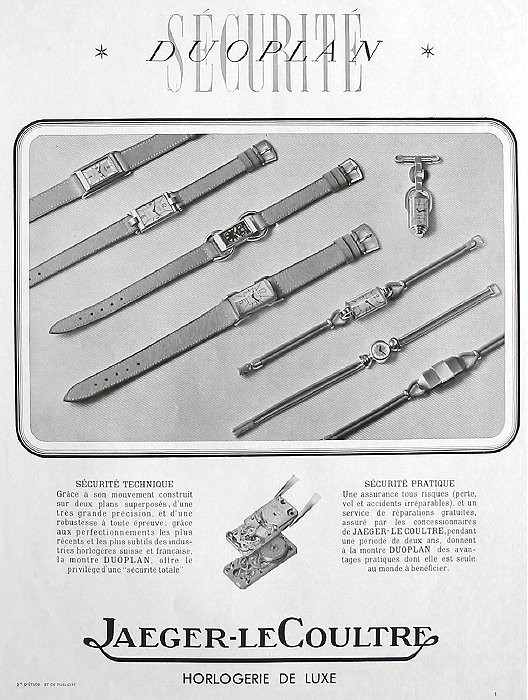
Duoplan. Patented in 1925, its two-level architecture places the escapement on one plane and the barrel on another. The concept reached its culmination in 1929 with the Calibre 101.
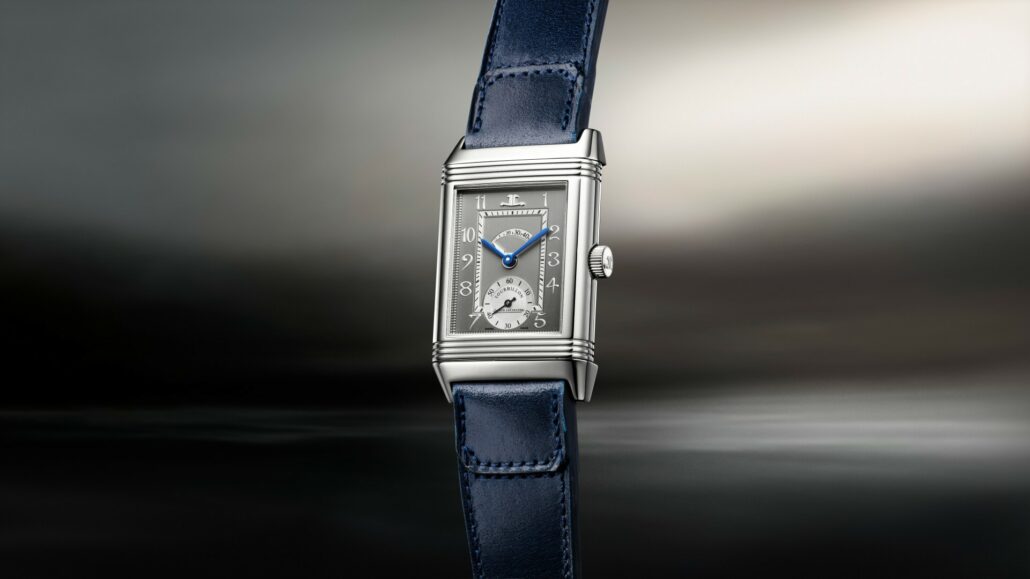
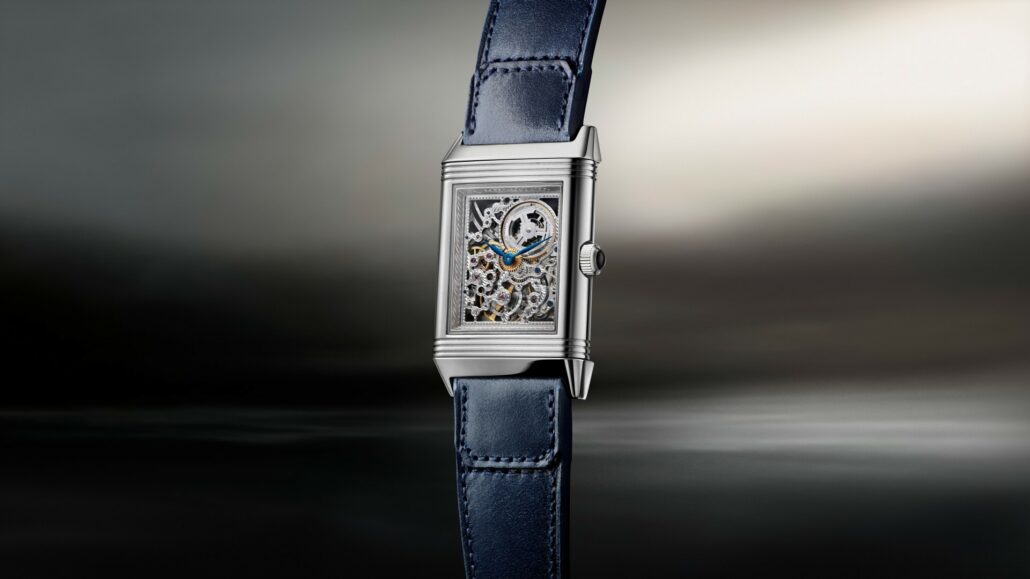
Reverso. Created in 1931 to protect the dial from the impact of polo, its reversible case became an Art Deco canvas, adorned with coloured lacquer and engravings on the reverse.
Memovox. Introduced in 1950, it incorporated a mechanical alarm into a wristwatch, establishing a distinctive acoustic signature for the Maison.
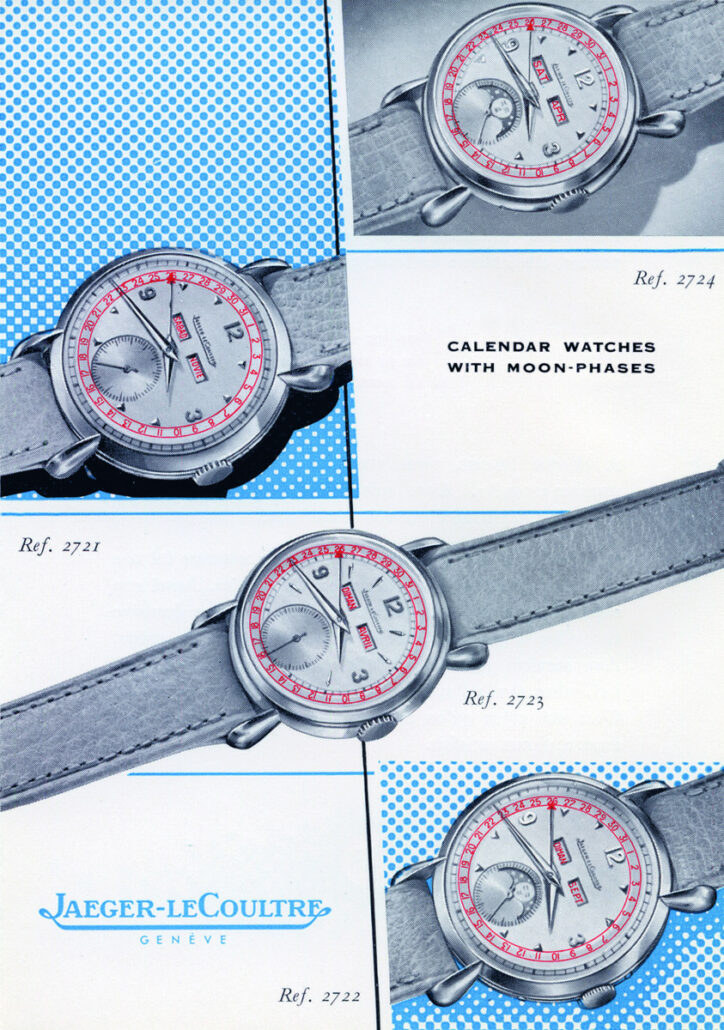
Precision. From the 1942 Triple Calendar to the Geophysic, this final chapter explores the pursuit of accuracy that occupied the Manufacture’s workshops for decades.
To bring the exhibition to life, a watchmaker from the Manufacture-Atelier will demonstrate traditional hand-bluing and pivot polishing techniques. Two round-table discussions, led by Matthieu Sauret, Director of Products and Heritage, will also bring together international experts and local specialists to discuss watchmaking and restoration.
© Jaeger-LeCoultre
© Jaeger-LeCoultre
Ten Timepieces to Make Your Own
The collection of watches available for purchase, launched on jaeger-lecoultre.com until October 19 and offered at the Hong Kong boutique throughout the exhibition, presents a family portrait of remarkable diversity.
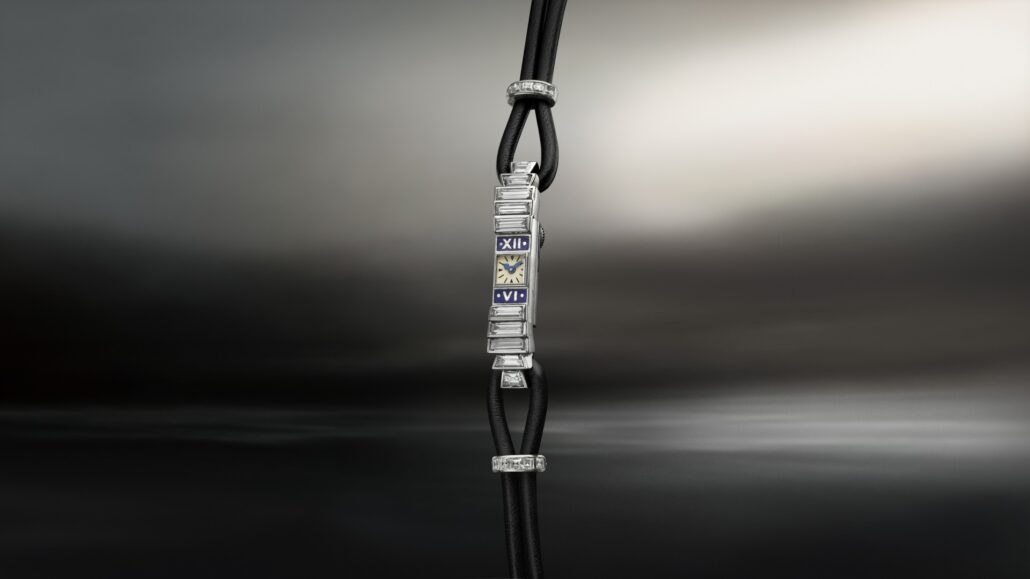
Among the jewellery watches, the 1955 Duoplan Chain features polished rose-gold links, with 73.92 grams of gold surrounding the Calibre 403 and heat-blued hands. Its 1949 counterpart, the Duoplan Tubogas, takes a more discreet approach: a fluted rose-gold cover, defined by vertical lines, conceals the dial when desired, set within a yellow-gold case. The Duoplan Monocorne, dating to around 1935, is attached by a single lug on each side, a rare detail that lends it the silhouette of a piece of jewellery. Around 1950, the Calibre 101 Art Deco combined platinum, blue panels and twenty-two diamonds, including ten baguette-cut stones set into the case.
Among the Reverso models, the 1931 Cordonnet pairs a steel case with a Tavannes movement, recalling that the collection appealed to women from its earliest days. The Platinum Number 1 (2001) and Number 2 (2003), each limited to 500 pieces, reveal their inner workings beneath sapphire crystal: hand-engraved bridges on the first, and a tourbillon on the reverse of the second.
Mechanical watch enthusiasts will find much to admire in the 1949 Triple Calendar, whose day and month discs are printed in Portuguese for a Lusophone clientele; the 1958 Futurematic E502, nicknamed “Porthole” for its two apertures; and the Memovox Parking, also from 1958, whose alarm can be set for 30, 60, 90 or 120 minutes to help motorists avoid parking tickets.


Calibre 101 Chain: When Jewellery Takes the Lead
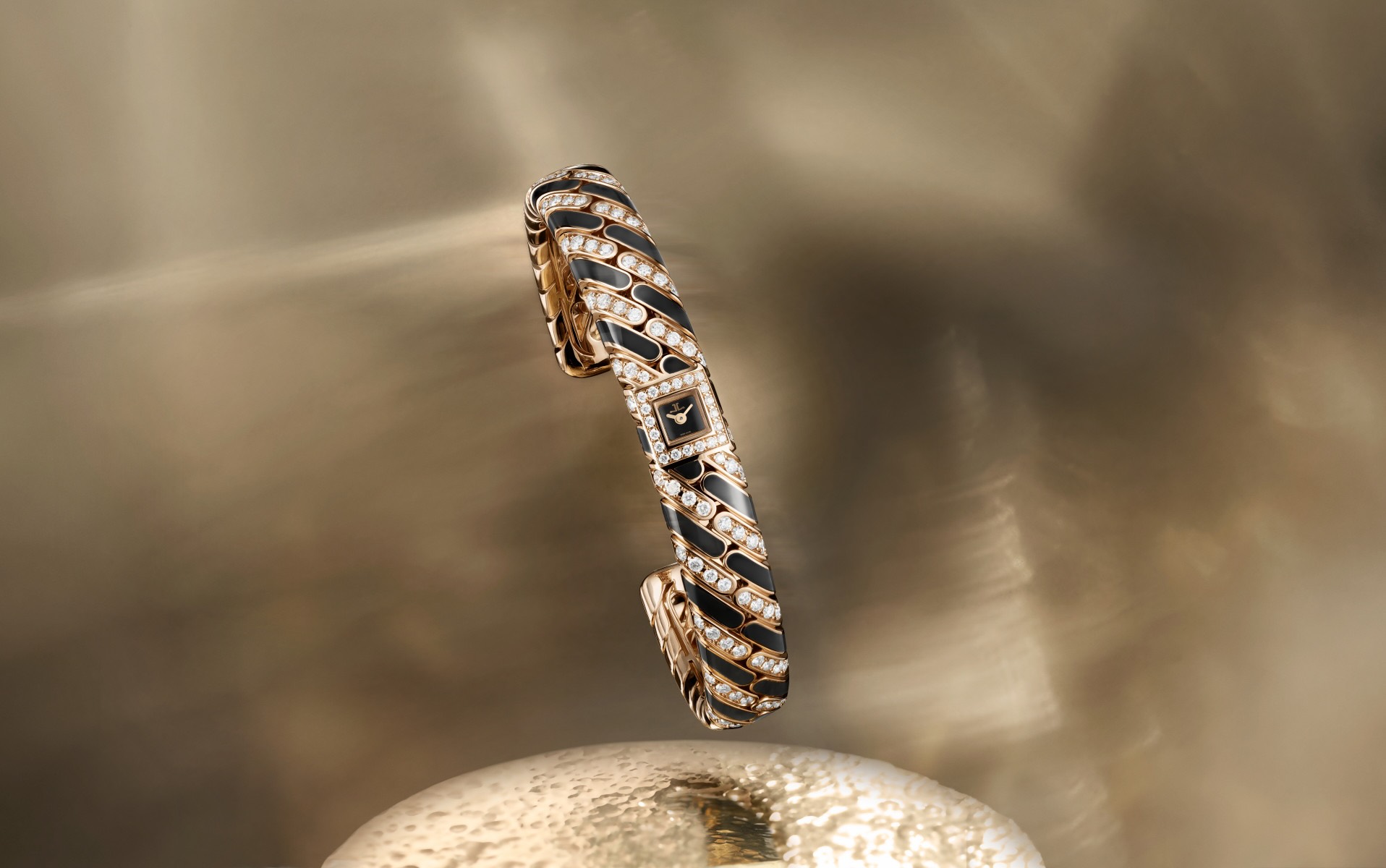
The week’s surprise awaits in a nearby display case. Unveiled as a world premiere, the Calibre 101 Chain is a direct descendant of the 1955 Duoplan Chain, and the exhibition offers visitors the opportunity to admire the two side by side.
The design process departed from the Maison’s usual approach. The creators began with the bracelet, the gemstone setting and the decorative details, working as a jeweller would. The case and movement were incorporated only at the final stage. More than 300 hours of research and development were required to bring the creation to life.
The 18-carat rose-gold bangle is made using a mould recreated for each individual piece. Thirty-six cavities are carved into it and then filled with liquid HyCeram®, a deep-black composite ceramic applied by syringe and polished until perfectly flush with the surface. A master gem-setter from the Métiers Rares™ workshop then sets 158 brilliant-cut diamonds by hand, totalling approximately 2.73 carats. Arranged in diagonal bands, the stones alternate between white brilliance and a black mirror-like finish.
At the heart of this creation beats the Calibre 101: measuring just 14 mm in length and weighing one gram, it comprises 98 components in its fifth generation. Forty hours of assembly are required, with annual production limited to a few dozen pieces. The watch head, featuring a black lacquered dial and a diamond-set bezel, measures just 18.60 mm by 5.98 mm. It offers a 33-hour power reserve (reference Q2842270).
Practical Information
The Collectibles Exhibition: October 13–19, 1/F, The Chater House, Central, Hong Kong. Opening hours: 11 am–7 pm, Tuesday to Saturday; 11 am–6 pm on public holidays. Free admission. Guided tours are available by reservation through the Maison’s website.