





Intimate Joséphine, between love, intrigues and the Imperial destiny.
On the occasion of the bicentenary of Joséphine’s death, the Luxembourg Museum pays tribute to her femininity and refined taste.
This exhibition takes us into her world, that of a complex empress. Let’s discover her legacy and explore the different facets of her personality that have marked the history of France.


Jean-Baptiste Regnault
around 1807
Joséphine de Beauharnais, the Empress with many facets, left an indelible mark on the history of nineteenth-century France. From her humble birth on a sugar plantation in Martinique to her dazzling reign alongside Napoleon I, her tumultuous life is a saga of love, infidelity, and betrayal.

Born on June 23, 1763 as Marie-Joseph Rose de Tascher de la Pagerie, this Creole with dark hair and a gentle voice grew up in French nobility. Her youth spent at the convent of the Dames-de-la-Providence in Fort-de-France marked the beginning of a refined education that would contrast with the coming turmoil. At the age of 16, she married vicomte Alexandre de Beauharnais, thus initiating a tumultuous period marked by the birth of two children and a separation in 1785 due to marital infidelity. The turmoil of the French Revolution brought Alexandre to the presidency of the Constituent National Assembly, but he was guillotined under the Terror in 1794.
Joséphine’s life takes an unexpected turn. Imprisoned in the Carmes Convent, she begins an affair with General Lazare Hoche, escaping the guillotine thanks to the fall of Robespierre. Freed, she becomes the companion of Paul Barras, tenor of the Convention and the Directory, before crossing paths with the general in chief of the Army of the Interior, Napoleon Bonaparte.
Their marriage in 1796 inaugurates a new era, but the shadow of infidelity looms large. The tensions intensify during the campaign in Egypt, where Joséphine prefers to stay with her lover rather than join Napoleon. Despite these upheavals, Joséphine’s charm always soothes her husband, as he himself admits.

The peak of his life came in December 1804 when Napoleon was crowned Emperor of the French. However, the quest for an heir became crucial. Joséphine’s inability to bear a child led to the divorce in 1809, paving the way for Marie-Louise of Austria as the new Empress.
Joséphine, however, did not retreat into obscurity. Preserving her title as Empress, she spent her last years at Malmaison, devoting herself to her passion for botany and exotic animals. Her death in 1814 marked the end of a turbulent era.
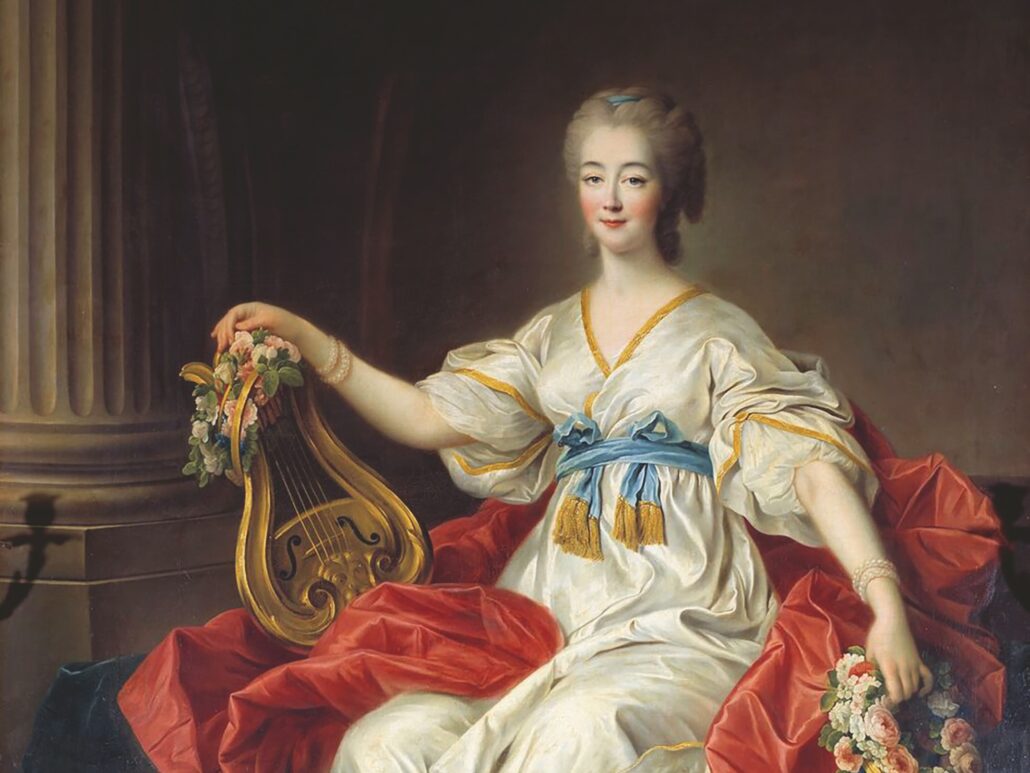
It should be noted that Joséphine is a woman with eclectic tastes in her collections and her passions in a wide variety of fields, such as interior design, fashion, music (a renowned harpist), jewelry, and even natural sciences and botany (she loved roses).


Joséphine, Empress, charms with her elegance. Known for her sophistication and innate sense of style, Joséphine marked her time by surrounding herself with the best artisans in Paris. This triggered a notable revival of luxury in the French capital.


1771-1835
Joséphine is the ambassador of French refinement and distinction. She was a true icon of fashion at the time; she knew how to perfectly showcase her beauty. Her inclination to succumb to the temptations of new creations made her a very sought-after client. Fashion designers, jewellers, and jewelers flocked to the doors of her imperial residence, eager to present their exceptional works in the hope of securing a prestigious order. The list of Joséphine’s preferred artisans was a guarantee of resounding fame and success in the world of haute couture and jewelry.
Thus the imperial couple called upon a pliant group of renowned jewellers, many of whom had already worked for Marie-Antoinette. Among the names of these famous jewellers and goldsmiths are Biennais, Depresle, Nitot, Pitaux, Perret, Lelong, Messin, Mellerio-Meller, Regnault, not to mention Capperone, specialist in cameos, as well as Scotto, merchant of corals.

A collector and passionate about jewelry, she enjoys the jewels of the crown. It should be noted that Joséphine particularly loved pearls, cameos, and coral. The extent of Joséphine’s coquetry is proportional to the colossal amount of her debts. A passion for jewelry that, although contributing to her dazzling aura, leaves a trace of her extravagant spending.


Joséphine’s stylistic legacy thus emerges as a dazzling fusion of tradition and modernity, capturing the dynamic spirit of the time.
One year before the divorce was pronounced due to Napoleon’s inability to produce an heir, the inventory of Joséphine’s wardrobe offers an enlightening perspective on her love for fashion and accessories. It features an impressive collection of 49 grand court dresses, 496 headscarves and scarves, 785 pairs of shoes and 1,132 pairs of gloves. The empress reveals the extent of her commitment to elegance. To house her precious ornaments, Joséphine placed numerous orders for jewelry that would be carefully stored in a dedicated cabinet. This jewelry box, crafted from ivory from the islands of Amarante and Acajou, achieved a remarkable reputation with a price reaching 55,000 francs. One of the highest prices for a piece of furniture from the First Empire. Through this incredible collection, Joséphine leaves a legacy that embodies both imperial splendor and an insatiable passion for refinement.


This woman with an incredible destiny still shares her eye for aesthetics and her passion for jewelry with us today. The exhibition offers a fascinating insight into Joséphine’s life, revealing a woman with an extraordinary destiny, a symbol of a bygone era.


March 12 to June 29, 2014
Luxembourg Museum
19 rue de Vaugirard 75006 Paris