






When the jewels of Art Deco find their way into the auction spotlight
© CHRISTIE’S
There are objects that have survived the century without ever losing their power of fascination. Not because they are old, but because they were alive, worn, filmed, admired, and desired. Two pieces presented at the next sale Magnificent Jewels Those at Christie’s, on May 13 at the Hôtel des Bergues in Geneva, belong to this rare category.
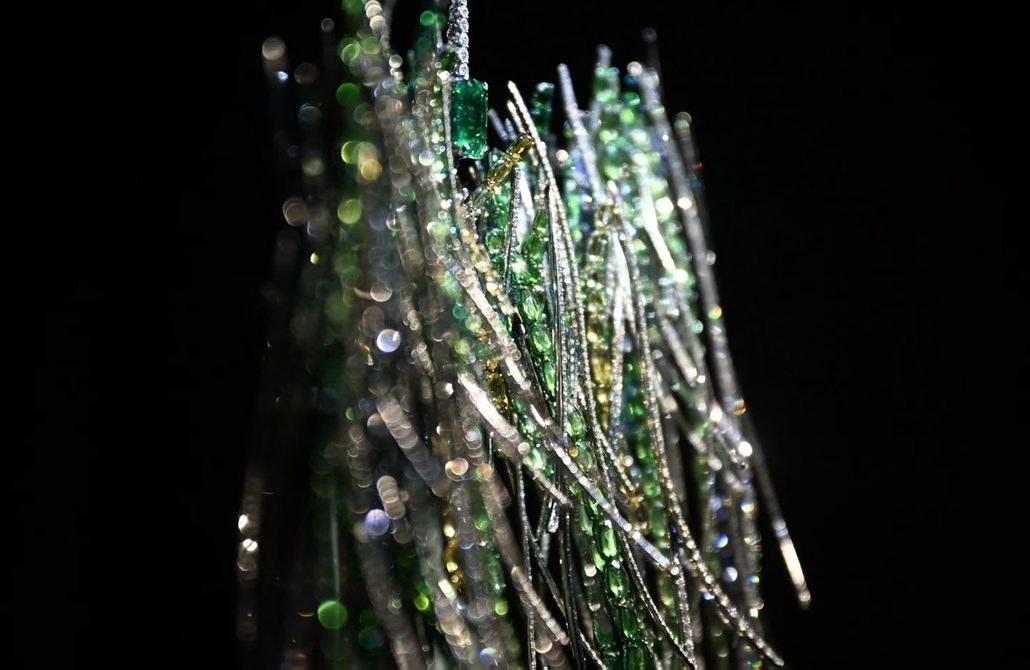
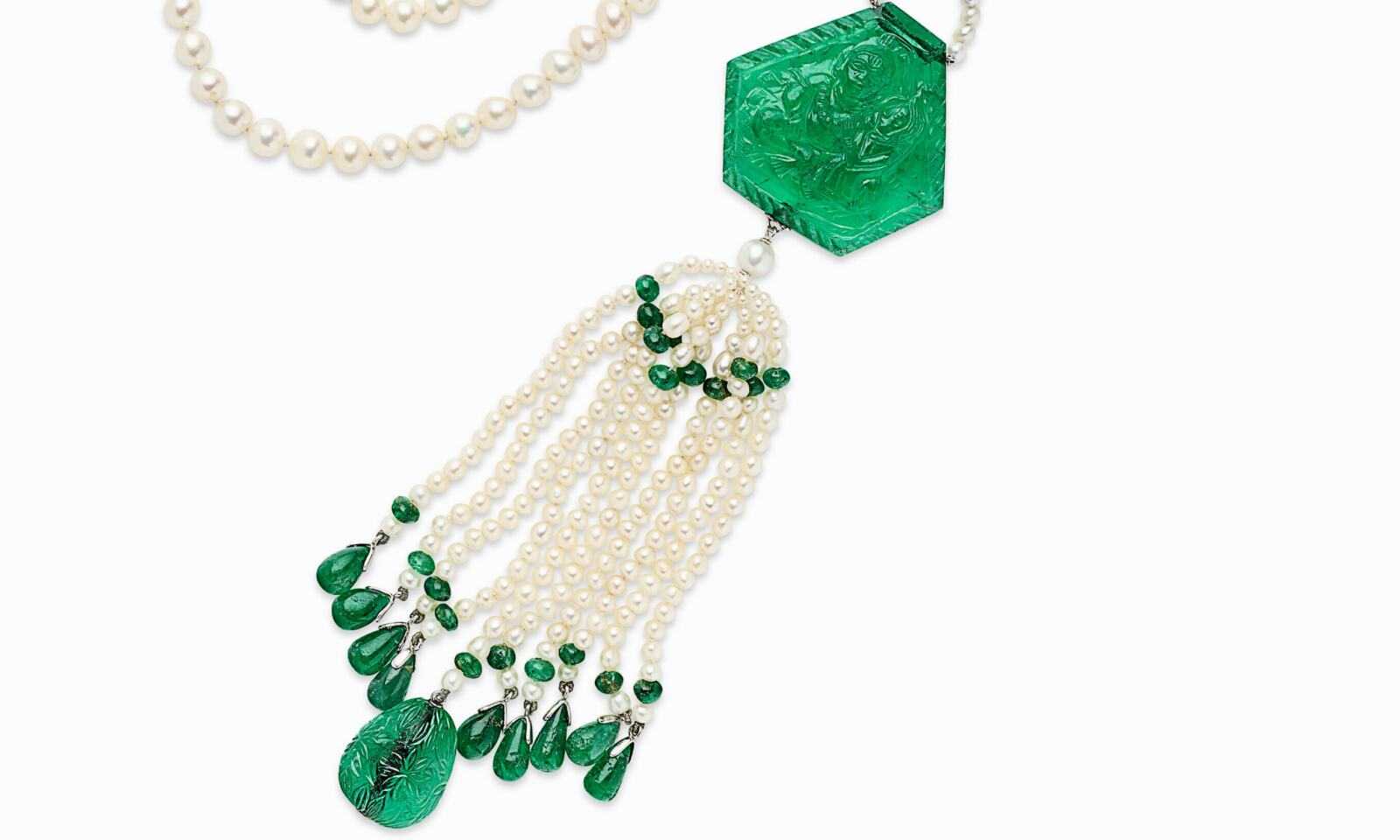
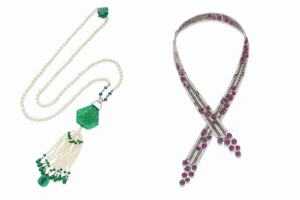
The first, a Cartier pendant created in New York in 1925, is a long chain of pearls and emeralds in the center of which rests a 86.71 carat carved emerald pendant representing the Hindu deities Shiva and Parvati. The piece was commissioned that year by one of the Maison’s most loyal customers, who already owned this exceptional emerald and wished to see it reborn in a setting worthy of the time. The result combines both goldsmithing and metaphysics.
What makes this watch unique in the auction landscape is not only its carat or its origin. It is its trajectory. Nearly fifty years after its creation in 1974, it appears on Jordan Baker’s wrist, or rather on his neck, in the film adaptation of Gatsby the Magnificent. Lois Chiles wears the jewel during a nighttime scene in New York, and her beaded outfits seem naturally to belong to the opulent fantasy that Francis Ford Coppola had set out to revive. The costume designer Theoni V. Aldredge, Oscar-nominated for her work on the film, had worked closely with Cartier and its designer Alfred Durante to dress each of the leading actresses in authentic Art Deco pieces. The choker was one of the most memorable.
Two years after the release of the film, Cartier celebrated his own legacy at the retrospective Louis Cartier in New York, where several of the jewels worn in Gatsby What the cinema had staged, the museum consecrated.
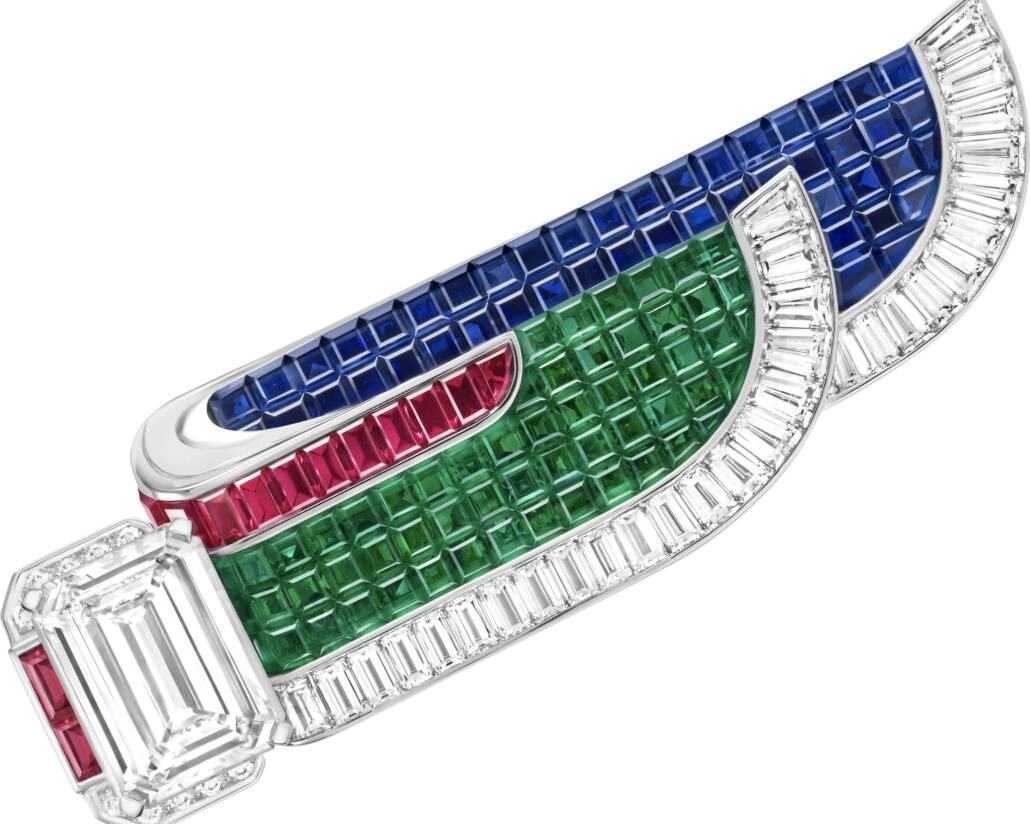
The other remarkable piece is a Boucheron necklace dating from the same year, composed of rubies, emeralds, onyx and diamonds set on platinum. Its architectural peculiarity is that it is divided into four distinct elements that can be worn as two separate bracelets and a separate pendant. This ingenuity is not accidental; it is part of the Maison place Vendôme’s long tradition, dating back to the necklace Question Mark From 1879, Boucheron’s first major step towards a jewelry house in motion, to the feather creations of 1889. The rose motif that adorns this piece directly evokes the stylized arabesques that Paul Iribe had drawn for Paul Poiret around 1908, a motif that had influenced an entire generation of creatives well beyond the field of couture.
It was precisely this necklace that Boucheron chose to present at the International Exhibition of Decorative Arts in 1925 in Paris, a seminal event that gave its name to an entire movement.
1925 Cartier and Boucheron side by side in history, with Fitzgerald publishing Gatsby the same year. It would be tempting to read into it a coincidence. Perhaps there is one. But on May 13 in Geneva, these two pieces will be there, together, to decide on it.