



Some textures can be recognized with eyes closed, by the fingertips alone. At Buccellati, the Milanese house founded in 1919, metal does not merely shine: it is worked like cloth, chiseled like lace, bent until it forgets its own hardness. Two collections now offer a singular reading of this idea. Muse takes the house’s celebrated Caviar motif from the sobriety of metal to the brilliance of colored stones. Torsadé takes the spiral, that ancient gesture of ornament, and lets it ripple across the body. One proceeds by the point, the other by the line. Both express the same philosophy.
Muse: The Caviar Grain Enters Color
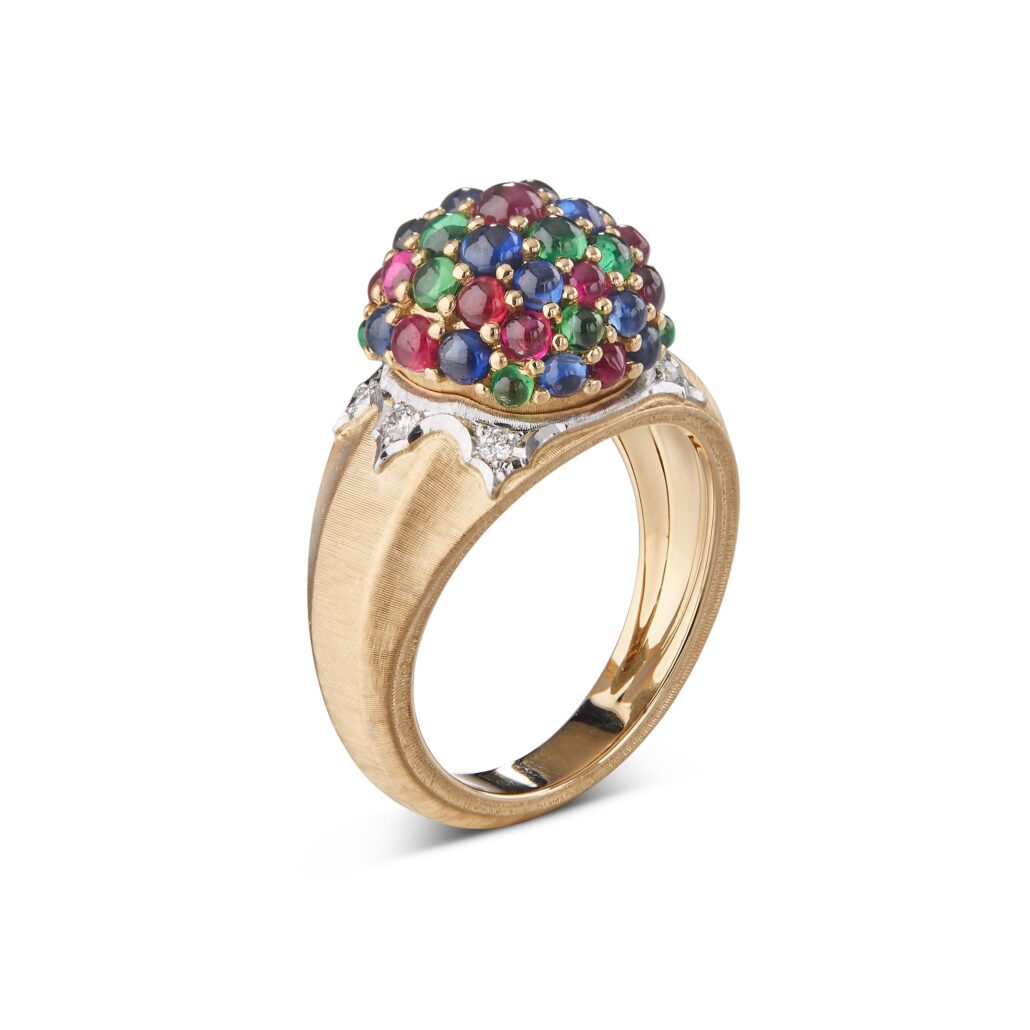
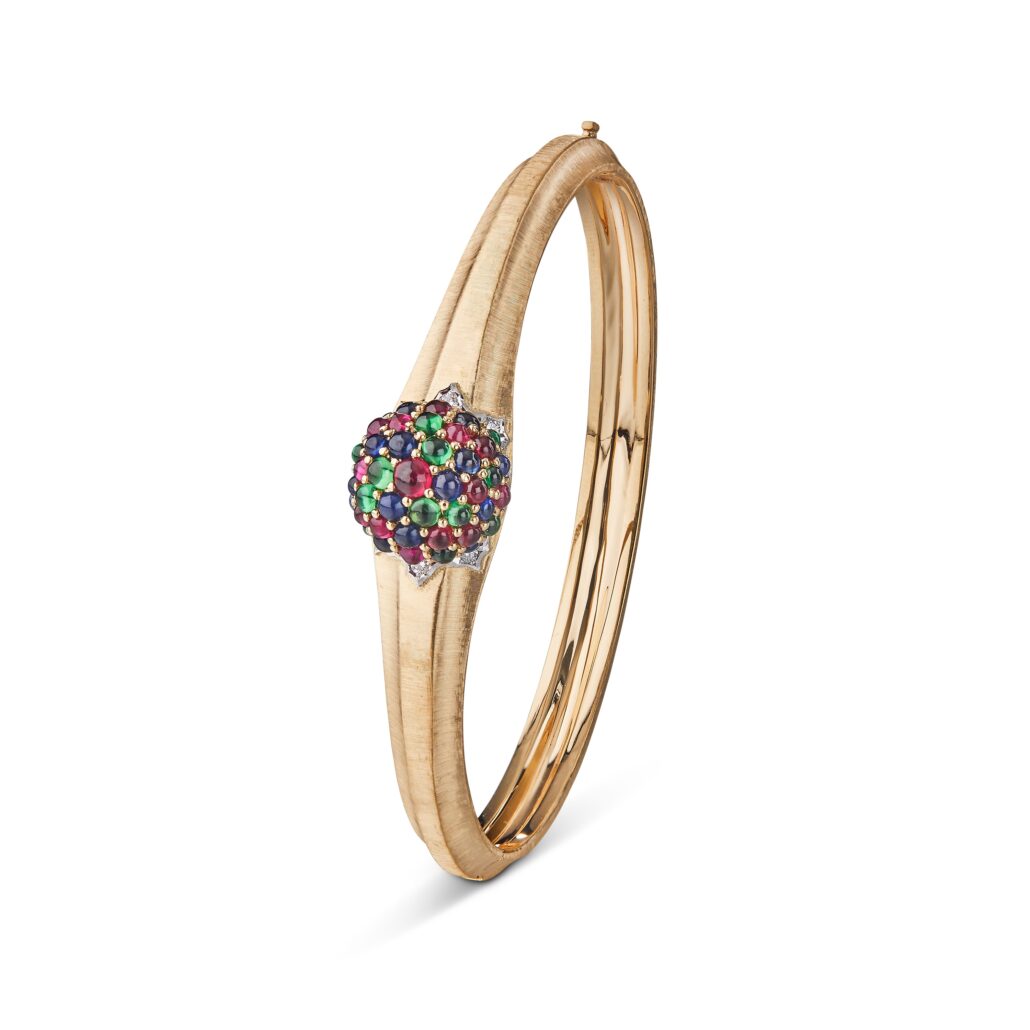
Caviar has been a Buccellati signature for generations. This mailletis, a field of tiny spheres, gives metal the suppleness of fabric and plays with light without ever leaving the tones of gold or silver. Born in silverware, it finds a new terrain in Muse: the body, the wrist, the ear, the hand. Andrea Buccellati, Honorary President and Creative Director, now brings it into color.
The collection’s name refers to an archive piece, the Cratère des Muses (Crater of the Muses), created in 1981 and preserved by the foundation that bears the family name. It is a discreet nod to inspiration as an engine, rather than to any particular figure.
Rubies, Sapphires, Tsavorites: Color as Breath
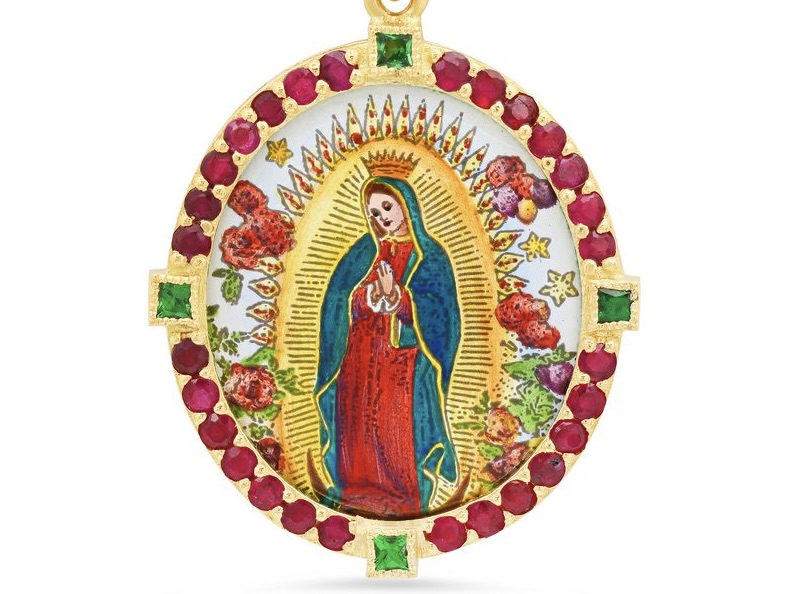
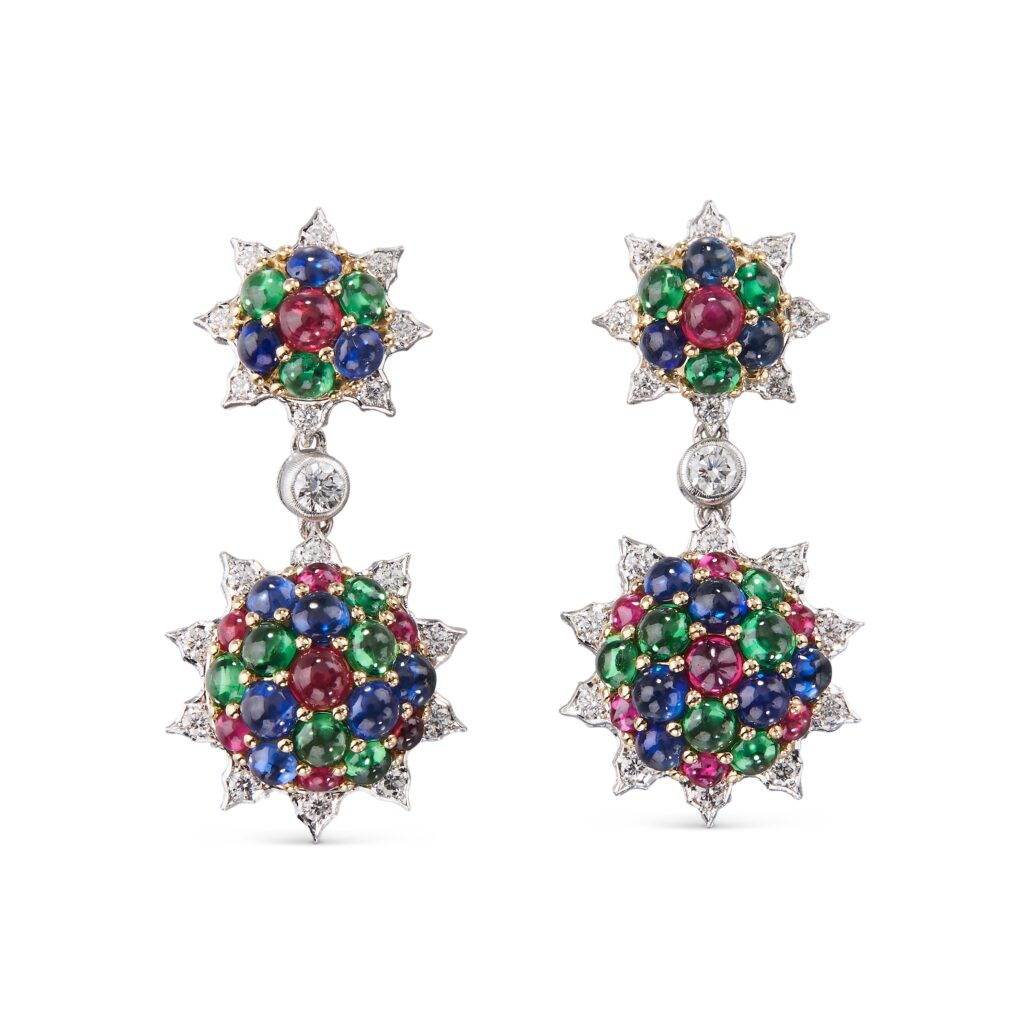
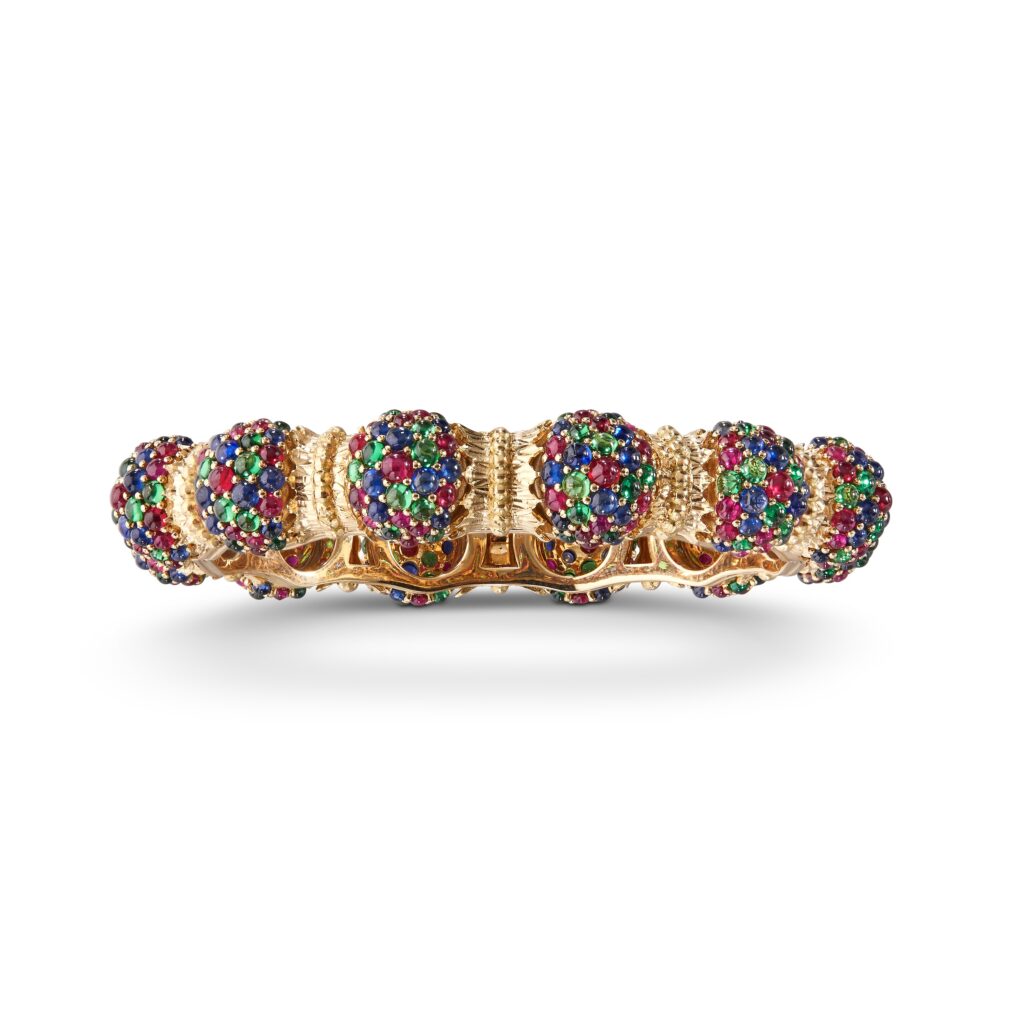
What strikes first is the rhythm of hues. The deep red of the ruby, the blue of the sapphire and the vivid green of the tsavorite answer one another without blending, like a score in which every note keeps its own timbre. Pendants, bracelets, earrings, cufflinks and a ring make up a collection in which color does not decorate the motif: it reinterprets it.
The meticulous setting gives each stone the look of an isolated grain within a broader texture. Seen up close, one thinks of the surface of caviar whose pearls would change color with the angle of the gaze. It is a goldsmith’s exercise that demands absolute precision, stone after stone.
From Point to Line: One Way of Thinking About Matter
What happens when a grain, repeated endlessly, stops being a point and becomes a movement? It coils. Caviar and the twist belong to the same family of gestures, those that wrest metal from its rigidity. The first achieves this through multiplication, the second through rotation. In both cases, the goldsmith does not seek to tame gold but to teach it fluidity. This idea, more than any single motif, is what the house hands down from generation to generation.

Torsadé: An Ode to Dynamic Elegance
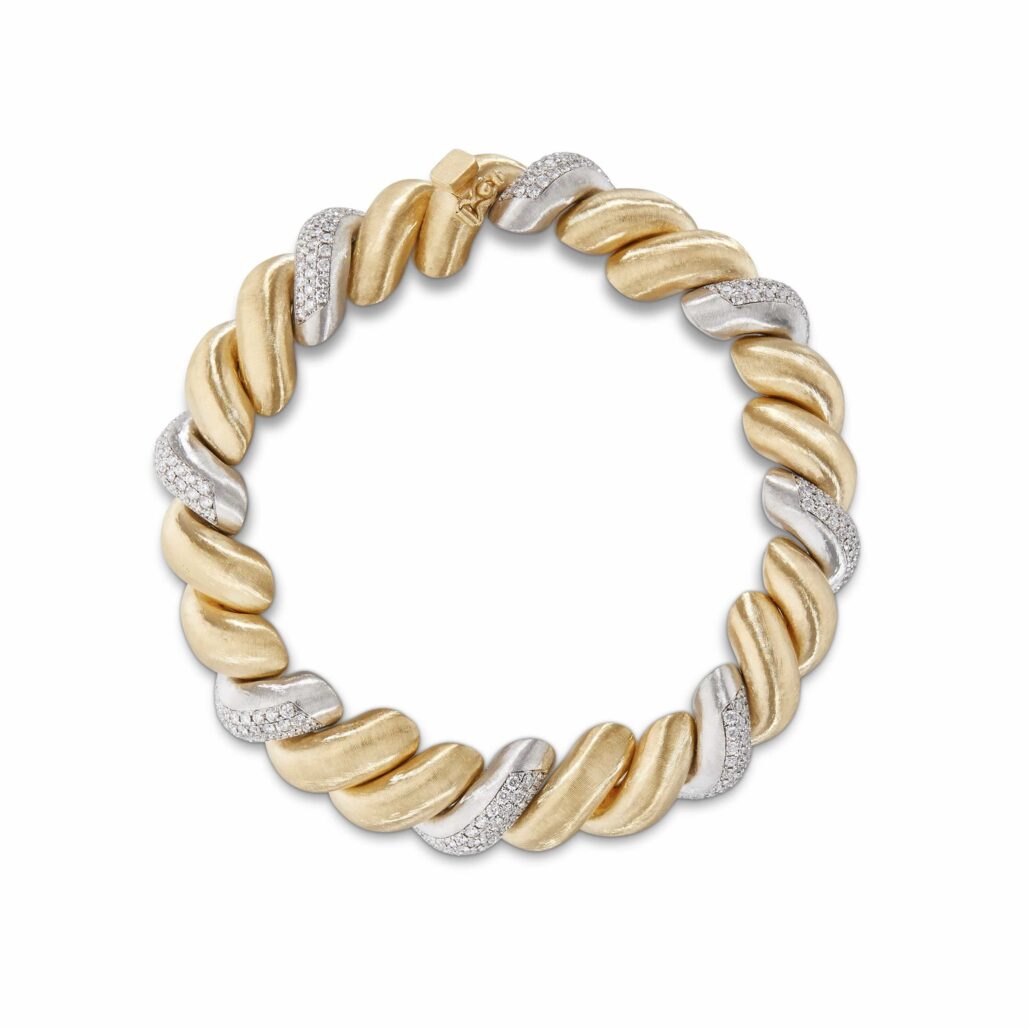
The Torsadé collection reinterprets the spiral motif with mastery. The motif, a twisted-rope pattern that has adorned art and architecture for centuries, evokes the timeless elegance of twisted columns. Its genealogy is inseparable from that of the house itself.
Three Generations, One Spiral
It all begins in the 1920s, when Mario Buccellati, the house’s founder, explores the twisted form in his silver creations. A page from the sales ledger, documenting a “torchon” tea and coffee service, bears witness to it. In the 1950s, he transposes the motif to jewelry, as shown by a necklace still held in the archives.
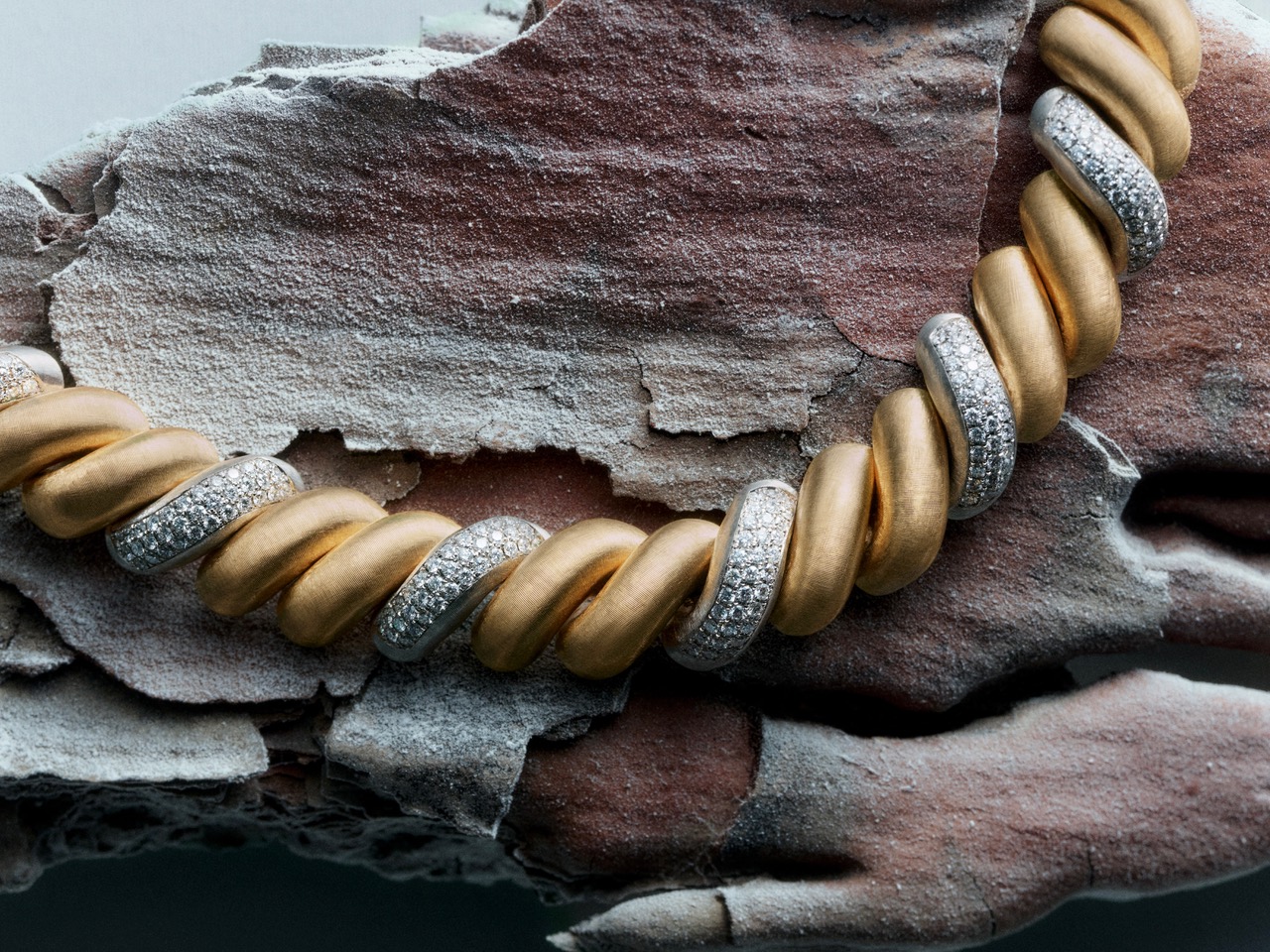
Next comes Gianmaria Buccellati, steeped in the exuberance of the Baroque, who creates the first true Torsadé design in jewelry. From the 1970s onward, he asserts the motif through bold color contrasts: yellow and white gold, sometimes a trio of yellow, white and pink gold. He employs two engraving techniques: rigato, renowned for its silky texture achieved with fine, hand-engraved parallel lines, and graffito, which, paired with delicate rows of diamonds, produces a dramatic gleam and heightens the brightness of gold.
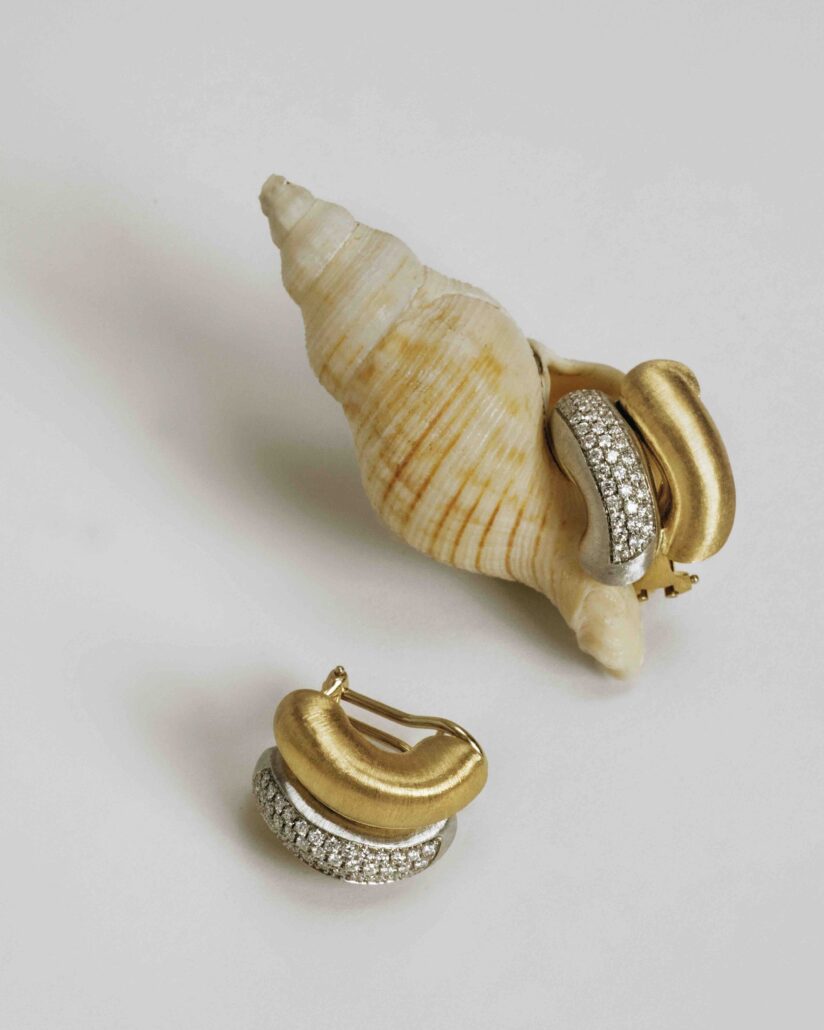
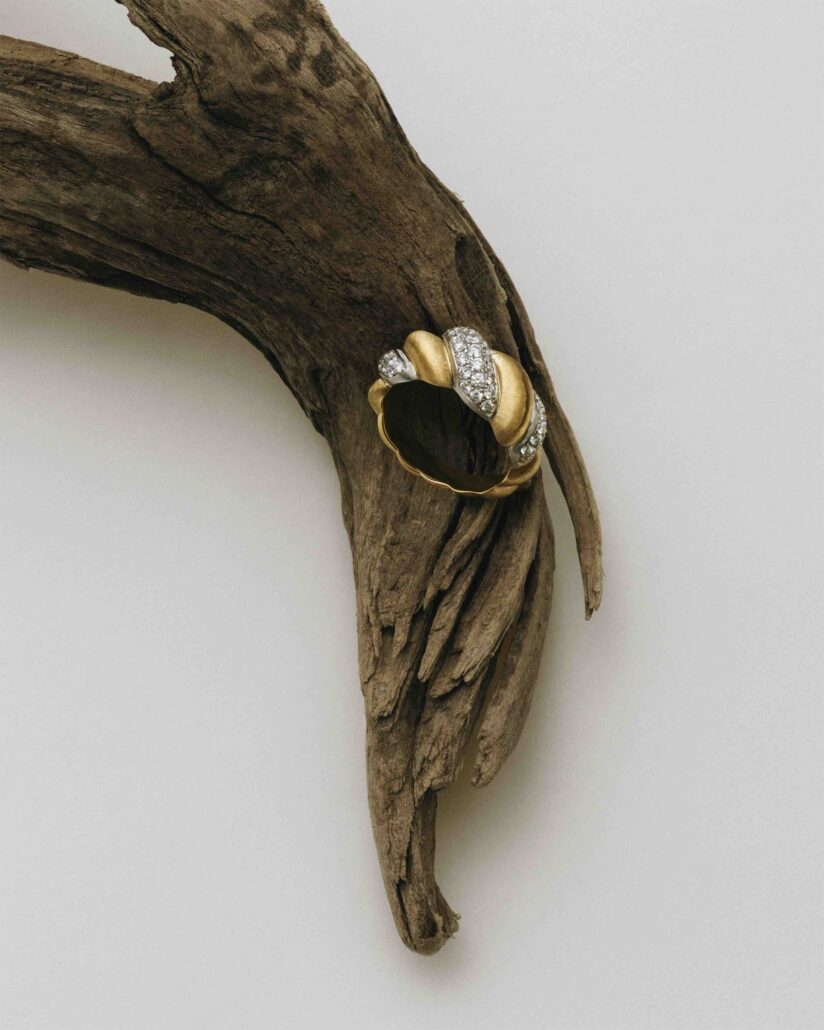
Andrea Buccellati carries this legacy forward today. He sets aside graffito and instead combines the rigato finish of the gold with curved bands set entirely with diamonds. This contemporary reading heightens the brilliance of the sinuous motif and reminds us that it spans three generations of a single creative vision.
An Invisible Movement
The collection comes in yellow gold, white gold and subtle blends of the two, across rings, earrings, bracelets and necklaces in which the precious metal coils into harmonious spirals. Beneath the apparent simplicity of these geometric forms, the necklaces and bracelets conceal an invisible internal linking system: each element moves independently, so the jewel follows the slightest movements of the body with natural grace.
This latest evolution is enriched by new rings and earrings set entirely with diamonds, as well as bracelets and necklaces now offered in medium and large sizes, also set with diamonds. These pieces reinforce the volume and brilliance of each creation, for a collection suited to a wider range of occasions.
Andrea Buccellati sums up the intention: to explore the beauty of movement and form, to make each jewel an ode to fluidity and lightness, without giving up the strength and refinement that define the house, for a modern woman who appreciates understated yet distinctive elegance.
Wearing an Archive, Extending a Gesture
Muse and Torsadé go beyond the question of the isolated jewel: they offer a way of wearing an archive. An evening bracelet, an everyday ring, earrings that suit a dinner as well as a working day: each piece condenses ancient savoir-faire while fitting today’s habits. The shapes of the collections draw on archive drawings and on the very first creations of Mario Buccellati; the techniques, such as hand engraving, go back to the traditions of the Italian bottega of the Renaissance.
This, perhaps, is the house’s lesson. Now 100% owned by Richemont but still home to the family, Buccellati shows that a heritage motif can be reinvented without betrayal, provided one knows where to draw from. The grain becomes color, the spiral becomes movement, and gold, always, becomes fabric again.