




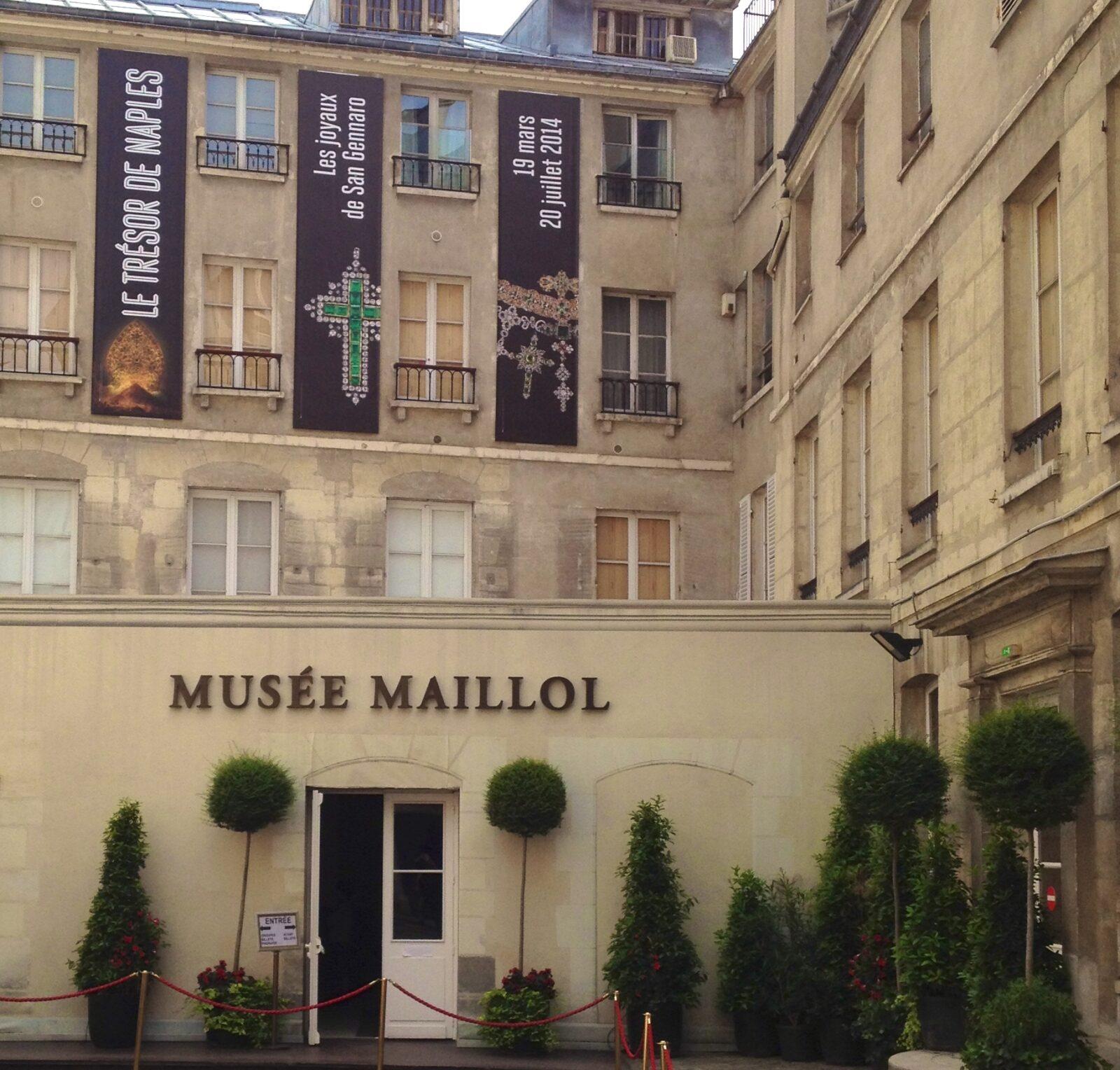
The Maillol Museum presenting «The Treasure of Naples, the jewels of San Gennaro».
It should be noted that the most important masterpieces of the immense treasure of San Gennaro are exceptionally presented in this exhibition. Thus, they take us on a journey through two hundred and fifty years of European history and reveal the soul of Naples.
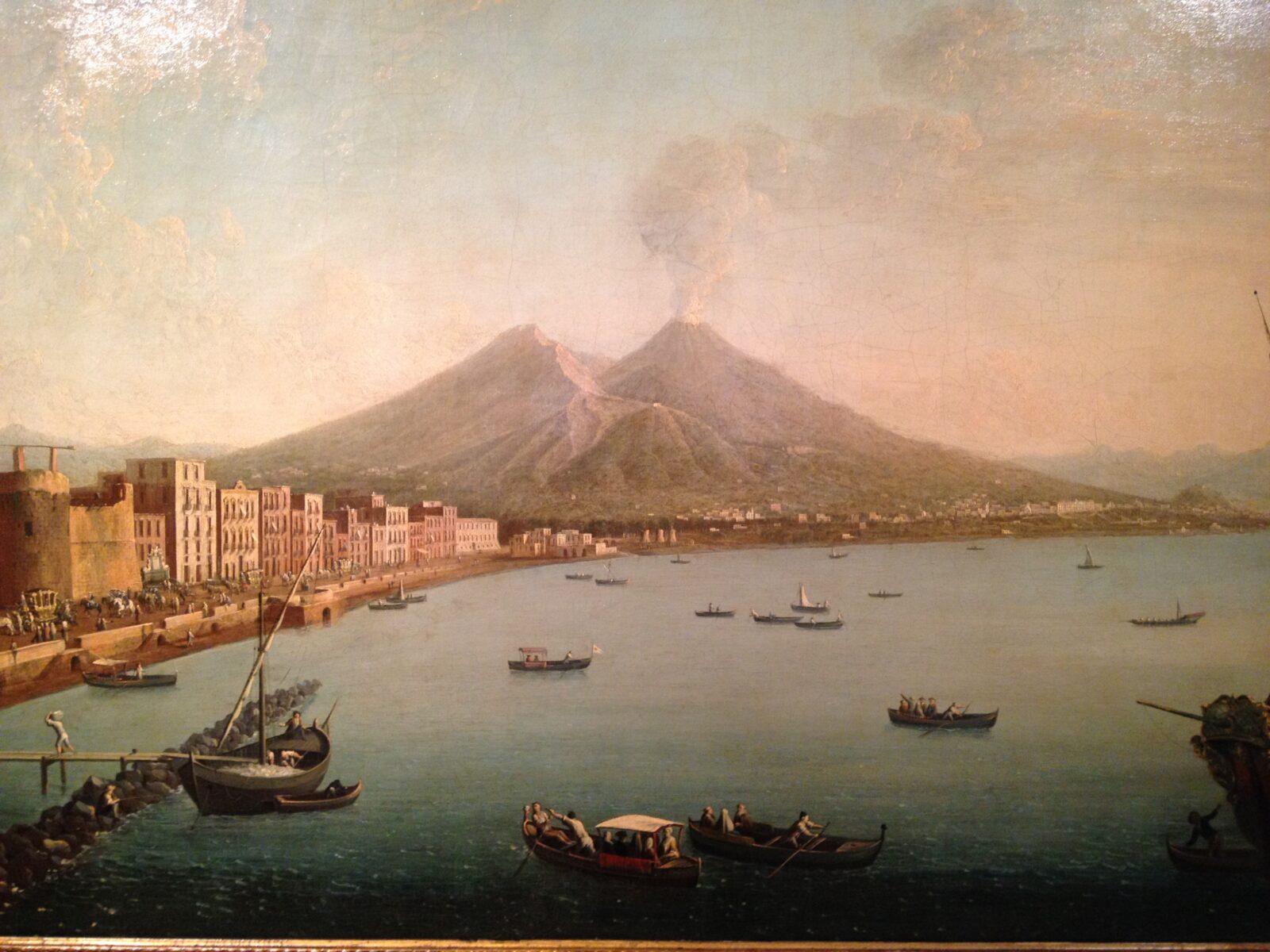
First of all, the history of the city of Naples is linked to Vesuvius, which is a constant threat. Moreover, in the face of this danger, the people of Naples have placed their survival in the hands of a patron saint, San Gennaro.
So the saint protects the city from evils; in return, the city provides him with a treasure. However, it is a mixture of sacred and profane, of money, gold, and precious stones, which are linked to the fire of a volcano and the blood of a Saint.
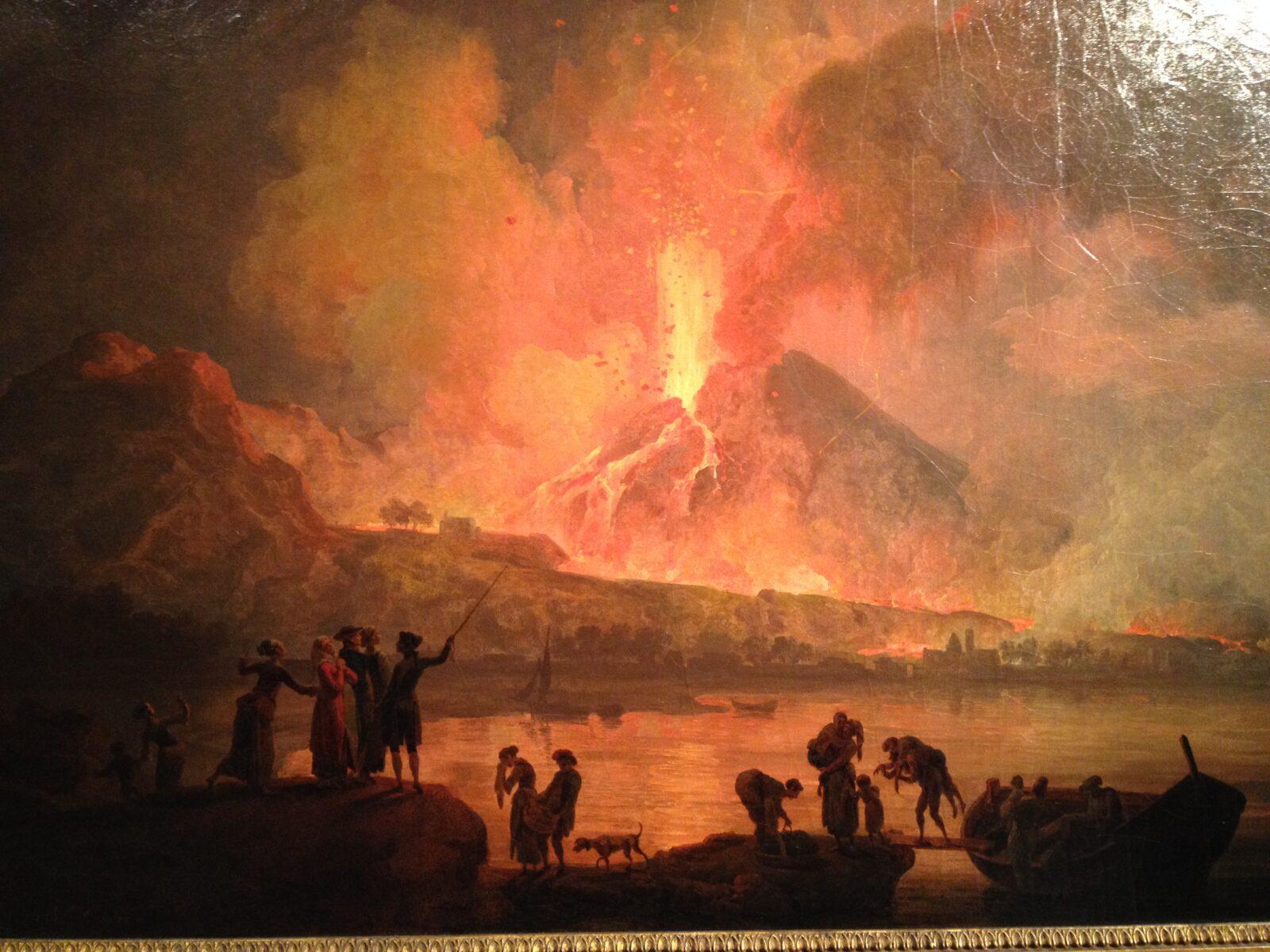
As every year on the Saturday before the first Sunday in May,
Naples celebrates San Gennaro.
More precisely, the liquefaction of his blood (recovered after his decapitation in 305) is a precious relic contained in two vials. Indeed, this prodigy has never been recognized by the church and unexplained by science…!

Gemstones, enamel, silver, vermeil
1305
Thus, the treasury dedicated to San Gennaro is managed by the the parliament, a secular organization founded in 1601.
Among other things, it is composed of 10 representatives of the nobility and 2 from the people. Moreover, its objective is to administer and manage the works preserved in the chapel of the treasury of San Gennaro. It should be noted that this treasury currently houses more than twenty-one thousand works, making it one of the largest collections of jewelry in the world. In a sense, it is comparable to the Jewels of the French or English Crown.
So much so that the Treasury has grown rich over the centuries thanks to the donations of sovereigns, popes, nobles and commoners, symbol of their devotion to the saint.
Once again, this is the first time the treasure has been presented outside of Italy.
So here is a look at this very beautiful and disturbing visit.
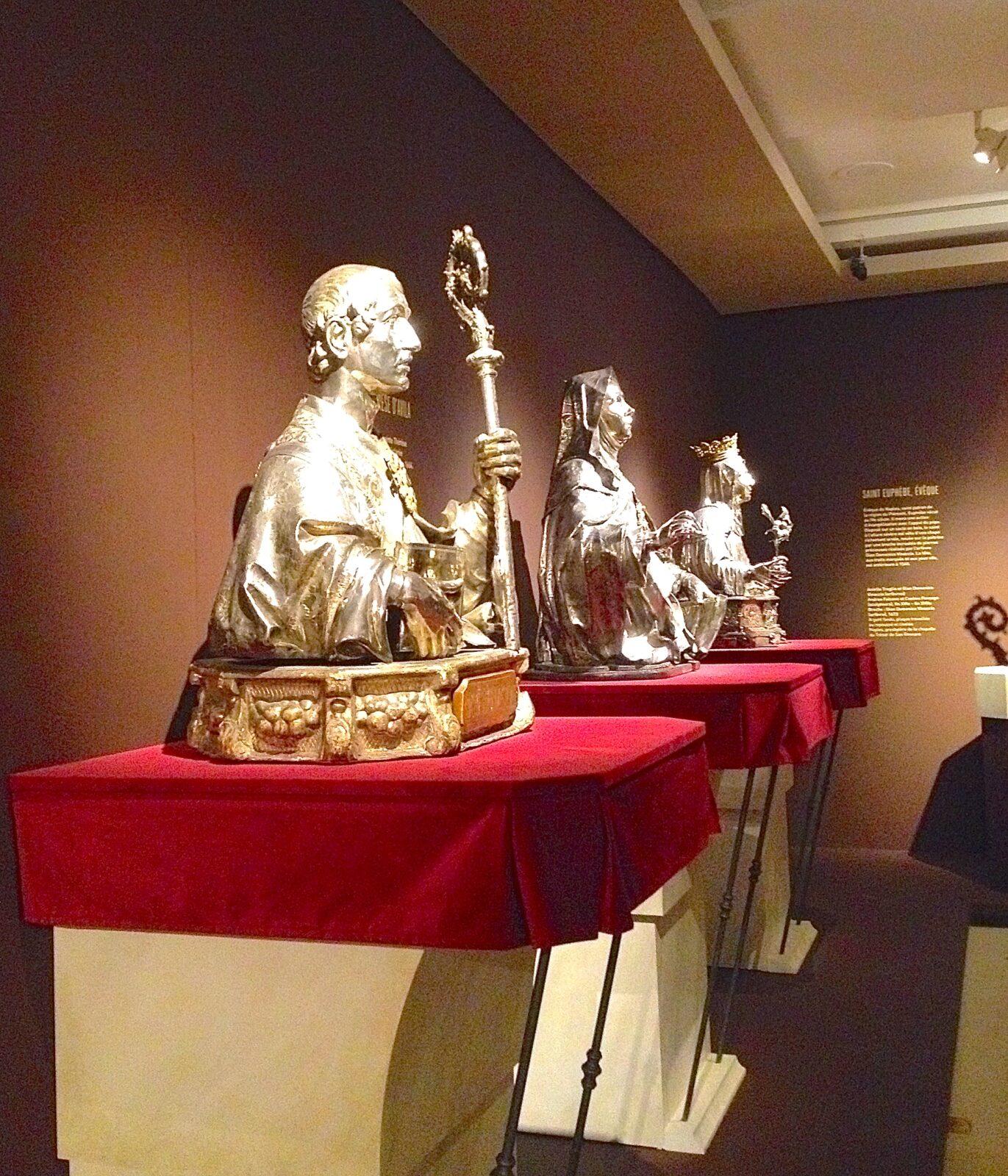
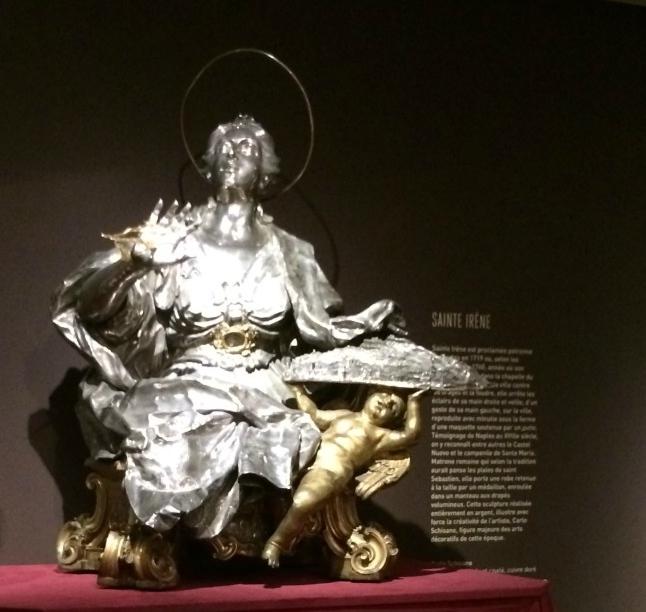
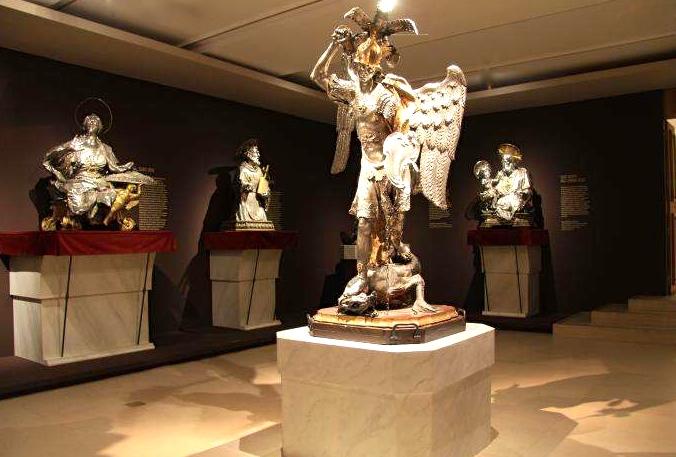
To begin the visit, there are imposing statues in melted silver, pushed back, carved, and gilded copper that impress with their presence. Like protective guardians, they also show us the craftsmanship of the goldsmiths and sculptors:
De Blasio, Murolo, Treglia, Vinaccia, Schisano, De Angelis, Fumo…

We appreciate this Giare made by the goldsmith Gennaro Monte in the 17th century. In fact, it is composed of anemones, roses and sunflowers and branches with wide silver flowers. It is undeniable that this is quite in the spirit of another Italian goldsmith closer to us, Buccellati.
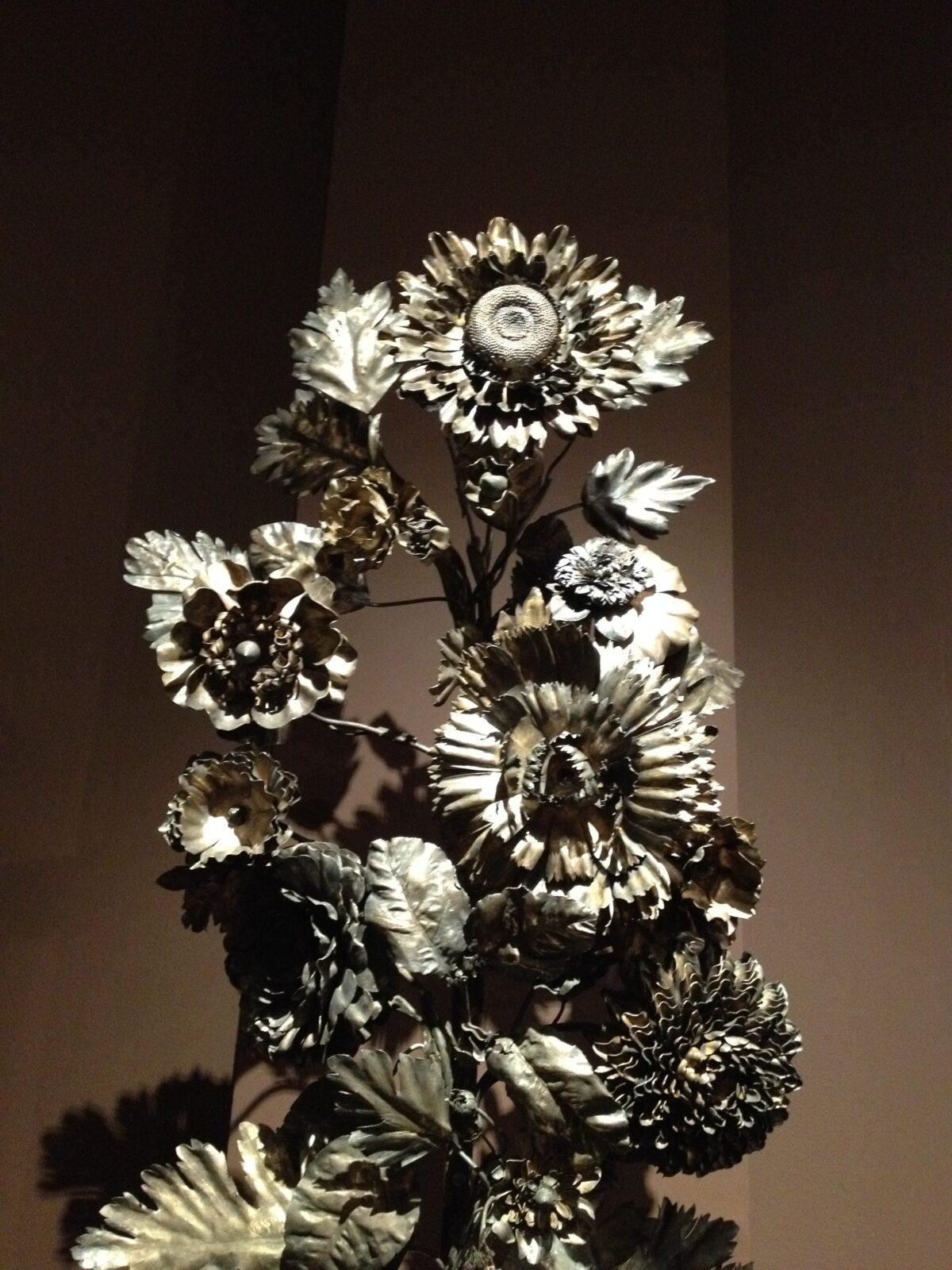
Here is another very beautiful reproduction of nature in silver. The flower is undoubtedly enhanced by the goldsmith’s skill. Moreover, we appreciate the very fine workmanship and the magnificent skill in the carving. Undoubtedly, all these works show the richness of Italian goldsmithing.

Coral, Silver
1707- Don Family Spera

Coral, Malachite, Gold
1931- Donation by Prince Umberto II of Savoy


Rubies, Sapphires, Emeralds, Diamonds, Gold
1831- Donation by King Ferdinand II of Bourbon

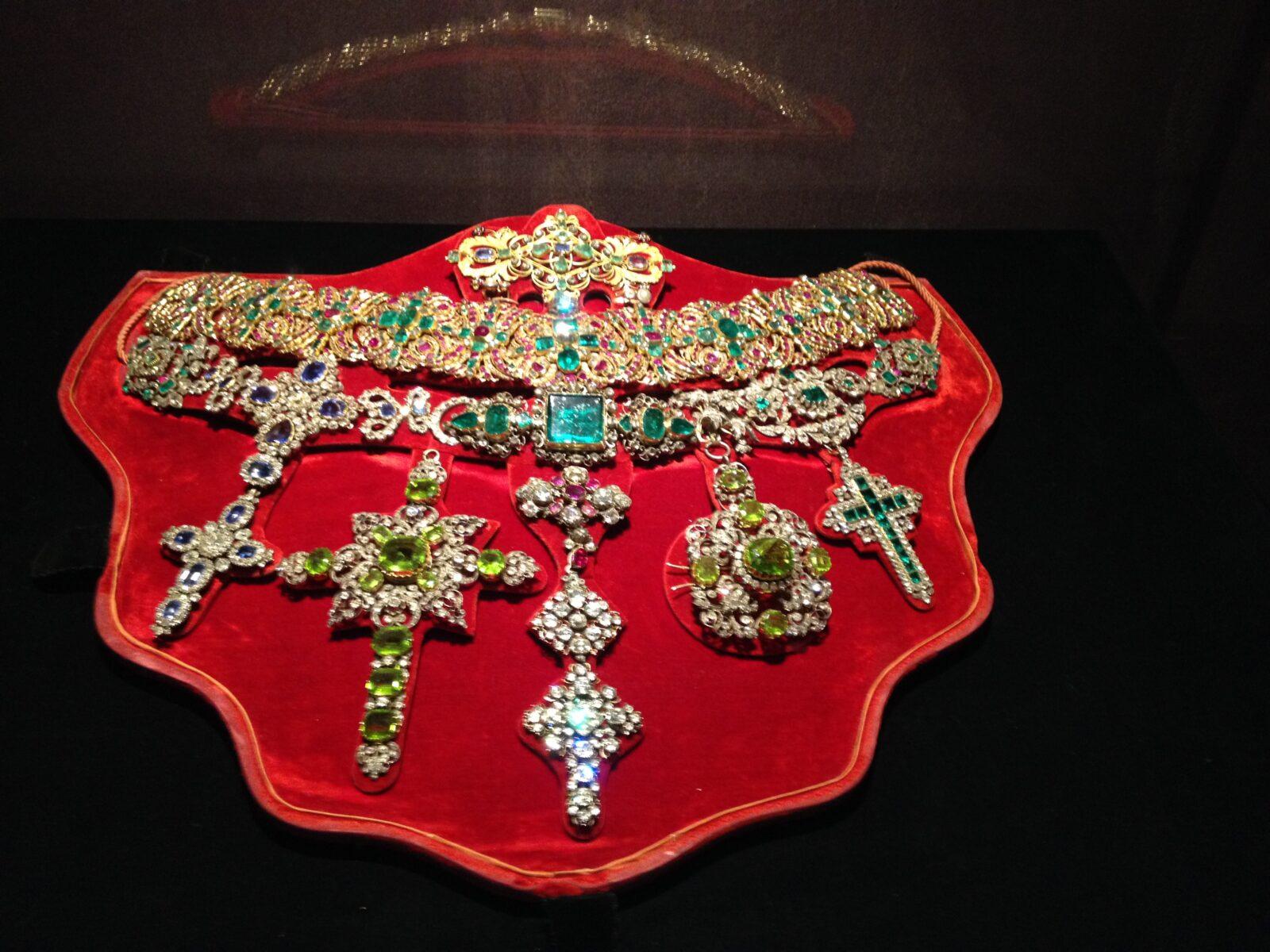
Finally, here is the San Gennaro necklace, sumptuous!
It should be noted that all the jewels present have three colors:
These are the white (diamonds), the green (emerald, peridot), and the red (ruby) according to the theological virtues that are Faith, Hope, and Charity.

In fact, this incredible piece has evolved over the centuries.
Thus, it is composed of four levels and consists of three donors.
(the people, the nobility and the sovereigns)

The first part was created by the goldsmith Michele Dato in 1679. Again, a work of great quality that gives the impression of a mosaic; the entire composition is based on the theme of the cross, with emeralds, rubies, and diamonds.
The second part, the clasp, is made of gold and silver set with sapphires, emeralds, diamonds and garnets; it was created by Mariano Imparato in 1833.
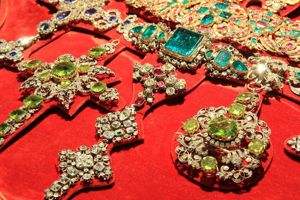
Finally, the necklace ends with 5 vertical motifs: a cross of sapphires and diamonds, a cross of diamonds and peridots, a cross of diamonds and rubies, a cross of diamonds and emeralds.
Cross of diamonds and sapphires, presented by Caroline of Austria 1715
Olive-green cross with diamonds presented by King Victor Emmanuel II of Savoy in 1862
Ruby cross, diamonds and enamel, presented by Charles III in 1734
Cross with emeralds and diamonds presented by Napoleon Bonaparte in 1806
This final composition is impressive by its quality, by the quantity of stones, but also by the number of different jewels, both in terms of the era and the style.
All different, but united by faith!

The Latin Cross is adorned with 8 emeralds and 9 antique-style diamonds, each weighing between 1 and 2 carats. The remarkable setting, of great finesse, forms a lace around each stone; it dates from 1878.

Another fabulous piece, the incredible mitre created by Matteo Treglia in 1713. .

In addition, it weighs 18 kg of gold and silver and is entirely studded with diamonds, emeralds and rubies.

So much so that there are 3326 diamonds, 198 emeralds and 164 rubies (and probably 2 garnets) to be counted.
Also, the 2 largest emeralds come from Colombia and bear a name.
(« Dom Fabio Ruso » and « Don Carlo Caraciolo », members of the delegation that originally placed the order).


And then, there are two other remarkable stones: a ruby from Ceylon called «Lave du Vésuve» and a diamond with 58 facets cut brilliant.
(extraordinary for the time) in the shape of a pear.
Thus, the exhibition ends in a subdued atmosphere, whispering about these wonders!
It is a very beautiful exhibition that you shouldn’t miss, of very high quality.
From March 19 to July 20, 2014
Maillol Museum
59-61 rue de Grenelle 75007 Paris