






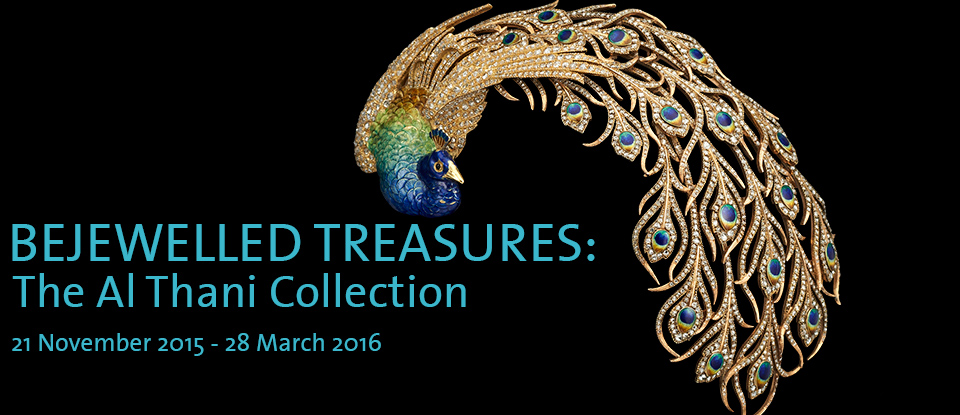
The Victoria and Albert Museum presents us with the spectacular Al Thani collection «Bejewelled treasures».
Sheikh Hamad bin Abdullah Al Thani has assembled a vast collection of jewels. Indian art and the Mughal emperors have fascinated this man.
More than a hundred Indian-themed or Indian-inspired objects are gathered in London. Let’s take a little tour of this treasure together.
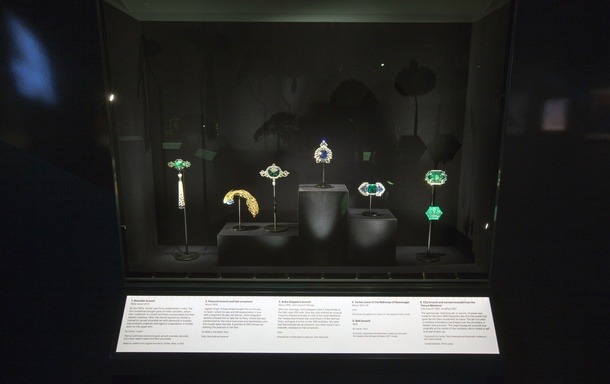
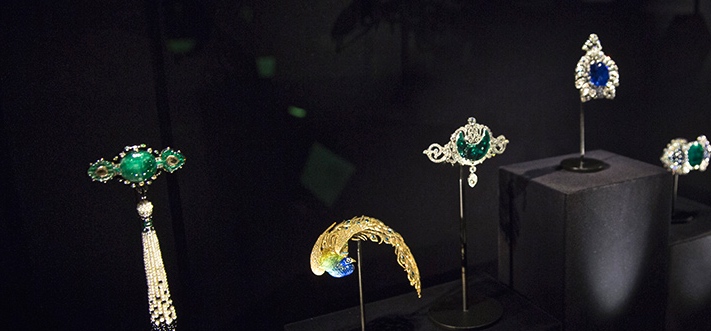
The precious stones are magnificent, both in terms of their weight and their color. They leave us dreaming...
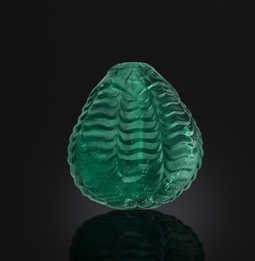
Until the 18th century, the historical mines of Golcondes in India offered exceptional diamonds in size and purity. The Mughal emperors sought out these incomparable stones.
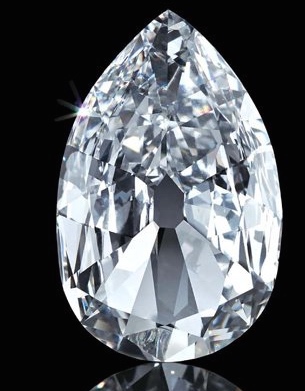
© V&A Museum
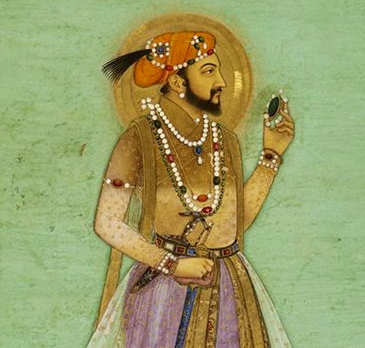
For centuries in India, fine pearls were threaded into very long necklaces worn by the maharadjas.
Under Mughal rule, pearls were mixed with emeralds and spinels. These necklaces represented the emblem of royalty.
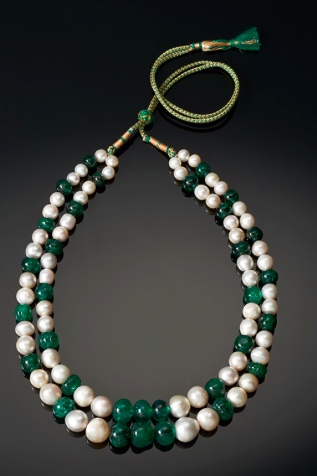
The Al Thani Collection © Servette Overseas Limited 2014
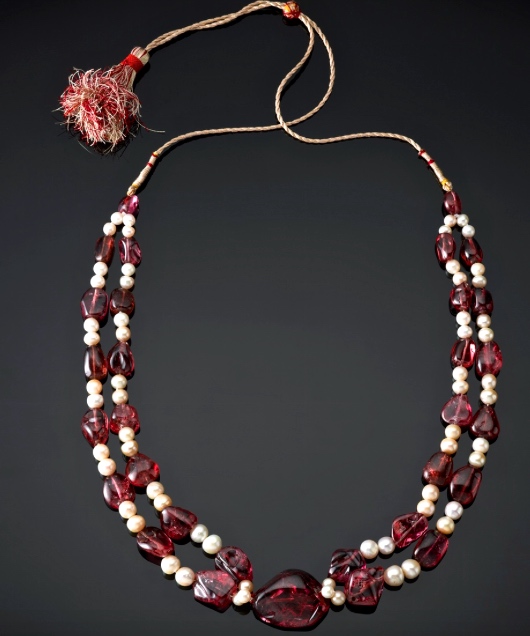
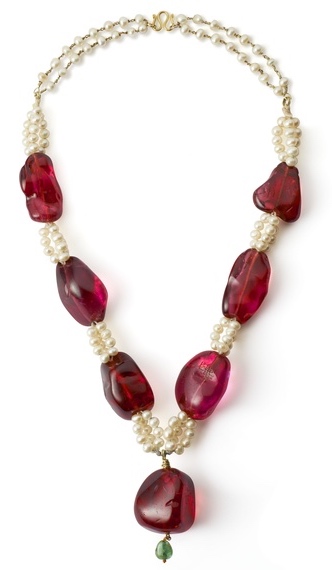
The Al Thani Collection © Servette Overseas Limited 2014
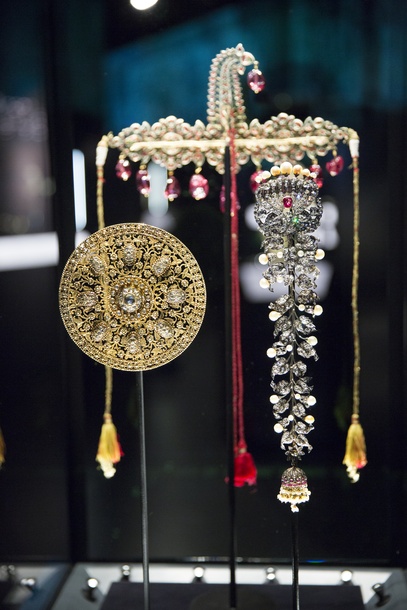
The jewelry and Indian objects reflect the splendor and wealth of that period.
Comparable to no other country, India is adorned with jewels. Almost every part of the body has its own jewels: anklets, belts, rings, bracelets, necklaces, earrings, nose jewelry, head jewelry…
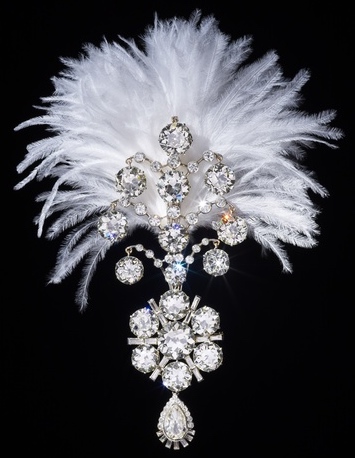
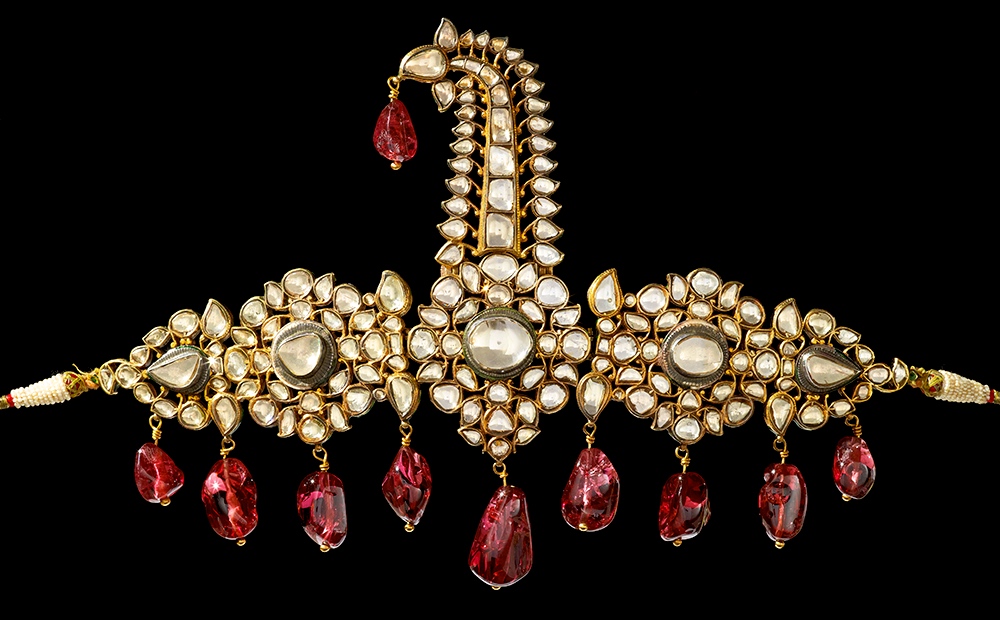
An emblematic jewel of India, the «Sarpesh».
The Maharadjas adorned their turban with sarpesh (Sar the head and Pesh the fastener).
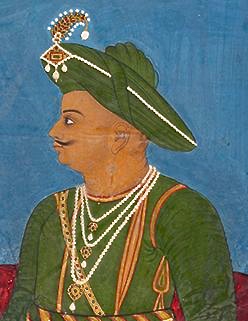
Feathers in diamonds and feathers.
19th-century Sarpesh in gold and silver, set with diamonds and spinels.
The stones are valued using the Kundan technique. This characteristic jewelry method, originating from Rajasthan, involves inserting a gold leaf between each gem and the setting.
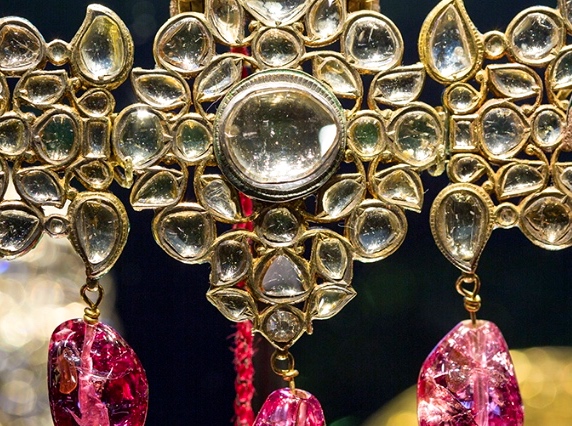
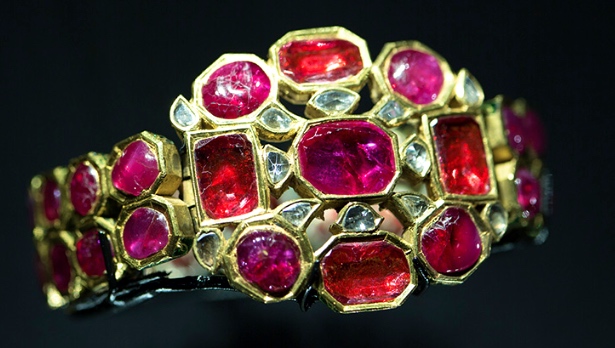
Gold diamond and ruby bracelet with the kundan technique.
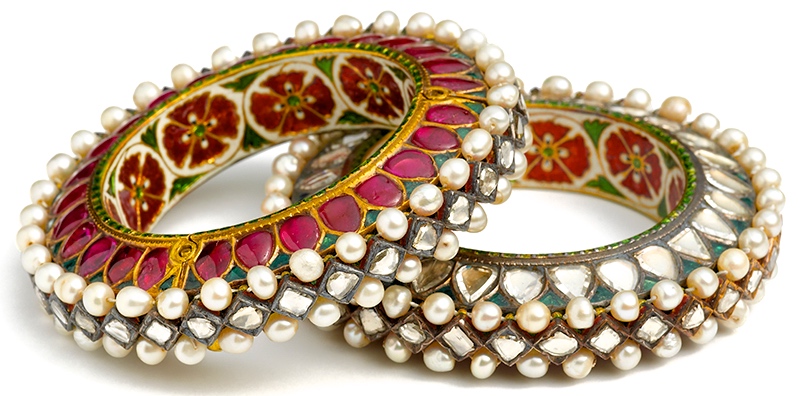
Around the mid-17th century, enamel appeared on Indian jewelry. It is perhaps the Portuguese state of Goa that is responsible for the European technique of enamelling Mughal jewelry. Elaborate elements, often featuring a white background with red and green flowers, can be found on many jewelry pieces.
Pair of gold bracelets, enamel, rubies, spinels, diamonds and pearls.
The objects are also inlaid with precious stones (Kundan technique); this is a sign of wealth and power. Besides diamonds, rubies, sapphires, and spinels, many jade objects can be found. The Mogul culture transfers magical power to jade. From Babur (founder of the Mogul dynasty) to Shah Jahân, jade is considered the stone of victory.
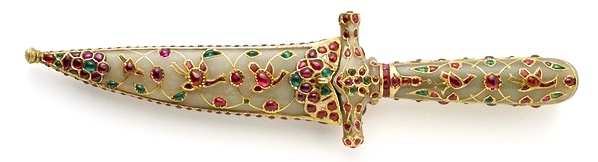
Jade, Emeralds, Ruby
Around 1615
The Al Thani Collection © Servette Overseas Limited 2014
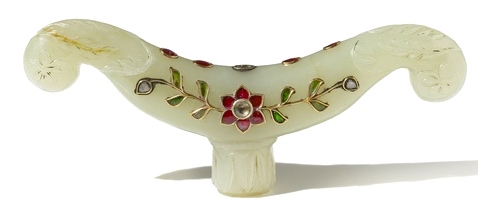
Jade, Diamonds, Rubies, Emeralds
18th century
The Al Thani Collection © Servette Overseas Limited 2014
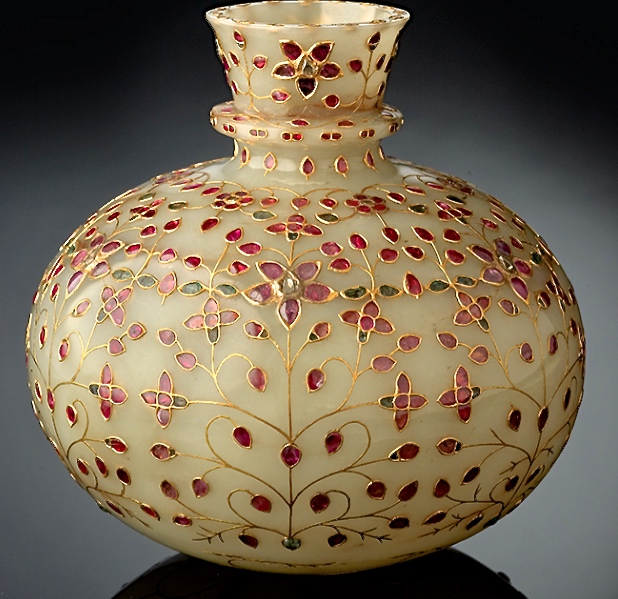
Jade, Diamonds, Rubies, Emeralds
19th century
The Al Thani Collection © Servette Overseas Limited 2014
What can be said of this remnant of the throne of Tipû Sultân, a fierce opponent of English domination?.
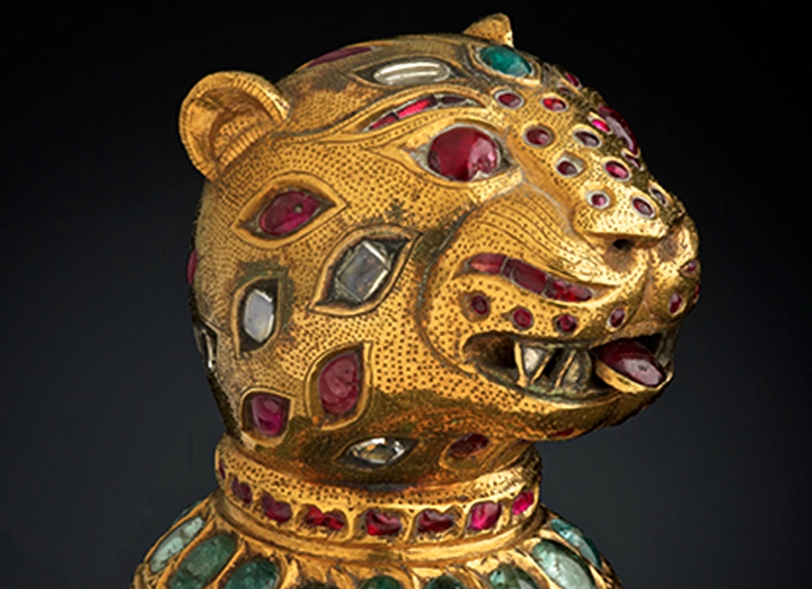
Diamonds, Rubies, Emeralds, Gold
18th century
The Al Thani Collection © Servette Overseas Limited 2014

Let's finish with the creations of great jewelers that these Indian jewels have been able to inspire.
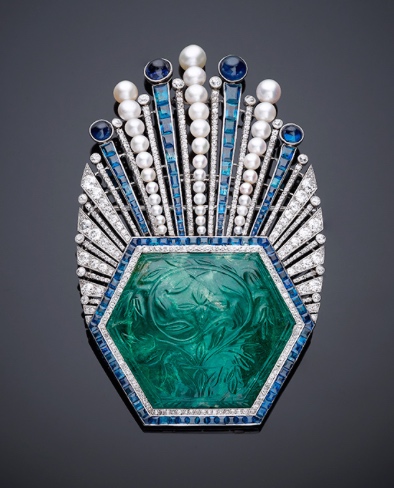
Emerald Colombia, Diamonds, Sapphires, Pearls, Platinum
1910
The Al Thani Collection © Servette Overseas Limited 2014
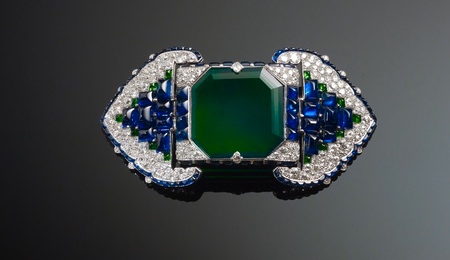
Emeralds, Sapphires, Diamonds, Gold, Platinum
1922
The Al Thani Collection © Servette Overseas Limited 2014
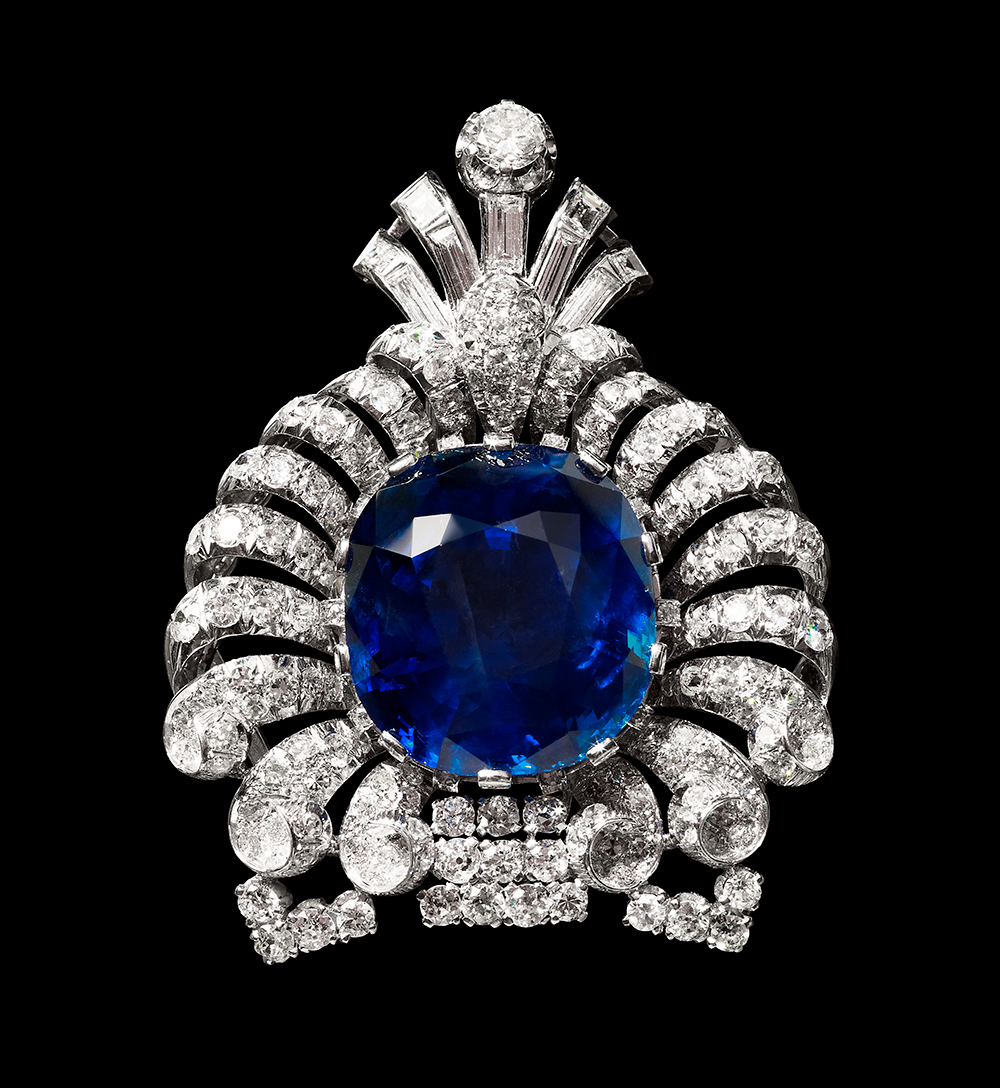
Sapphire, Diamonds, Platinum
Around 1930
The Al Thani Collection © Servette Overseas Limited 2014
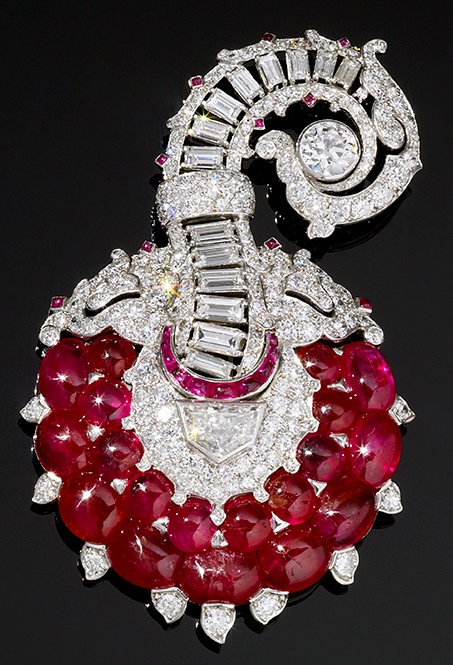
Diamonds, Rubies, Platinum
1935
The Al Thani Collection © Servette Overseas Limited 2014
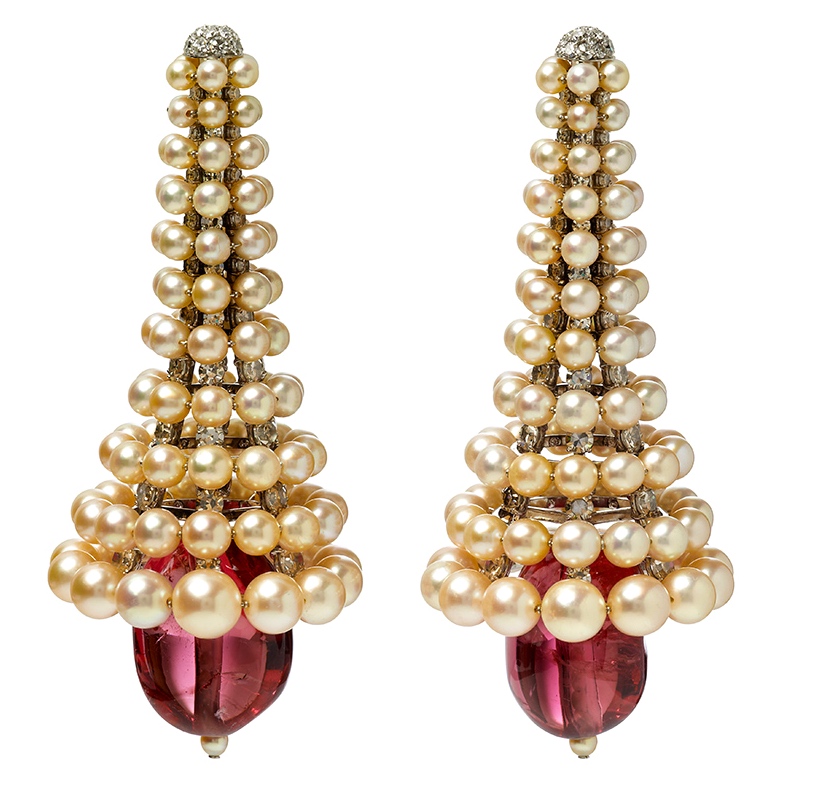
Spinel, Pearls, Diamonds, Gold, Silver
2010
The Al Thani Collection © Servette Overseas Limited 2014
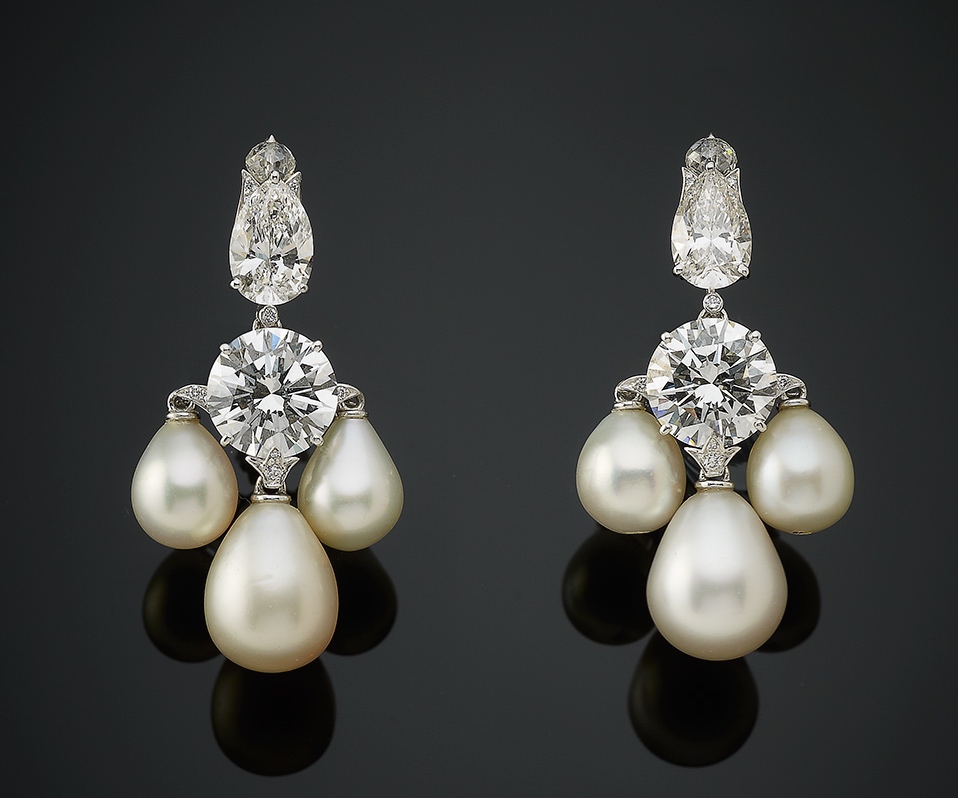
Diamonds, Pearls, Platinum
2012
The Al Thani Collection © Servette Overseas Limited 2014
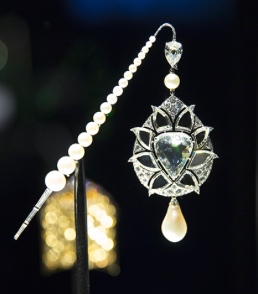
Diamonds, pearls, platinum
2014
The Al Thani Collection © Servette Overseas Limited 2014
The Victorian & Albert Museum opens a very beautiful showcase where we discover a spectacle of colors, stones, jewels and history. To be dazzled by the light!
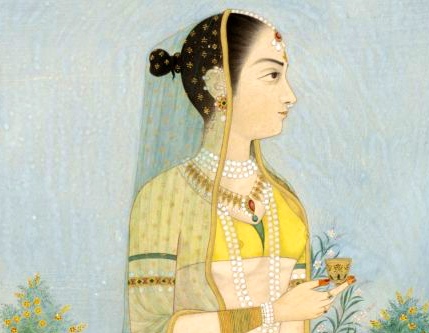
21 November 2015 – 28 March 2016
Victoria and Albert Museum
Cromwell Rd, London, UK
Photos credits Victoria & Albert Museum