




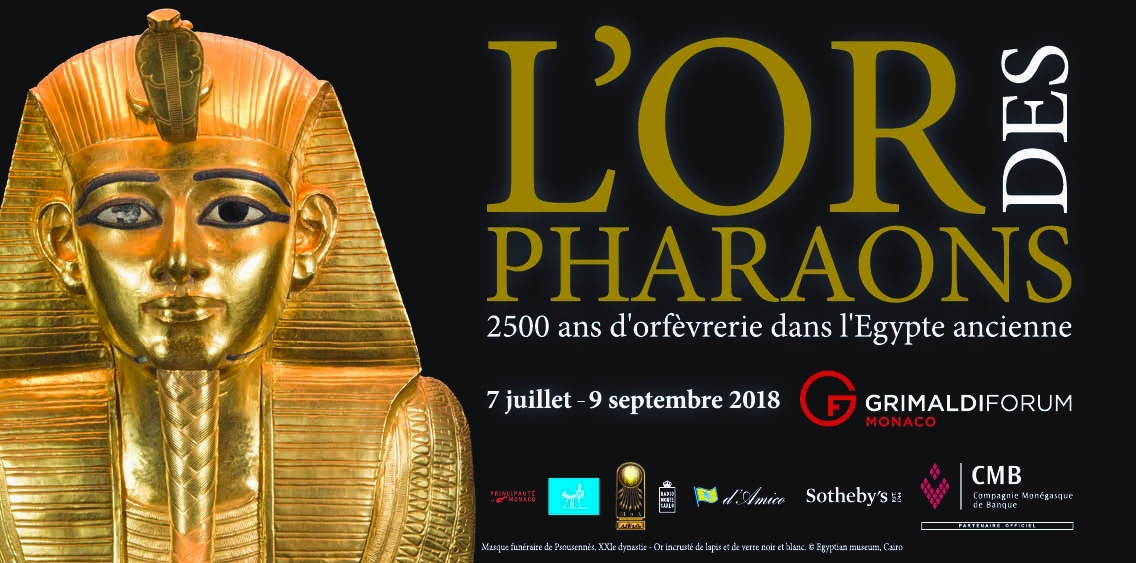
The Gold of the Pharaohs, A beautiful exhibition in Monaco on jewelry making.
Every summer, the Grimaldi Forum Monaco It will present a major thematic exhibition dedicated to a major artistic movement, a subject of heritage or civilization. Thus, the exhibition will begin on July 7th. The Gold of the Pharaohs, 2500 years of goldsmithing in ancient Egypt.
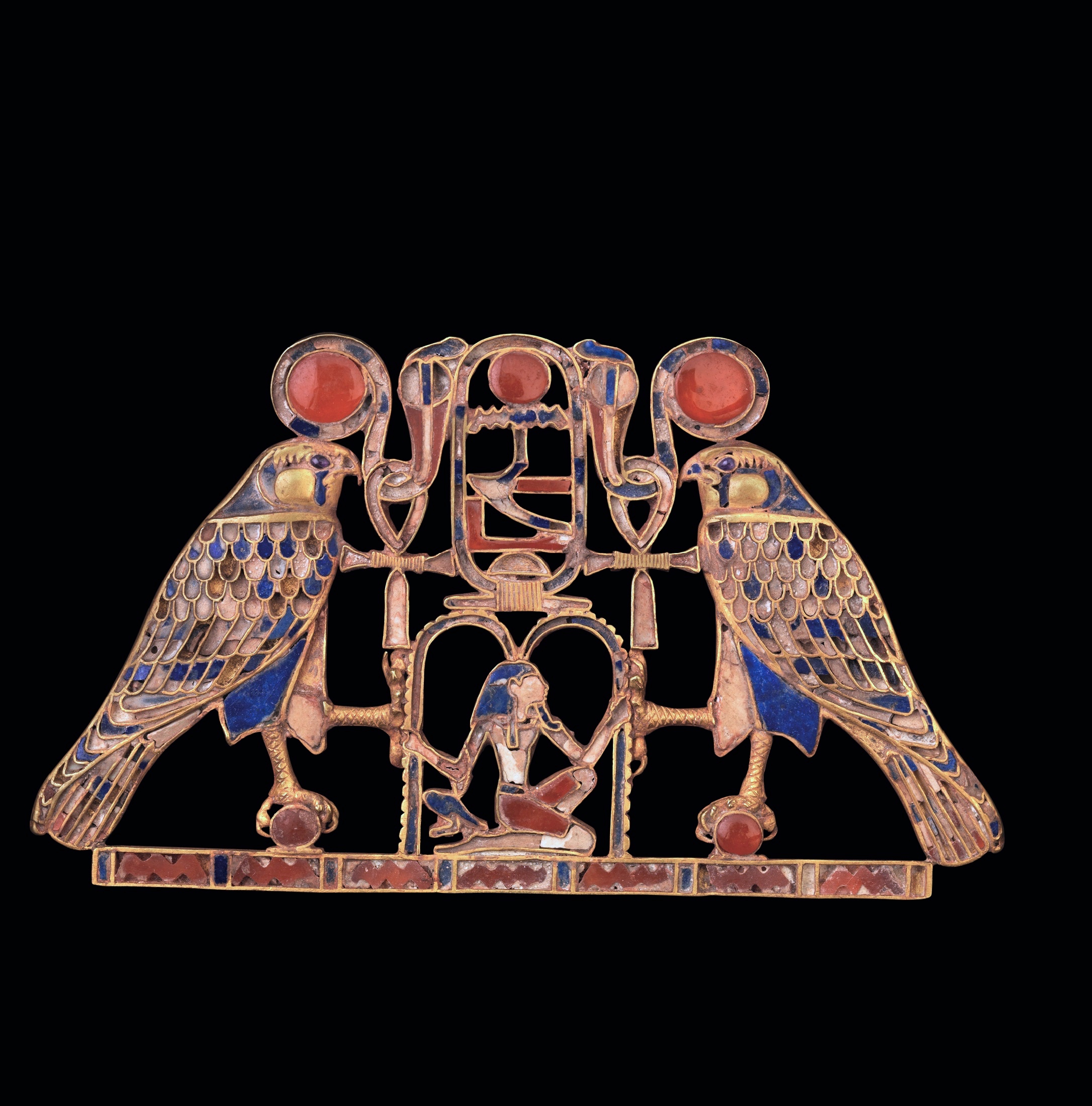
Cornaline, Lapis-Lazuli, Gold.
Illahoun
12th Dynasty
Cairo, Egyptian Museum, JE 44922
© Laboratoriorosso Srl
Often reserved for an elite, and primarily for the gods (offerings, obelisks, liturgical equipment…), the goldsmithing and the jewelry worn by both men and women are attributes of power.
It should be noted that this jewelry is produced using precious materials and elaborate techniques. Moreover, it is a hierarchical production that ranges from miners to the accounting scribes of gold. Then to the jewellers who manufacture jewelry for the sole possessor of the country’s wealth, Pharaoh.
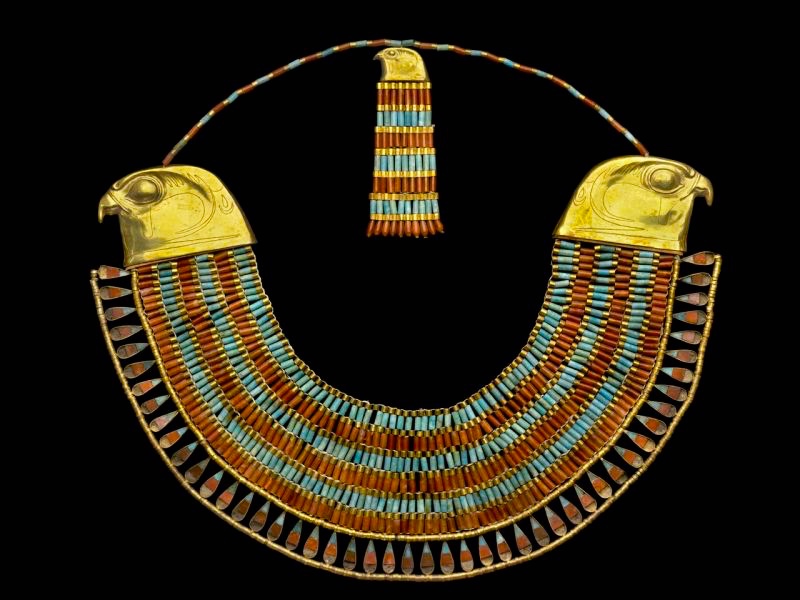
Cornaline, Feldspath, Or.
Hawara, pyramid of Neferouptah XIIth Dynasty, reign of Amenemhat III. Cairo, Egyptian Museum, AD 90199
© Laboratoriorosso Srl
As early as the 3rd millennium BC, the Egyptians knew how to work gold, precious metals, and fine stones. Moreover, the Egyptians had a rather optimistic conception of the afterlife. Therefore, they wished to prolong their earthly life and everything that was of interest to them in the afterlife. Thus, they were buried with jewelry, markers of their social rank, but also charged with a protective power.
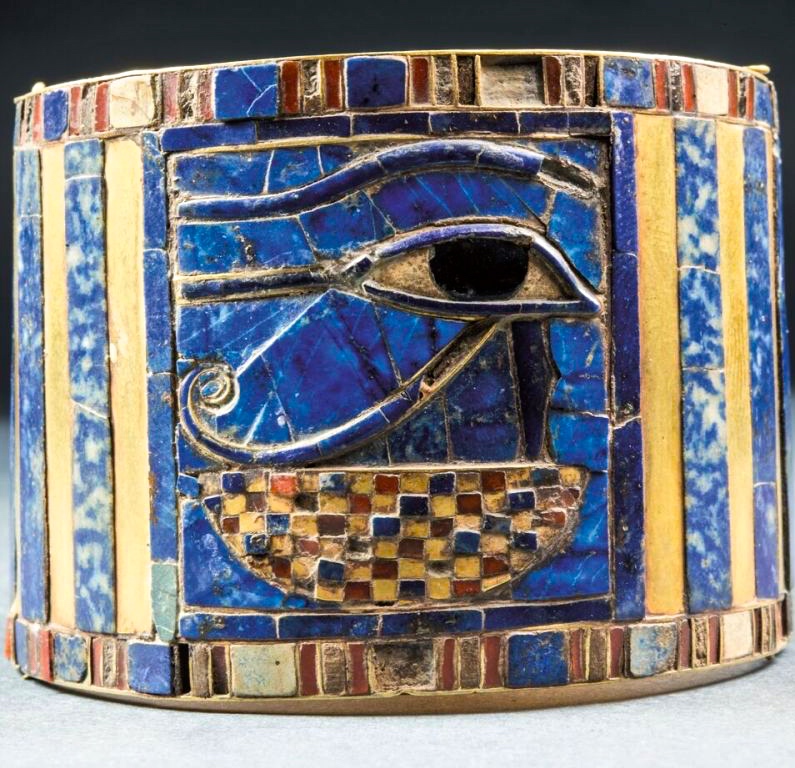
Third Intermediate Period, XXIIth Dynasty, reign of Chechanq I, around 930 BC.
Lapis-Lazuli, Cornaline, White Faience, Gold.
Tanis, Tomb II, antechamber, burial place of Chechanq II
Cairo, Egyptian Museum, inv.JE 72184-B
© Egyptian Museum, Cairo
For example, the Egyptians attributed magical properties to fine stones according to their color. First, the red of cornelian or jasper evoked the blood that beats in our bodies. For the green of turquoise, it represents the vegetation, of which the papyrus, emblematic in Egypt, evoked health and youth. Finally, the blue of lapis lazuli evoked the starry sky and constituted the hair of the gods.
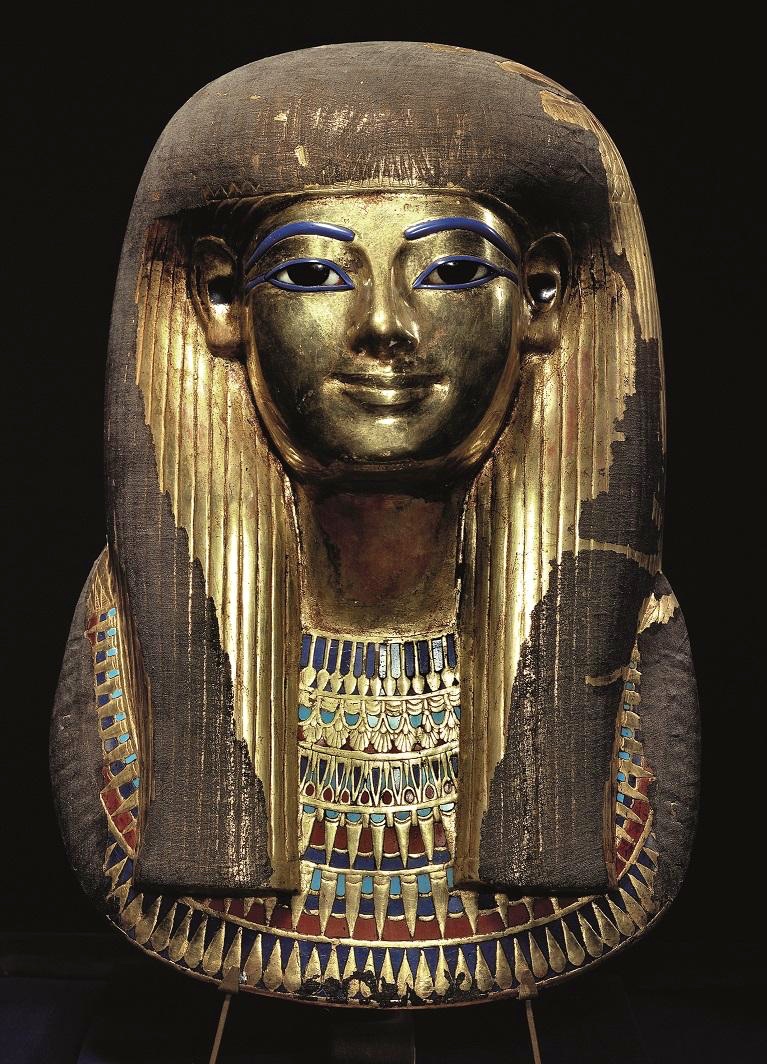
Gilded carton.
Valley of the Kings, tomb of Youya and Touya of the XVIIIth Dynasty, reign of Amenhotep III
Cairo, Egyptian Museum, JE 68967, JE 95254
© Photo: Jürgen Liepe
It should be noted that Egypt has many gold deposits. The extraction techniques were known already five thousand years ago. Gold played a very important role in the pharaonic civilization; it had a commercial, religious and symbolic value. In fact, it was traded according to its weight and not according to the work of the goldsmiths. This is the reason why the divine gold that shone like the sun was considered the flesh of the gods. Thus, as divine, it gave Pharaoh his power in eternity ensuring him immortality.
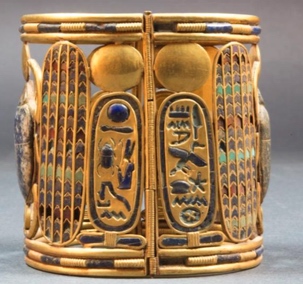
Lapis-Lazuli, Glass Paste, Gold.
Third Intermediate Period, 21st Dynasty, reign of Psusennes I of Tanis
Cairo, Egyptian Museum, inv. SR 1/8727, JE86027
© Egyptian Museum, Cairo
As one might expect, the exhibition presents the stages and techniques of jewelry making used by the Egyptians. We discover the evolution of techniques through the typology of the jewelry and their continuity. Since some are of high symbolic value and have remained the same for more than four thousand years.
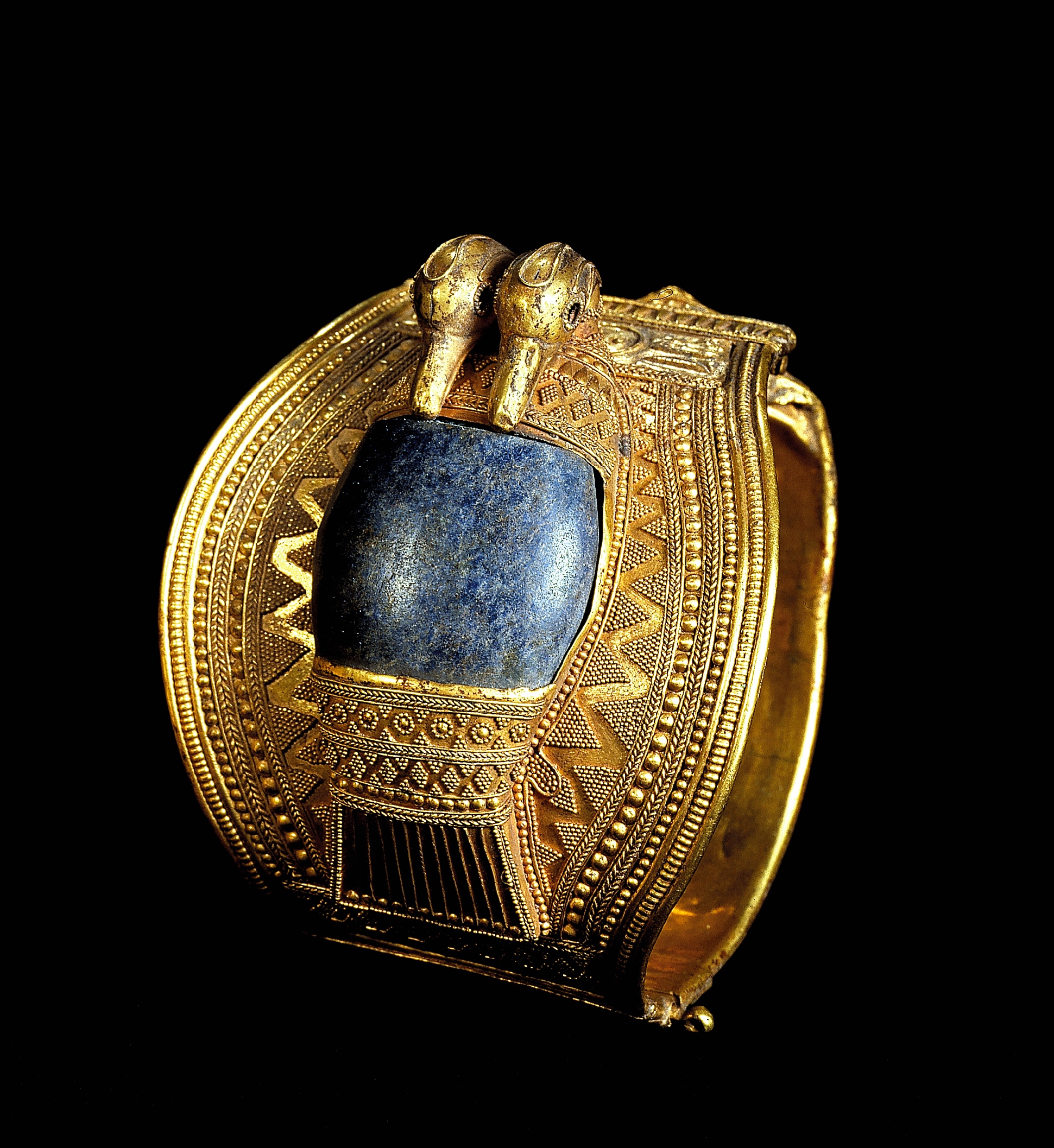
Lapis-Lazuli, Gold.
Boubastis, Tell Basta
19th Dynasty
Cairo, Egyptian Museum, JE 38710(a), JE 39873(a) ©Photo: Jürgen Liepe
This ancient goldsmithing will be revealed through techniques and the tastes that show the relationships that ancient Egypt maintained with other countries, which will influence the decorative themes.
To put it simply, it is an exhibition that immerses us in the history of ancient Egypt while giving us a different perspective on what ancient Egyptian goldsmithing and jewelry were like.
The Gold of the Pharaohs
Grimaldi Forum Monaco
10 Avenue Princesse Grâce, 98000 Monaco
July 7 to September 9, 2018