



The fine pearl reveals a part of its secrets.
Esprit Joaillerie shares the passion for fine pearls
by Olivier Segura, Director of the French Gemmology Laboratory.
What is a fine pearl?
It is a pearl that was born all by itself in a mollusk without any human intervention.
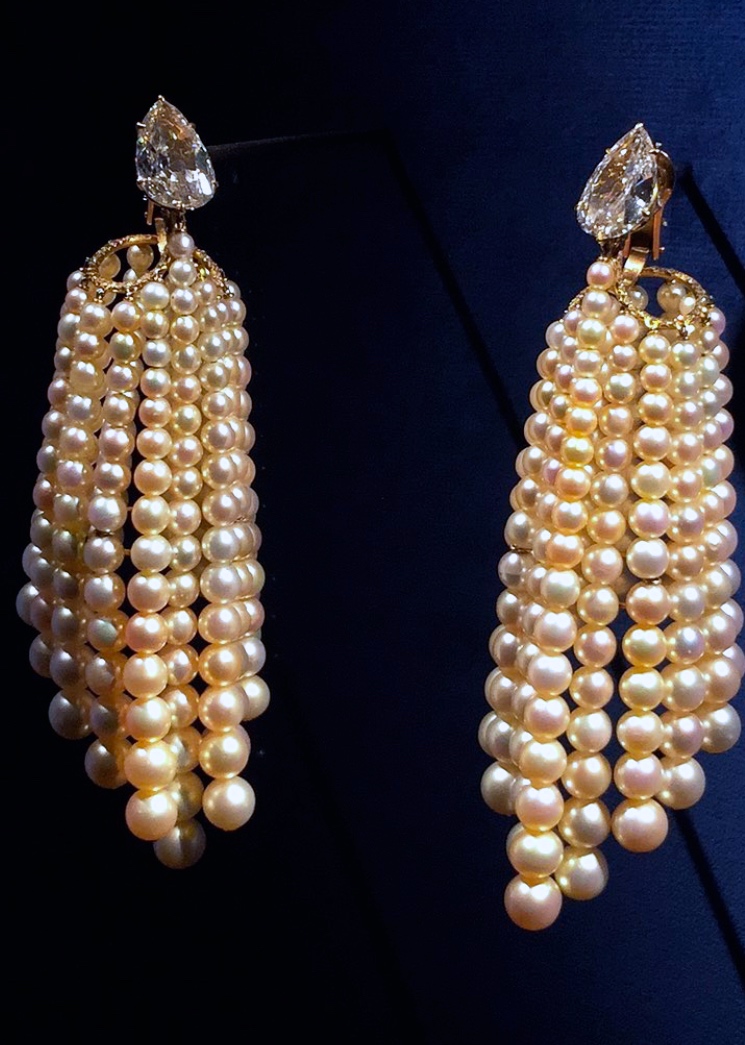
Fine Pearls, Diamonds, Gold
© Esprit Joaillerie
How is the fine pearl born?
It should be emphasized that the pearl does not originate from a single grain of sand but from a cell that produces the shell within the mantle. This shell cell continues to develop and forms a sac, which is extremely rare. Then, these cells produce calcium carbonate, thus secreting the shell. Only in this case, the shell is inside the animal, so it is a fine pearl. We emphasize this because these cases are extremely rare; that is why fine pearls are rare. Moreover, these pearls will grow just as the animal lives and the shell sac will not deteriorate.
Thus, the life of a sea urchin varies according to the species: 10, 20, 30 years. So, if the pearl is born quite quickly in the animal, one can find exceptional pearls of 15 mm to 20 mm. It should be noted that the pearls grow by about 1 mm per year, depending on the water temperature and salinity.
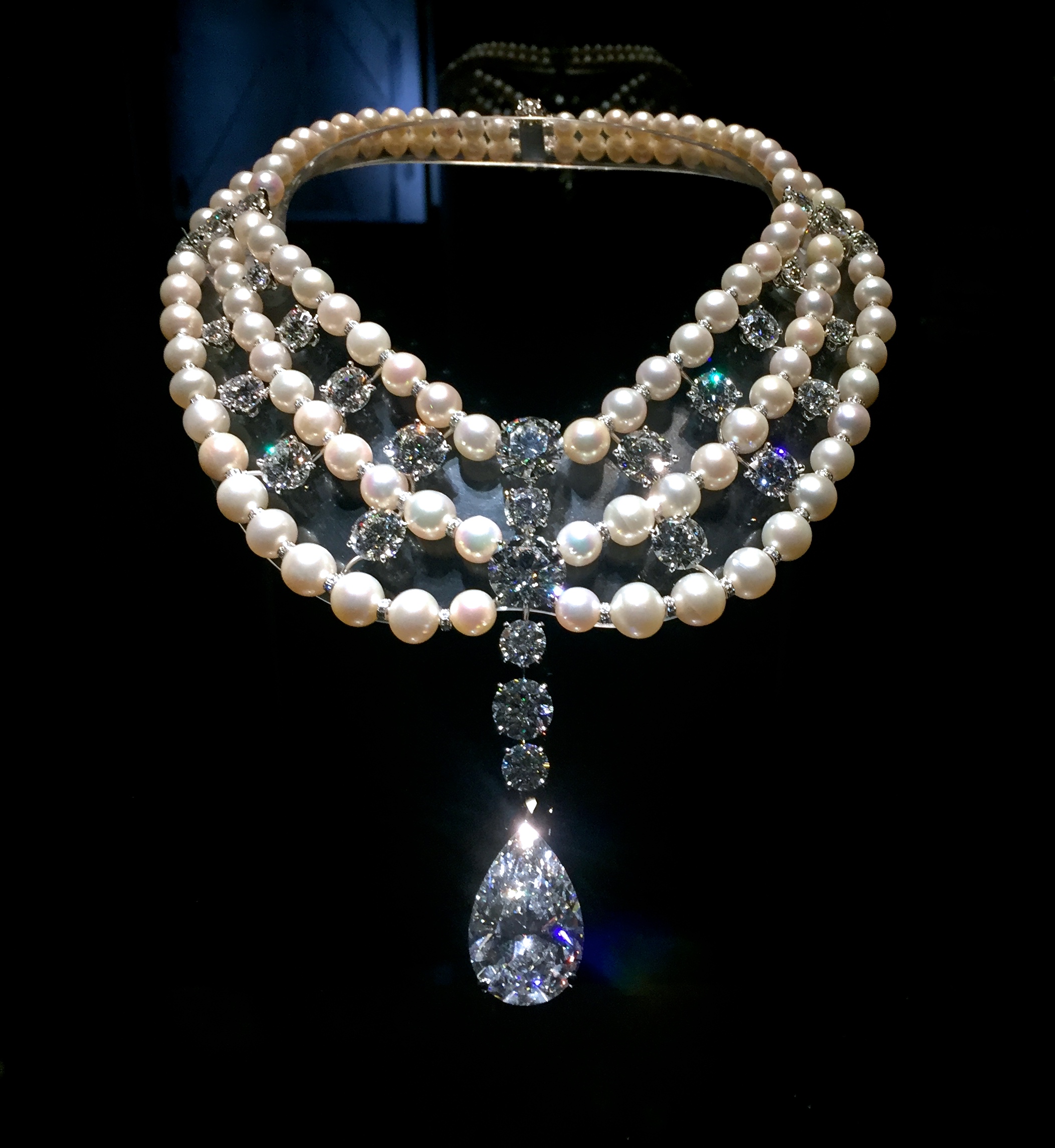
Fine pearls, diamonds, platinum.
© Esprit Joaillerie
What gives the quality of the material?
There is no doubt that the quality will depend on the water temperature, the nutrient medium and the species. What is best known and much appreciated today are the pearls from the Gulf of Persia, from the Mannar Strait. In fact, it is the species pinctada radiata that produces white, pinkish-white, sometimes slightly yellowish pearls, depending on the subspecies.
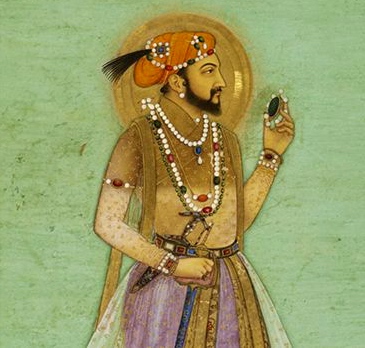
Undoubtedly, this is the most beautiful quality of mother-of-pearl. It should not be forgotten that these pearls adorned the Maharadjas.
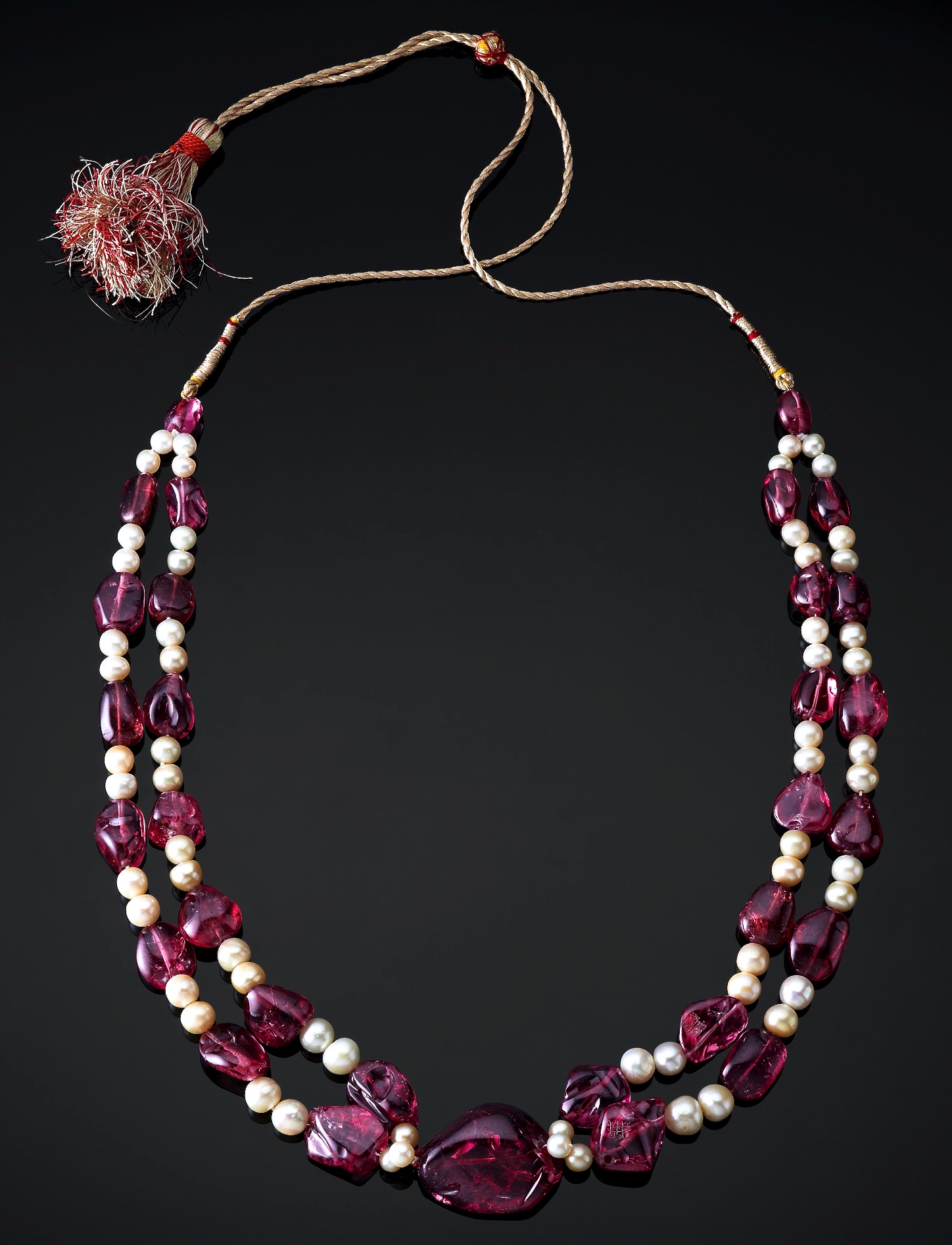
North India
Around 1600-1650.
© The Al Thani Collection 2013 / Prudence Cuming.
Furthermore, fine pearls are created under very special conditions. We don’t really know exactly why, but the virus or bacteria theory is the most plausible. In 1900, studies were conducted to determine how a pearl is created. Several pearls were cut to find a grain of sand. But there was never any sand in the fine pearls!
Therefore, the pearl remains mysterious. Since, at present, it is still not known exactly how and why a fine pearl is created.
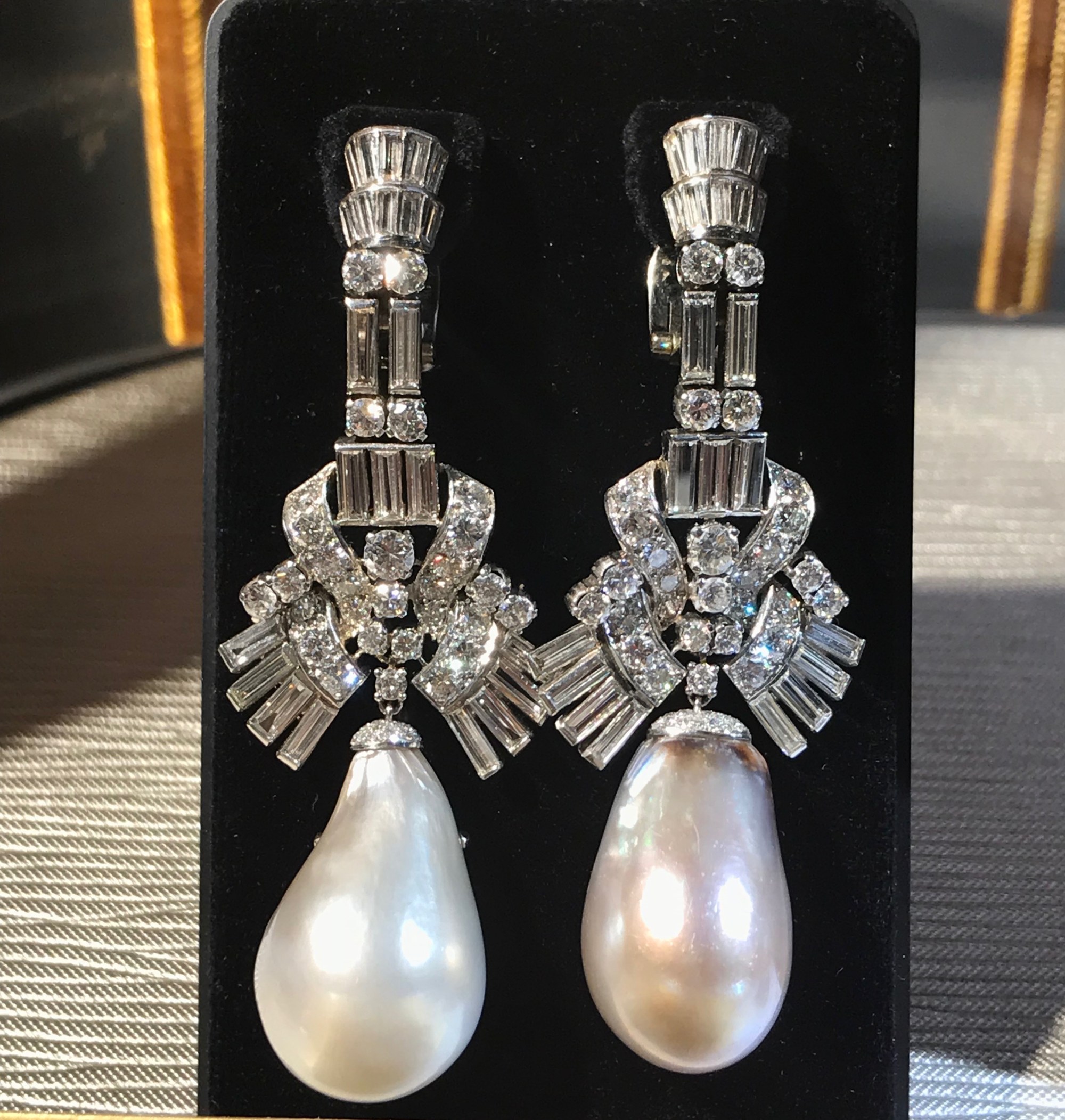
Fine pearls, diamonds, platinum.
Exhibition «Through The Eyes Of A Connoisseur» The Van Cleef & Arpels School Of Jewelry Art Dubai 2017
© Esprit Joaillerie
Is the fine pearl really rare?
Absolutely, it is rare because it is no longer collected. So we are living on a finite stock that is decreasing. The Maharadjas were not mistaken; the jewelers also understood that this interplay of light and fine beads is unique. Moreover, it is an exceptional material with extraordinary mechanical properties.

High Jewellery Millon Charlotte Wannebroucq
© Esprit Joaillerie
Are all the fine pearls round?
Baroque shapes without a center of symmetry, buttons, pears… all shapes are possible. You can even accentuate a natural shape by plaiting or working on it.
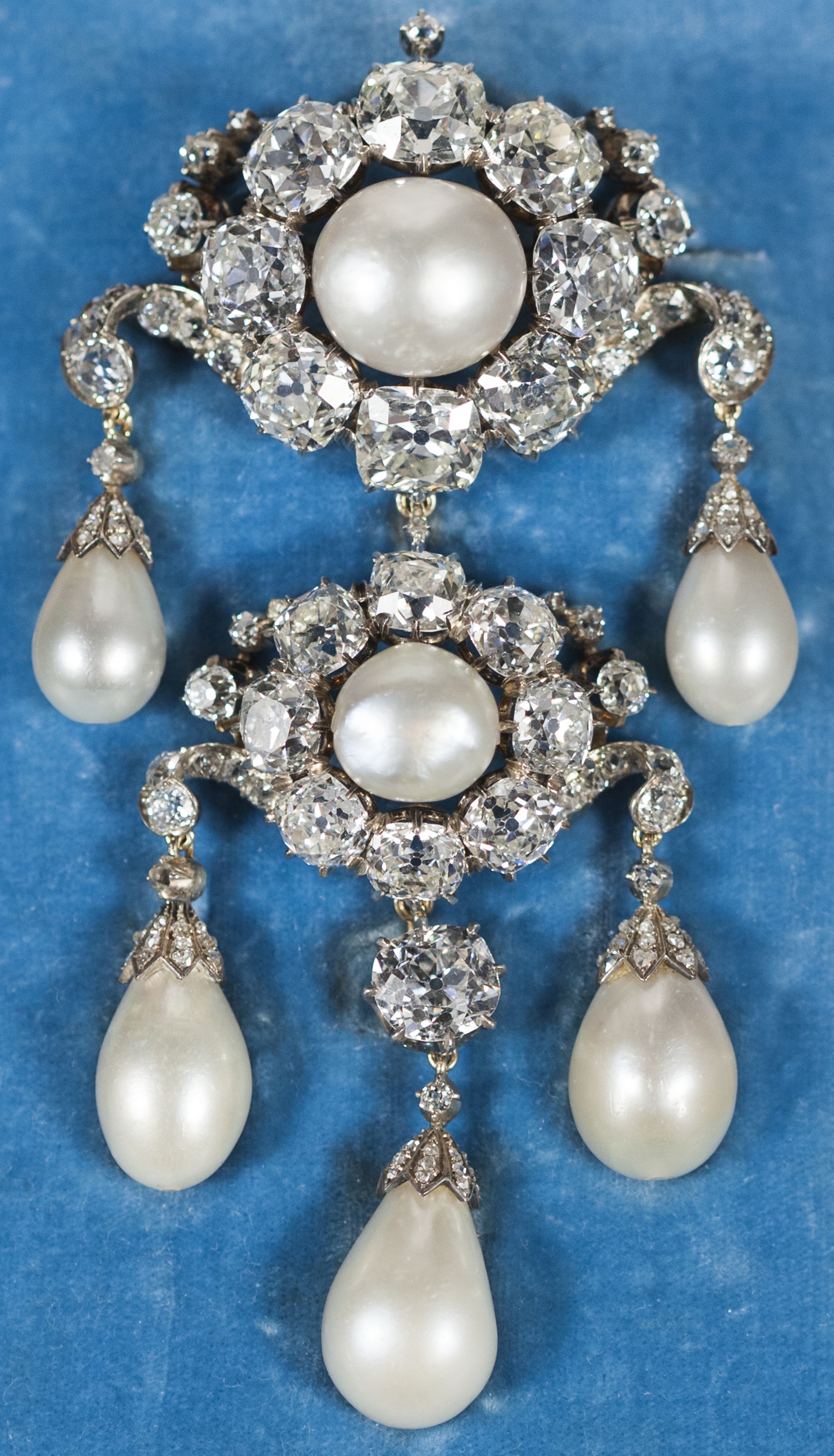
© Louvre Museum
Are all colors possible, as in cultured pearls?
As one might expect from gold to black, white… As the pearls of cultures since culture uses the same species. The Cowdray necklace worn by Cartier is a magnificent necklace of fine black pearls.
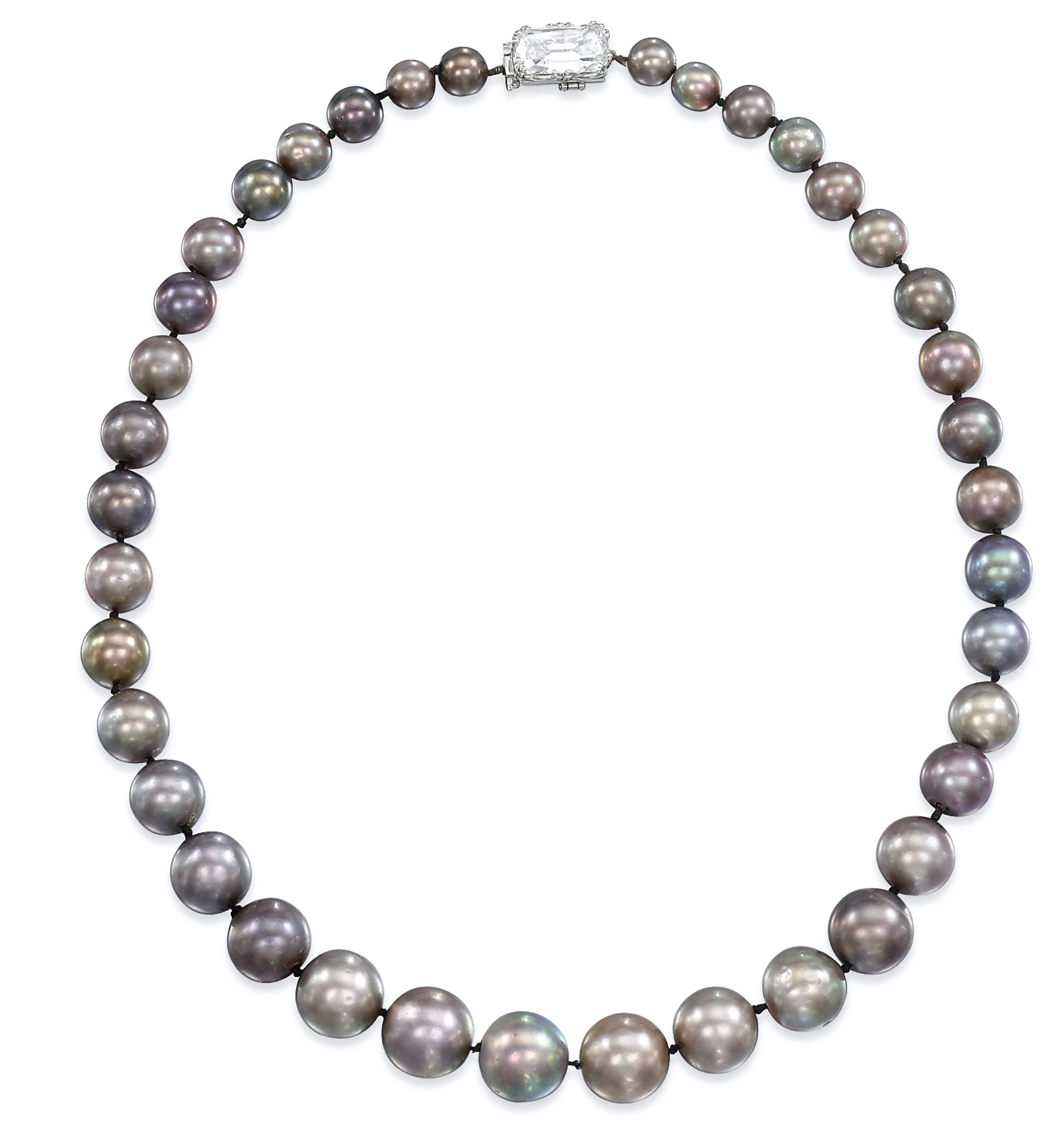
The Cowdray Pearls.
Composed of a single row of thirty-eight graduated natural grey pearls, measuring 11.4-6.8mm, to the rectangular mixed-cut diamond clasp.
© Christie’s
How does the LFG proceed to distinguish the fine pearl from the cultured pearl?
The only way is to go and see the internal structure; to enter the pearl. Is this a human-induced birth, with a nucleus or a graft (without a nucleus)?
Or does a pearl arise ex nihilo from a virus?
So, only radiography allows us to access its secret by visualizing the internal structure of the pearl.
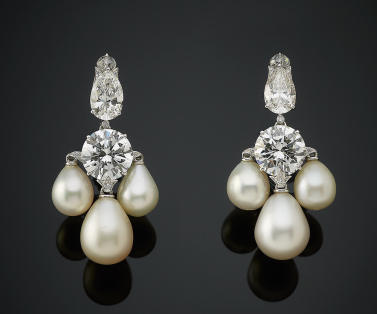
Diamonds, fine pearls, platinum
2012
The Al Thani Collection © Servette Overseas Limited 2014
Are there different categories of fine pearls?
Absolutely, that is the subject of my thesis on fine beads. I want to catalog and describe the structures of fine beads. There are 3 main types of fine bead structures:
First of all, the protein core, the organic matter protein. It gives the blue pearls their color. blue core (blue heart). These beads are iridescent in a bluish gray color and are generally small because this blue heart hardens quickly, so the blue heart is very small, 3 to 4 mm.
Secondly, the pearl has concentric structure in Onion skin.
Finally, the last category has a fibrous structure with a calcitic core. In other words, it is a particular form of calcium carbonate that develops into calcite. The pearl will then grow into aragonite. The aragonite is the usual nacre, but in this structure the organization is different. It plays with the light differently like a sun. These are pearls that will have much richer colors.
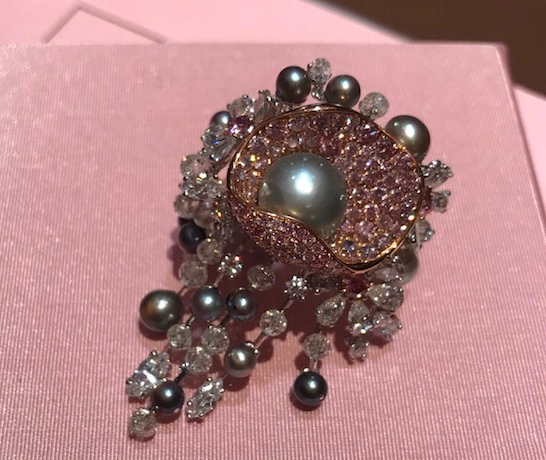
Fine Pearls, Diamonds, Rose Diamonds, Rose Gold, Platinum.
© Esprit Joaillerie
Are there treatments for fine pearls?
Yes, of course. The dye, for example. In this case, it’s important to understand that before cultured pearls, black pearls were highly sought after. Therefore, some fine pearls were dyed black. Natural black fine pearls are always very sought after because they are even more rare.
Of course, there are also simple imitations like glass balls.
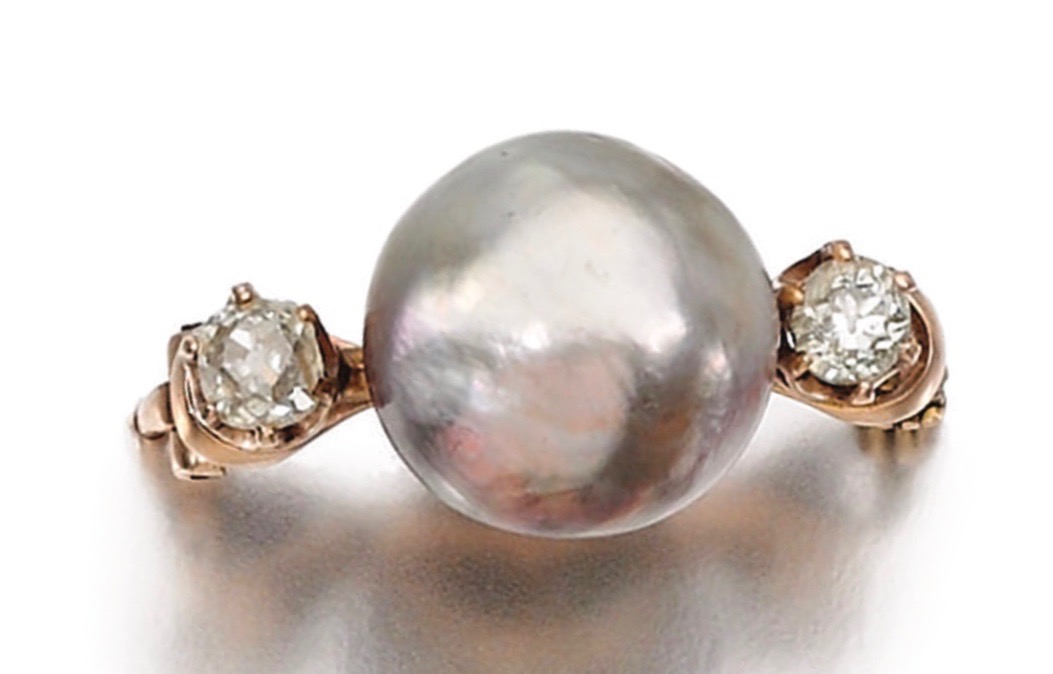
© Sotheby’s
What do you like about fine jewelry?
It is a very beautiful, soft and delicate material. With incredible color combinations, it is very different from cultured pearls. The bio-mineralization process is also fascinating. Creating minerals from living organisms is extremely complex. Moreover, the research has not fully explained this process.
In conclusion, I would say that the fine pearl has not yet revealed all its secrets.
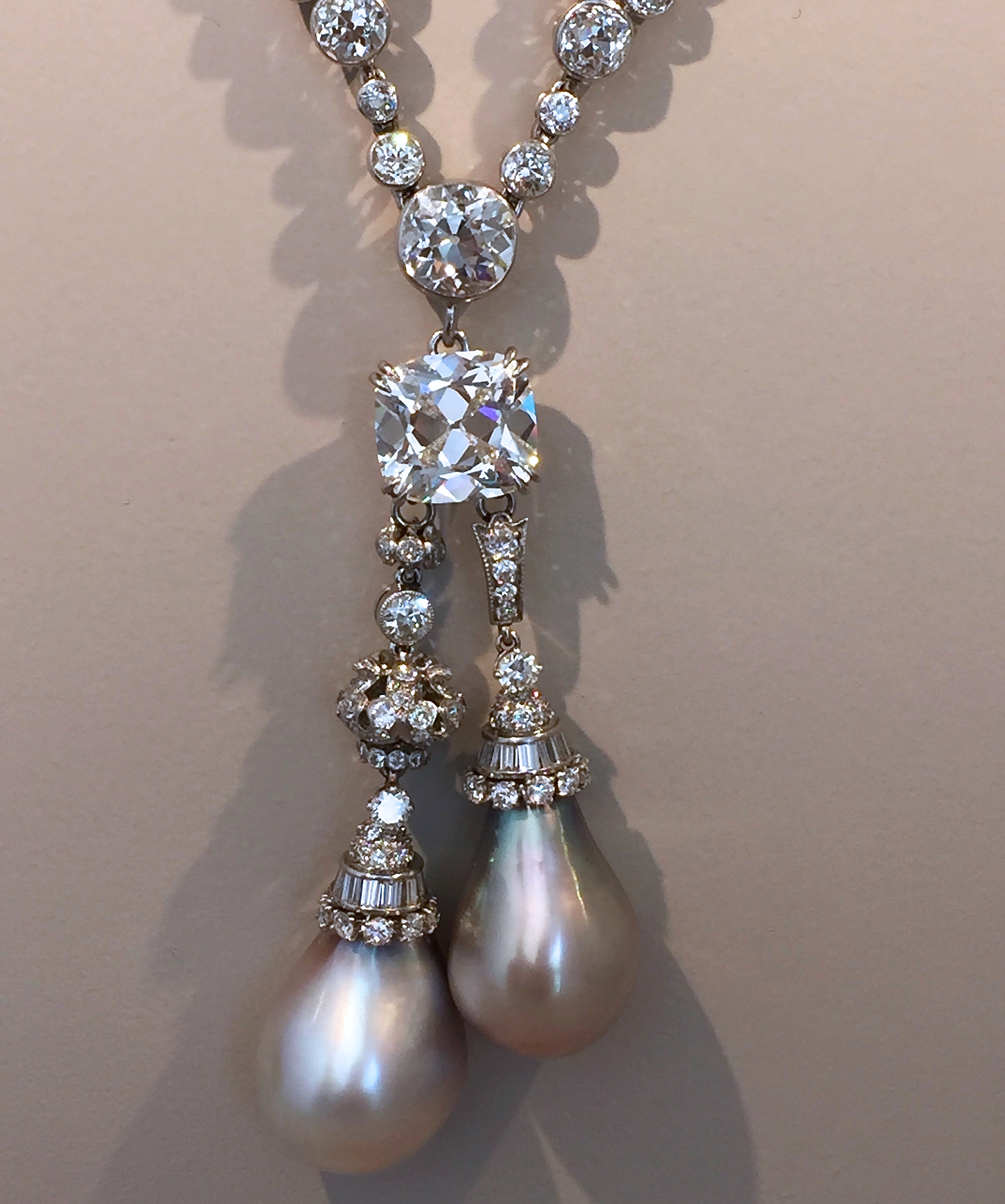
Diamonds, fine pearls, platinum.
1930
© Esprit Joaillerie
Thanks for this exciting moment of discovering fine gems.
French Laboratory of Gemology
30 rue Notre Dame des Victoires 75002 Paris
www.laboratoire-francais-gemmologie.fr