





Here is a masterpiece of the 18th century, the “Table of Teschen” which is both a piece of furniture and a jewel because it is adorned with hard stones.
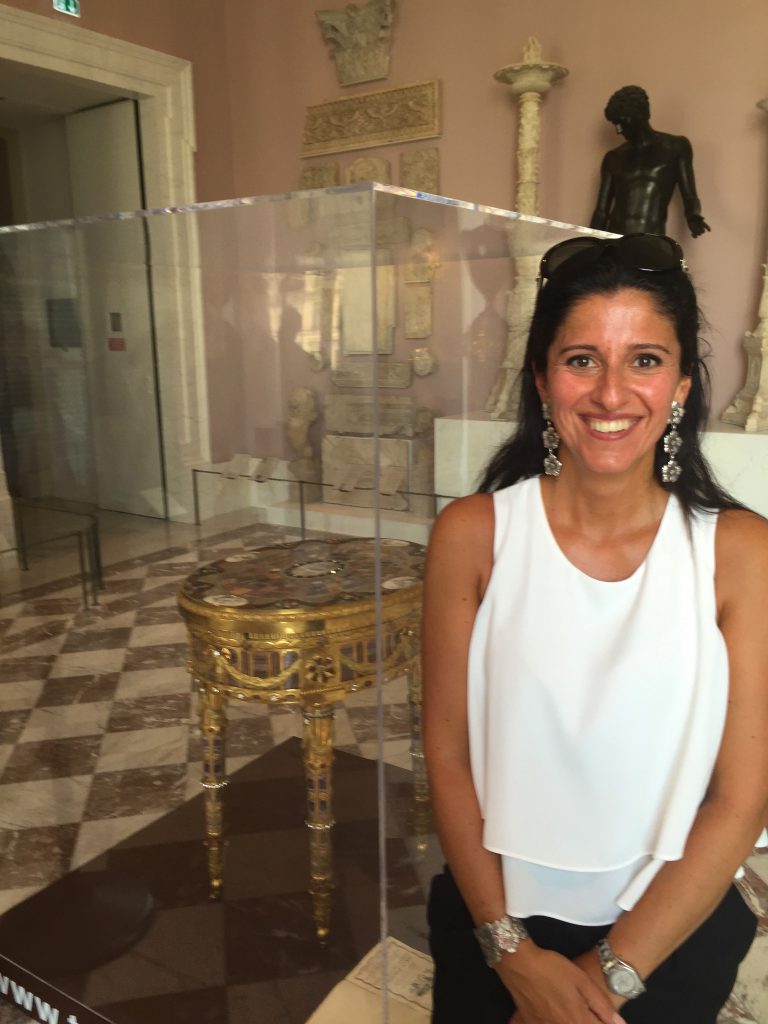
It should also be noted that this is a true patrimonial treasure commemorating European history. In 1778, Bavaria was coveted and the rivalry between Emperor Joseph II of Habsburg and King Frederick II of Prussia threatened peace. The balance of European powers was unstable. Louis XVI, with wisdom, refused to involve France in a conflict. French diplomacy found a solution to peace and a treaty was signed in Teschen in May 1779. In gratitude, Baron de Breteuil, a discreet diplomat, received this table of hard stones, a testament to a peace treaty and the balance of European powers.
It was Johann Christian Neuber who created the “Table of Teschen”. Trading in hard stones, mineralogist and goldsmith of the Saxon court, he was known for his mineralogical cases and tabacera. His technique called “Zellenmosaic” (mosaic of hard stones) had made him famous.
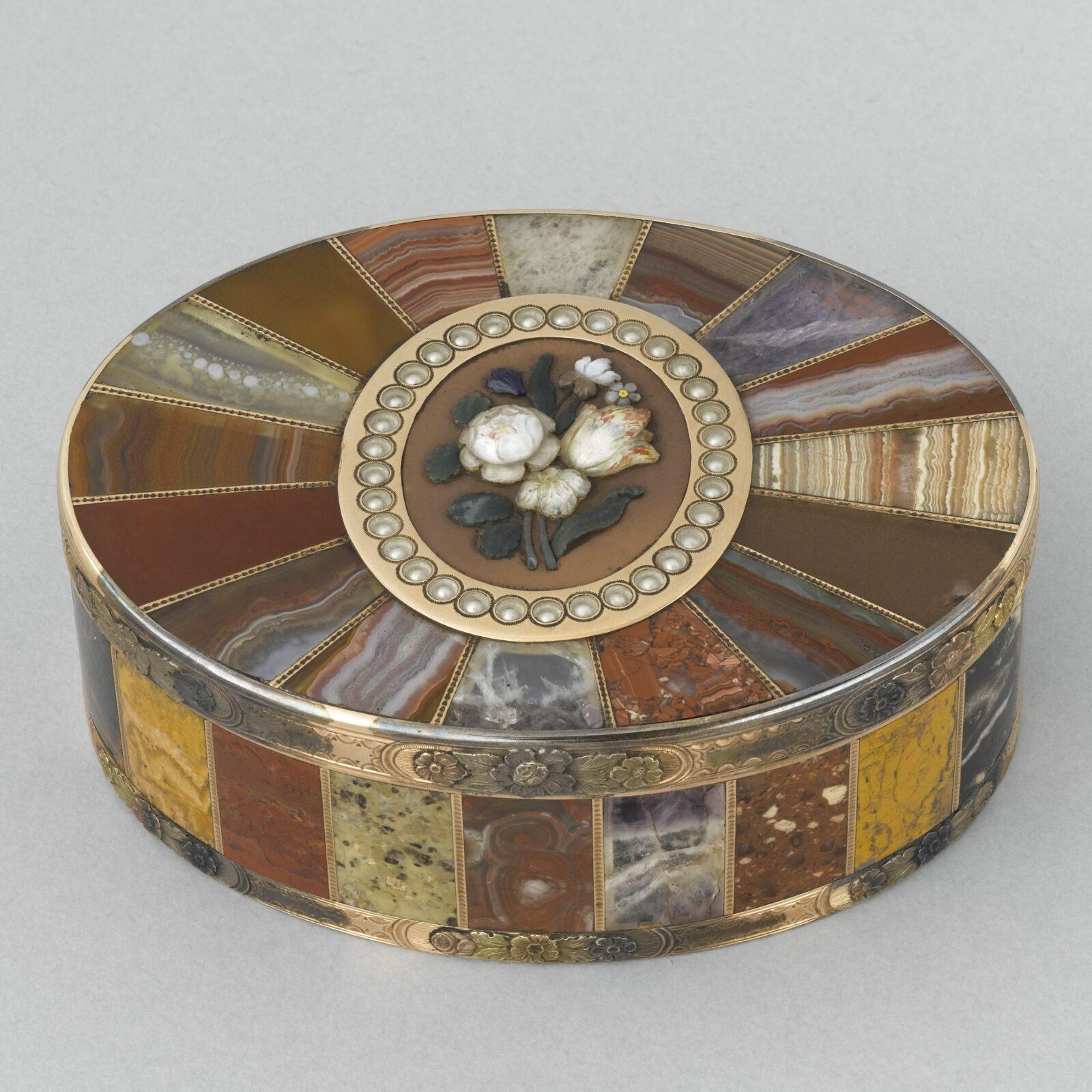
Johann Christian Neuber
Decorated in this way, labeled with numbers and accompanied by an explanatory booklet, the Neuber tabatiers became veritable small cabinets of mineralogy. Scientists and scholars collected them with passion. Twelve «Steinkabinett Tabatiers» can be seen in the new rooms of the Louvre, department of 18th-century art objects.
With the table by Teschen, Neuber created one of the very first masterpieces of Neoclassicism created in Germany.
The table is a masterpiece made with 128 samples of minerals. Calcedones, Jaspers, Amethysts, Quartzites, Cornalines… are all numbered. Cut into tiles or facets embedded in golden bronze of three colors mounted on a wooden frame.

To discover the names of these stones, a booklet accompanies the table. A compartment under the tabletop contains this manuscript, and one by one, the geological riches of Saxony are listed.

You have until January 31, 2015 to participate in this acquisition of symbolic, historical and artistic significance.
By participating in the purchase of this work of art and by becoming a patron of Louvre Museum, of History, Art and Stones.
If you wish to make a donation, visit the website www.tousmecenes.fr
Photos Table Teschen Credit Museum of the Louvre