




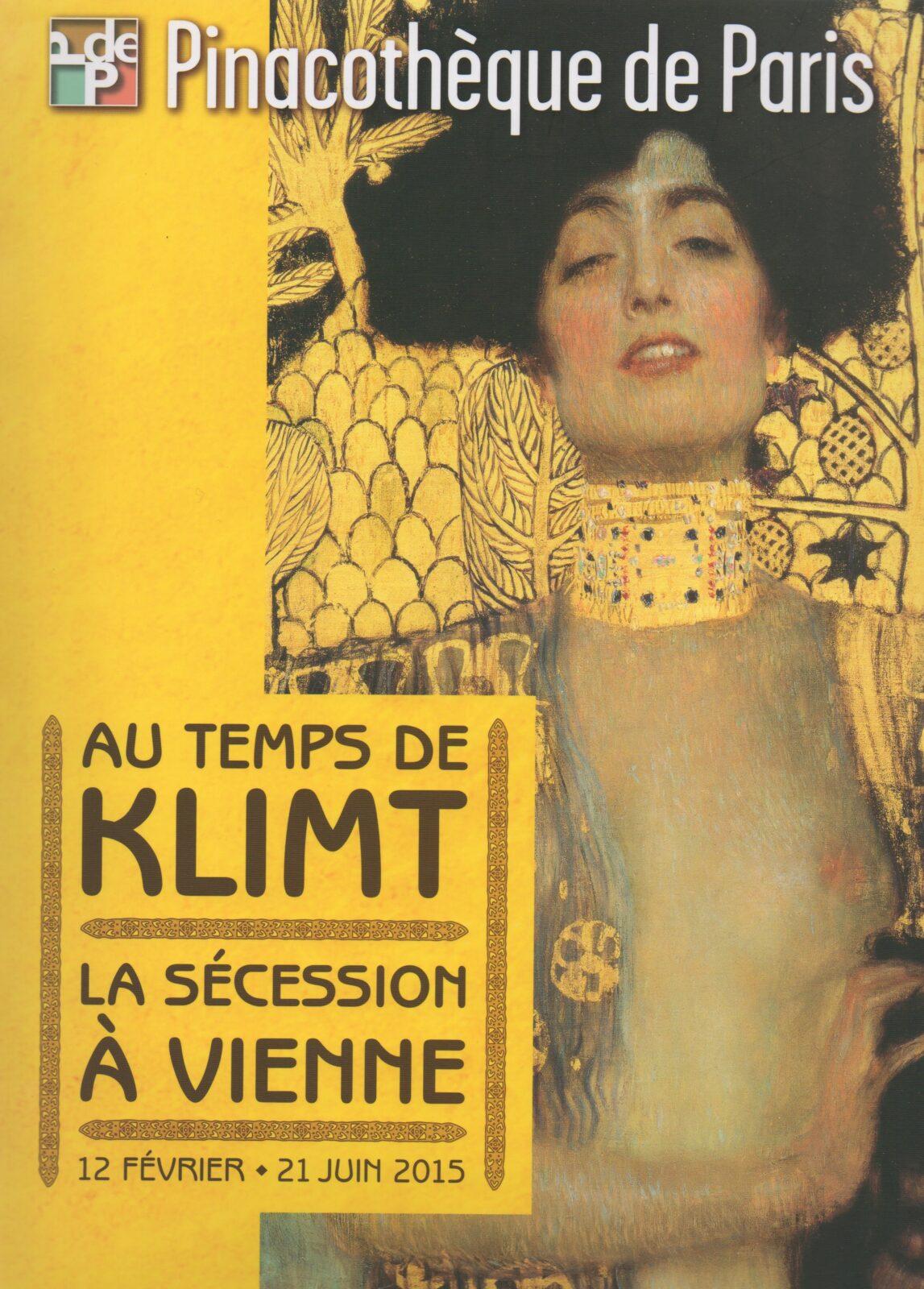
The exhibition «At the Time of Klimt: The Secession in Vienna» tells the story of Art Nouveau that developed in Vienna in the early 20th century, under the name of secession.
At that time, the city of Vienna was an important cultural center. Capital of an empire led by François-Joseph, Vienna is home to a mosaic of diverse languages and traditions. The economic context is flourishing; the aristocracy rooted in academia coexists with a more detached bourgeoisie that is then seeking to escape reality through art.

Symbolist ideas from France find favorable echo. The mysteries of the mind, explained by Sigmund Freud, inspire artists.
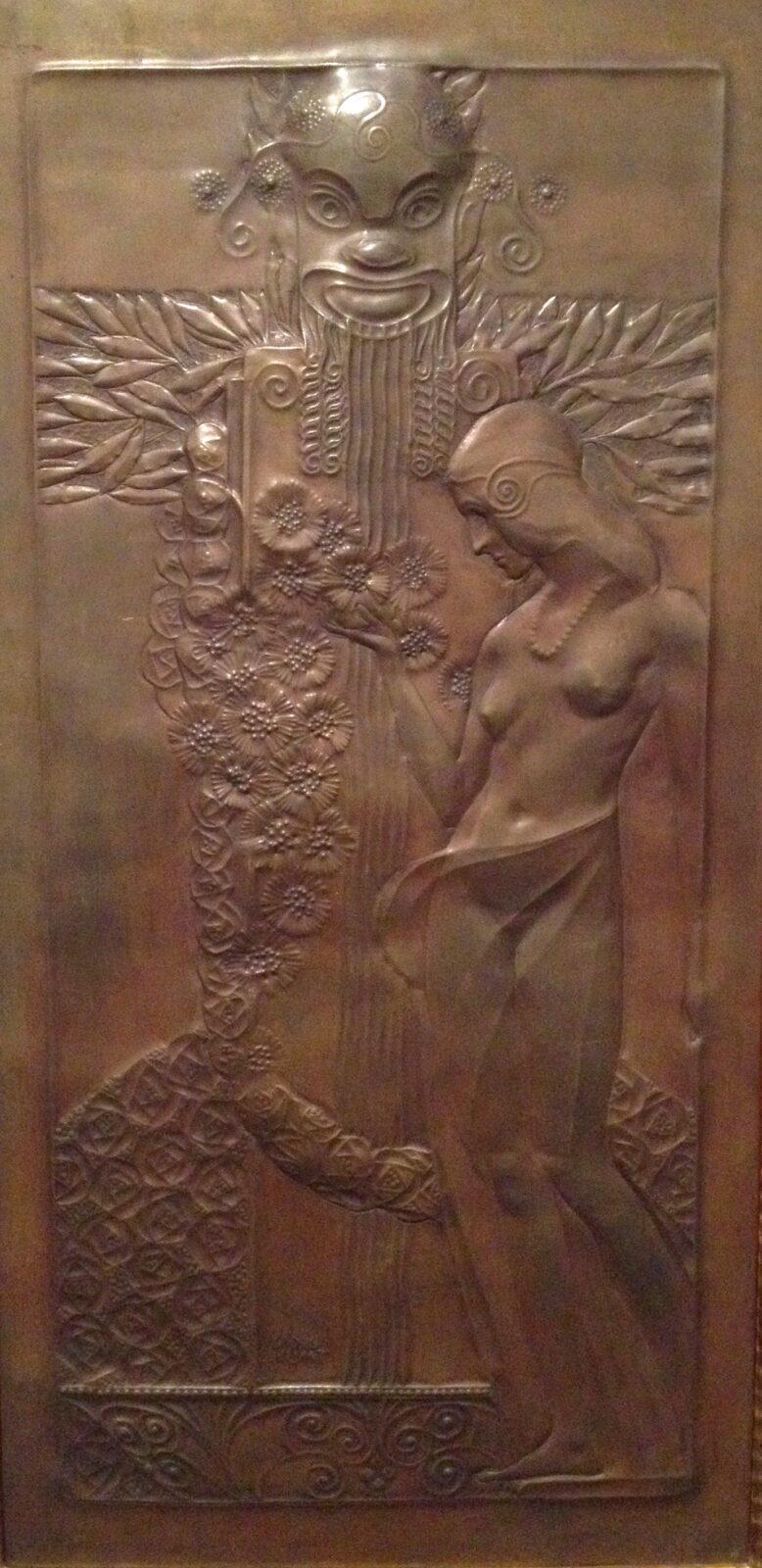
«Nymph and Satyr»
Copper
The myth of the femme fatale or that of the fragile woman is very widely presented. The feminine nature is a way of expressing one’s emotions.
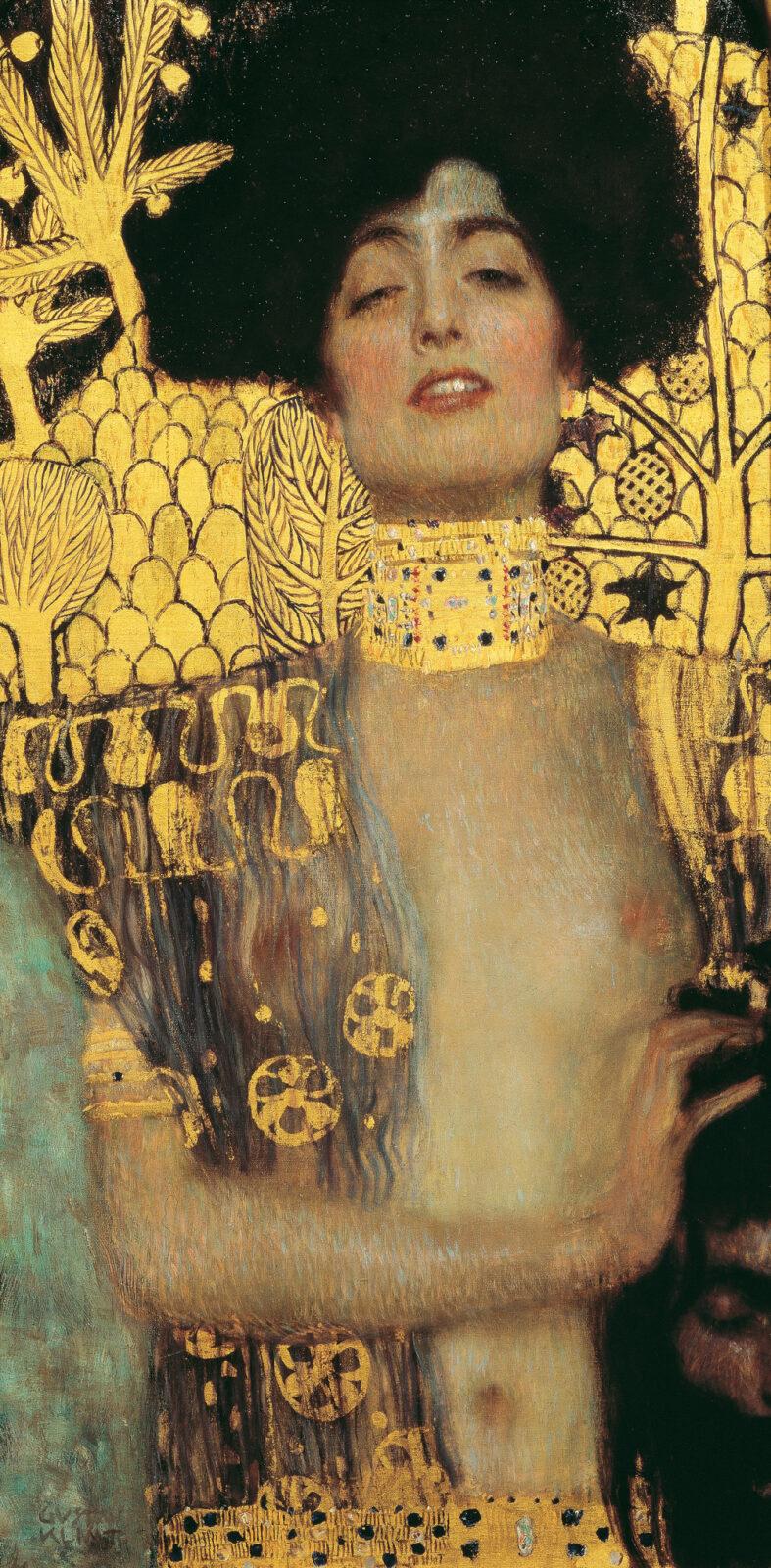
«Judith»
Credit agency Kalima
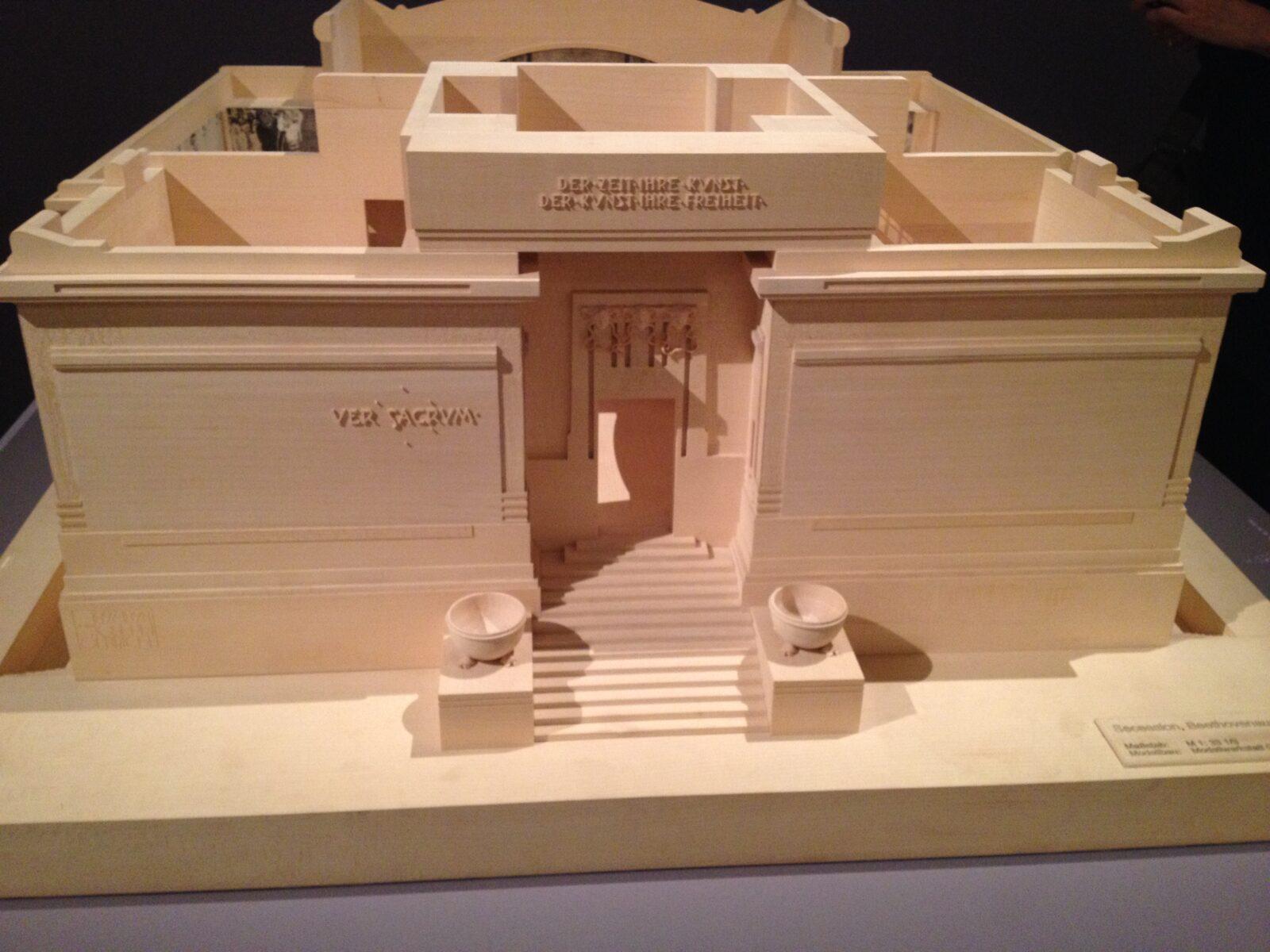
Gustav Klimt, the son of a Viennese goldsmith, began his work with an academic style, then moved away from the world of conservative painters at the end of the 19th century. He then founded «La Sécession» a new movement and also built «Le Palais de la Sécession» on its facade; the following motto can be read: «To every era its Art. To Art its Freedom.»
Its goal is to allow artistic creativity to express itself without hindrance and thus achieve total art, with the aim of creating the perfect work.
For an exhibition of the Secession, Gustav Klimt created in 1902 one of his best-known works, the «Beethoven frieze».
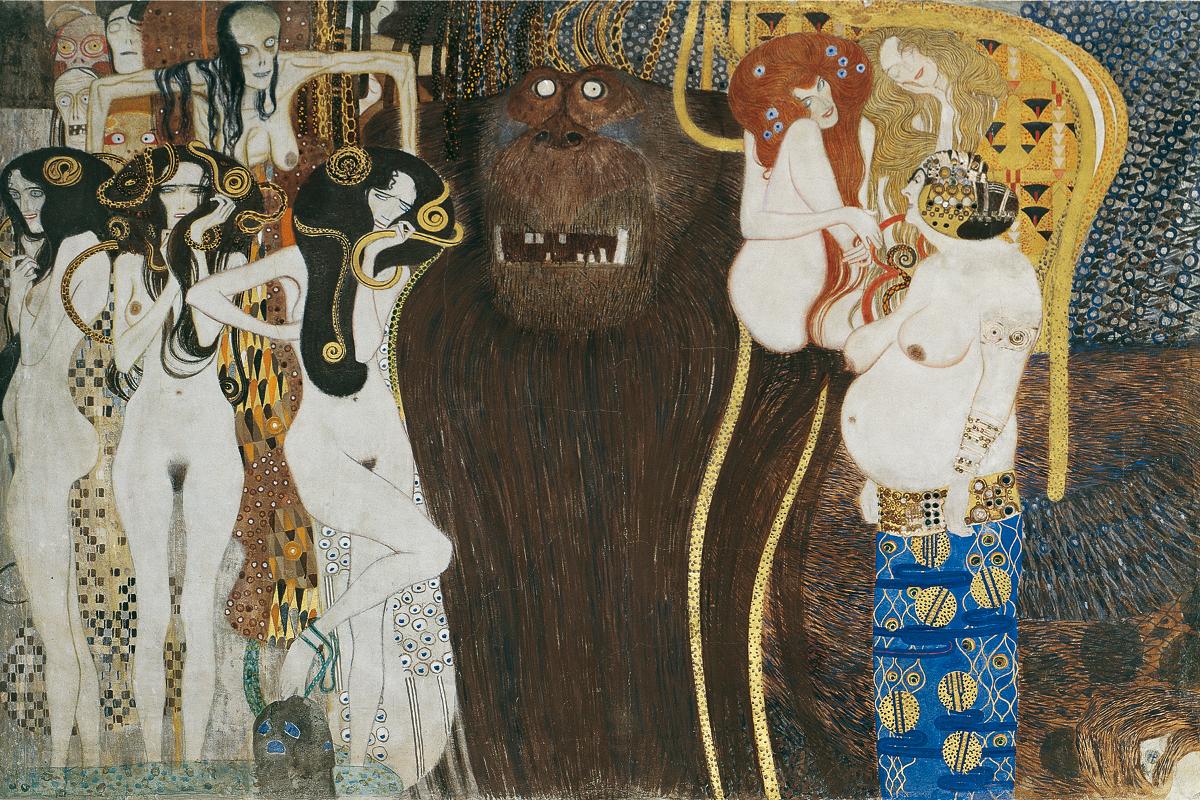

Beethoven's Frise

Beethoven's Frise
This monumental work, whose Pinacothèque presents a faithful reproduction (34 meters wide by 2 meters high), is a tribute to the music of Ludwig van Beethoven. Seven panels represent the «ninth symphony»; it represents the aspiration to happiness of humanity, which seeks its peace in the arts.
The contrast in style between the use of oil paint and the use of precious materials is striking.
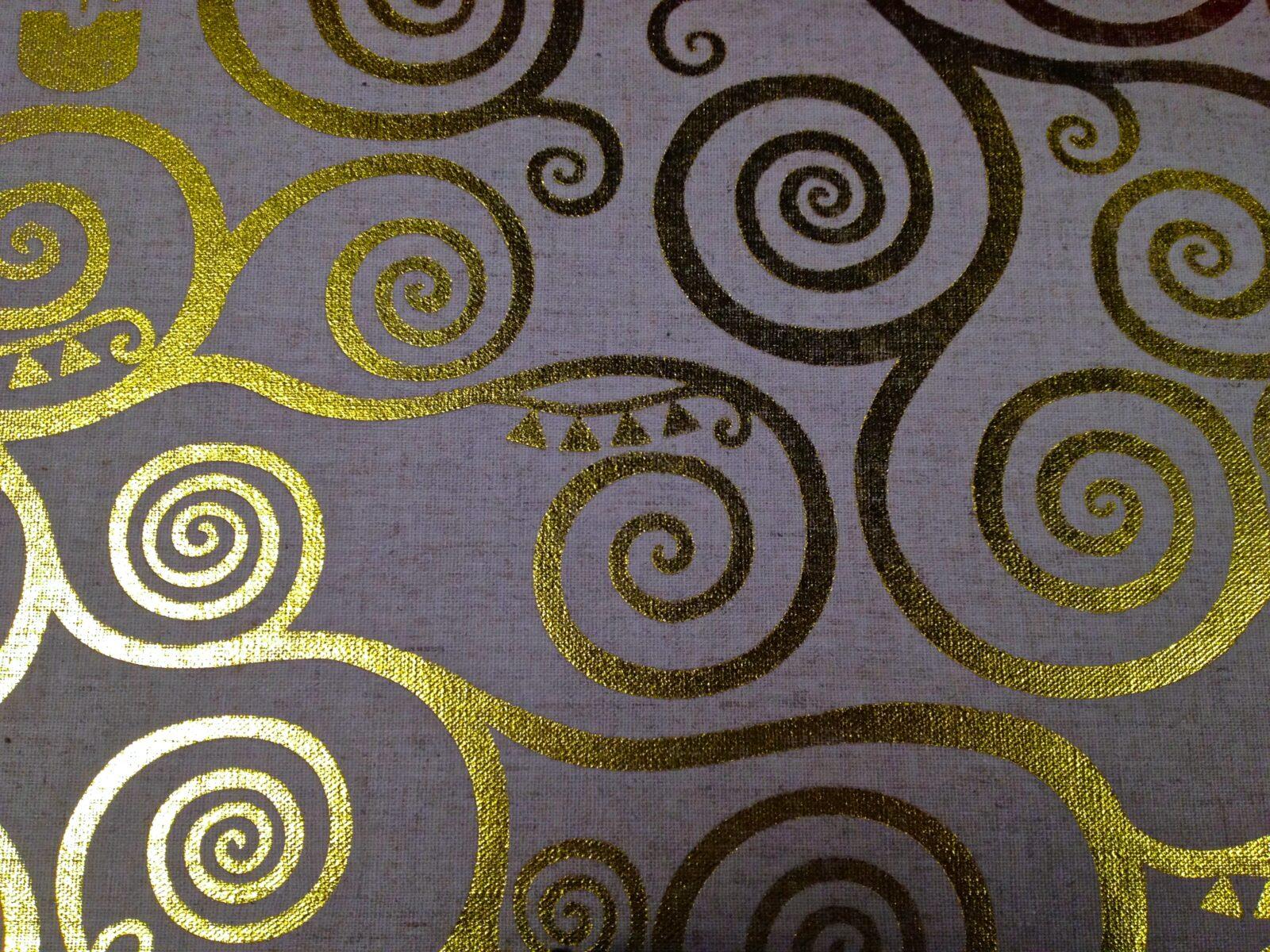
Thus, the application of gold leaf and the fine stones that adorn this frieze require artisanal and innovative work. The Beethoven frieze therefore blends painting, sculpture, architecture, jewelrymaking, and music.

Detail of the Beethoven Frise

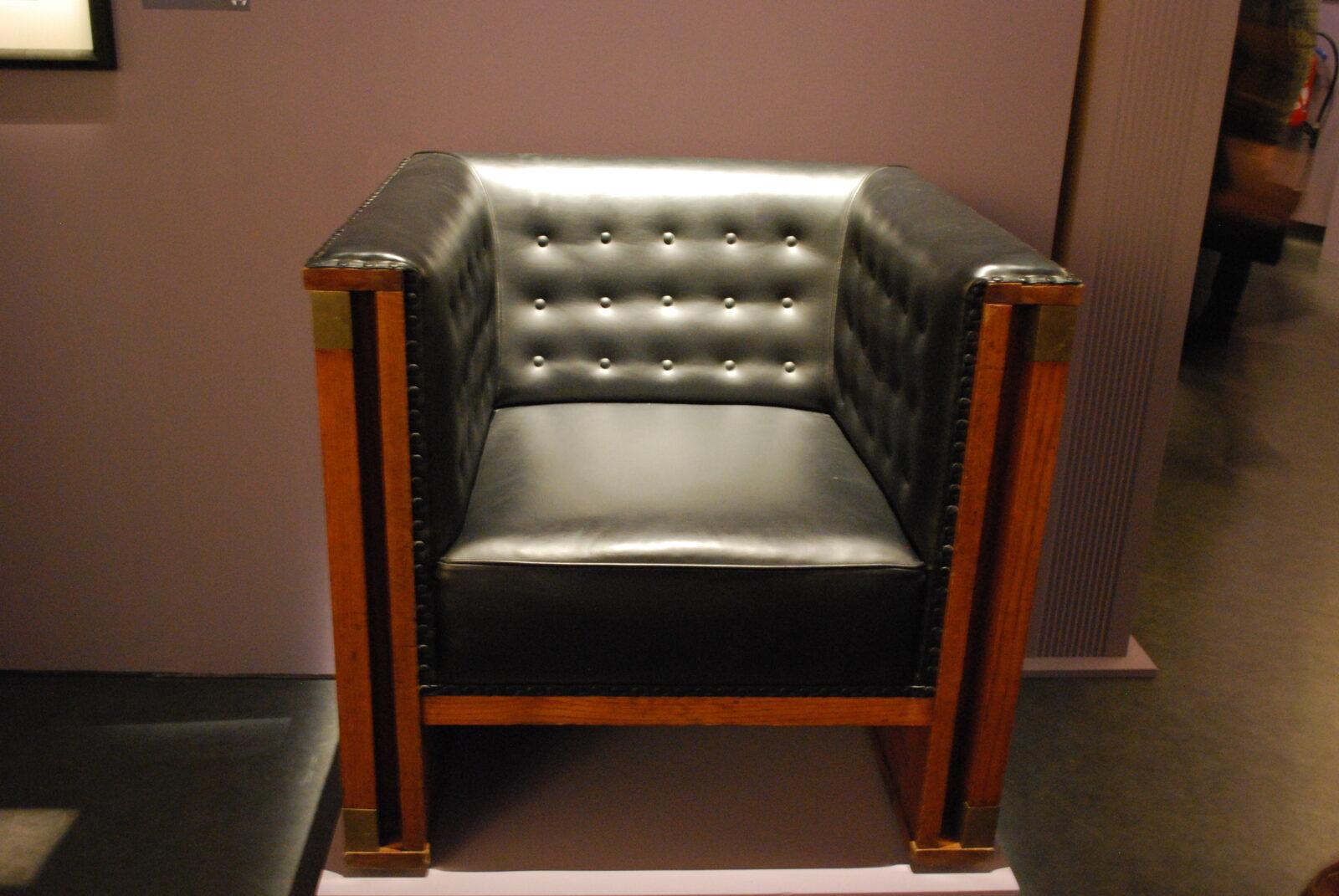
The secession style (Sezessionsstil) «Austrian Art Nouveau» is characterized by a geometric and rectilinear design.

Model of door relief, painted white wood.
1902
Witness to the evolution of the artists of the time, Viennese art gave birth to furniture pieces as well as «Jugendstil» jewelry.
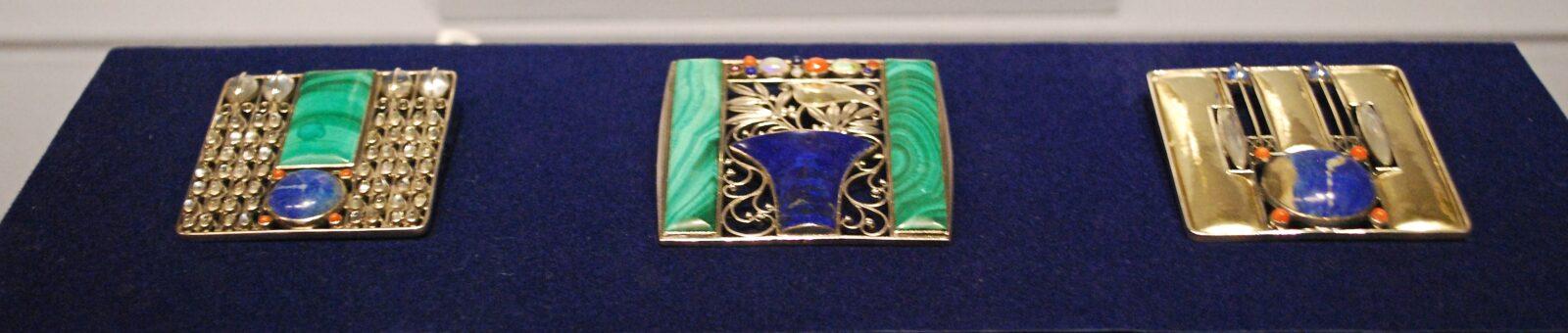
The «Jugendstil» can be seen in the rectilinear shapes, the jagged motifs of stylized plants, and the typical fine stones (Moonstone, Malachite, Lapis Lazuli, Opale…) in these brooches by Joseph Hoffmann.
Joseph Hoffmann is fascinated by Art Nouveau. This Viennese architect is drawn to the simplicity and geometry of this movement.
The joint work of Gustav Klimt and Joseph Hoffmann, notably at the Vienna Secession, paved the way for the revolution in modernism in the field of art. They were two pioneers of modern art in Vienna in 1900.

Silver brooch, Lapis Lazuli, Malachite and Coral. Around 1905
Credit Agency Kalima

Silver brooch, Moonstones, Coral, Turquoise, Amethysts, Sapphires and Opals.
Around 1905

Silver brooch, lapis lazuli, malachite, moonstone and coral. Circa 1909
Credit Agency Kalima

Gold and silver brooch, lapis lazuli, moonstone and coral. Circa 1905
Credit agency Kalima
The Pinacothèque de Paris, through the exhibition «At the Time of Klimt: Secession in Vienna», gives Art Nouveau another dimension, more rectilinear than the French Art Nouveau; the «Jungendstil» offers powerful vertical forms softened by the presence of stones.

Cover image of the guide for the Austrian section of the 1900 World Exhibition
Pinacothèque Paris
February 12 - June 21, 2015
www.pinacotheque.com

1910