






The myth of Cleopatra at the Pinacothèque in Paris

His name is one of the most famous in history; his beauty is legendary... Like Alexander the Great, Cleopatra belongs to the Ptolemaic dynasty.

Middle I century BC Marble
Cleopatra became queen of Egypt at the age of 18, a fragile woman, an intriguing character, a seductive and cunning woman who won over Julius Caesar and Marc Antoine. She reigned over a country with fabulous riches.


Isis-Fortuna
1st century BC.
Of Greek culture, this pharaoh’s wife reigned from Alexandria, the city of wonders. According to the description of the Latin poet Lucian, the palace of Alexandria shone with gold and was adorned with agate and porphyry slabs, ivory, tortoise shell, and inlaid with emeralds. The beds were adorned with carvings, and the royal banquets shone with gold dishes strewn with gems.

2nd-1st century BC.
Credit Agency Kalima

Second half of the 1st century BC.
Credit Agency Kalima
It is thanks to the blending of Hellenistic and Egyptian knowledge that the arts develop with great grace and elegance.

A life like the Gods, where everything is done for beauty!

Or, Garnets and Emeralds
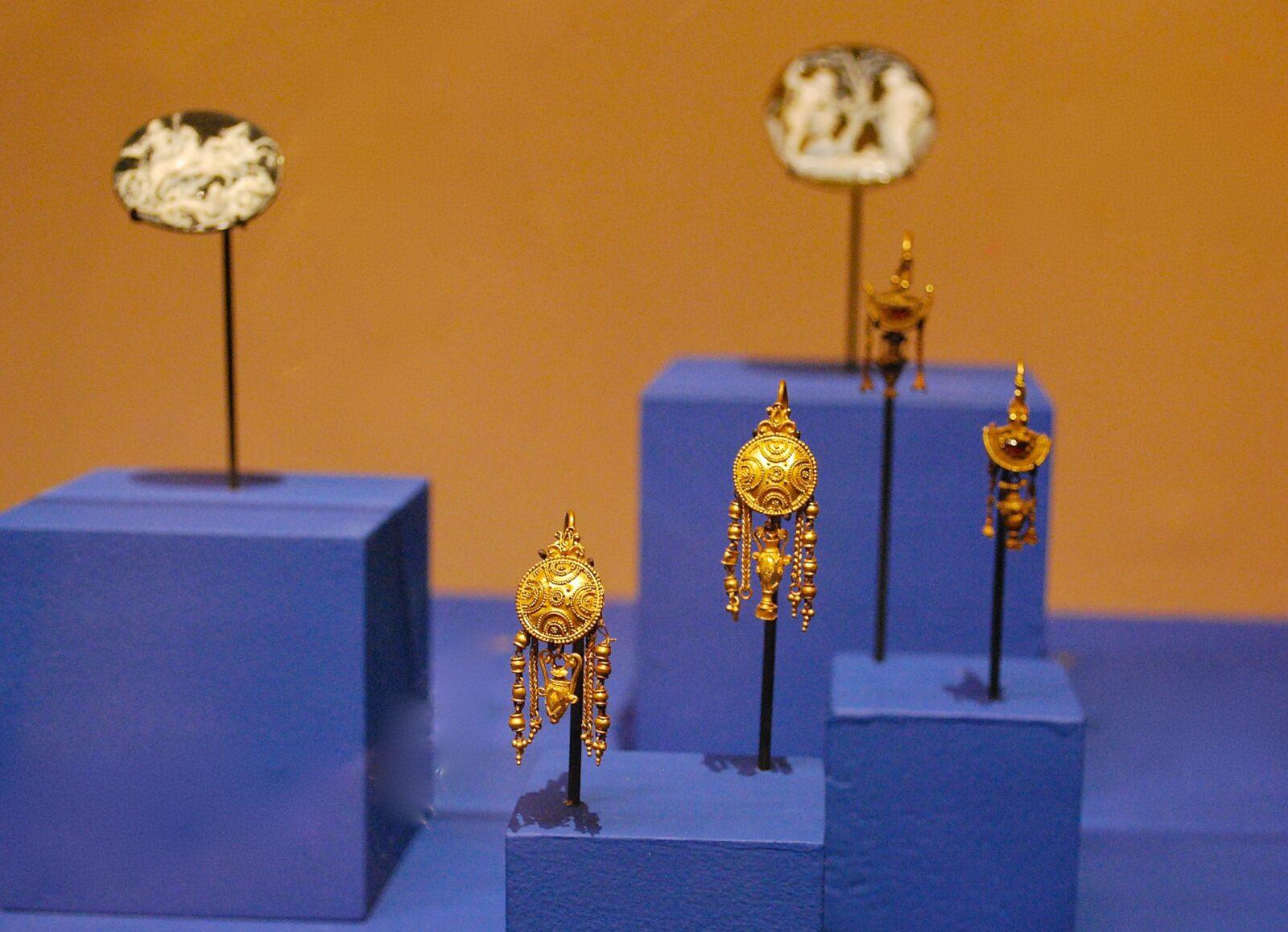
The most precious materials are used:
Marble, granite, basalt and slate for the statues. Marble mosaics, polychrome glass paste for the furniture.

And Gold, Silver, Gemstones, Precious and Ornamental for Jewelry. Objects of seduction and protective amulets.


2nd century BC.
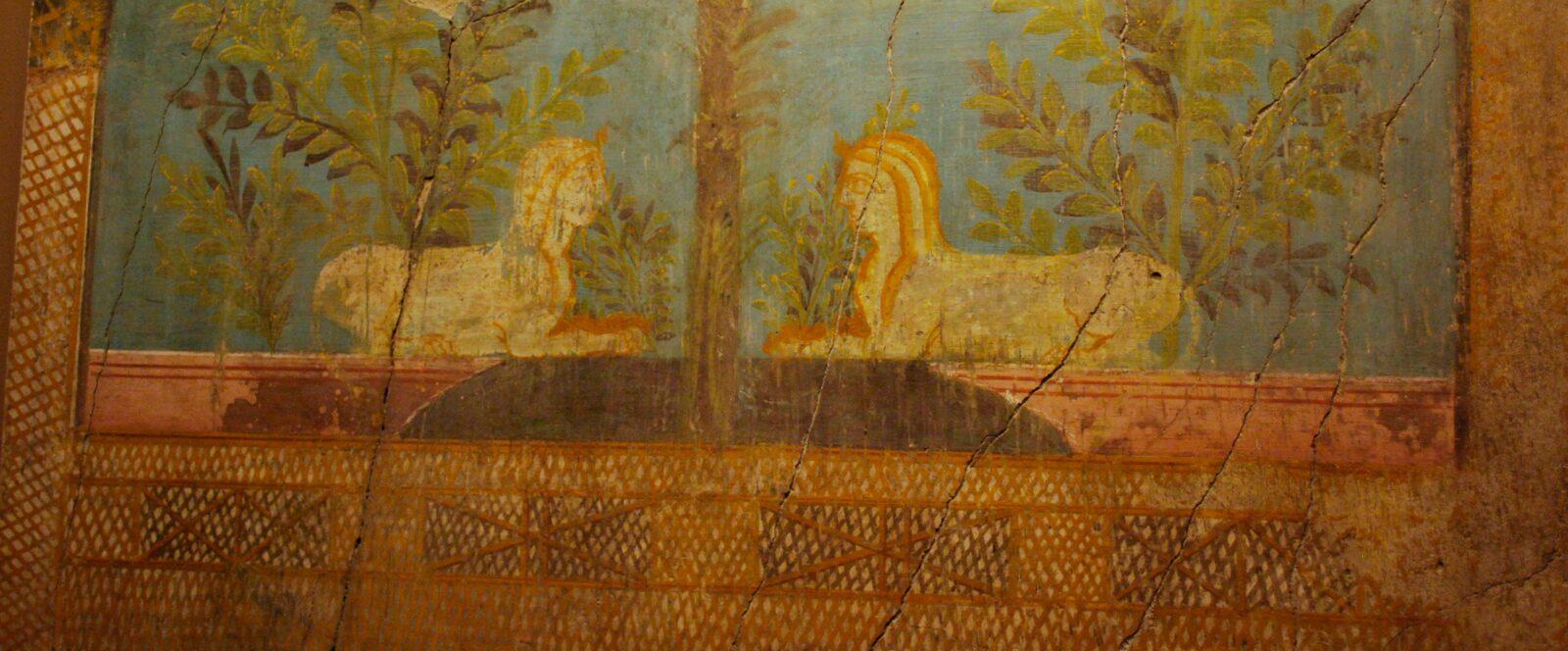
In this opulence and luxury, fascination with Egypt is growing in the Roman world. This Egyptian inspiration can be found in many jewels. The symbols of snakes, scarabs, sphinxes… bear witness to this fascination.
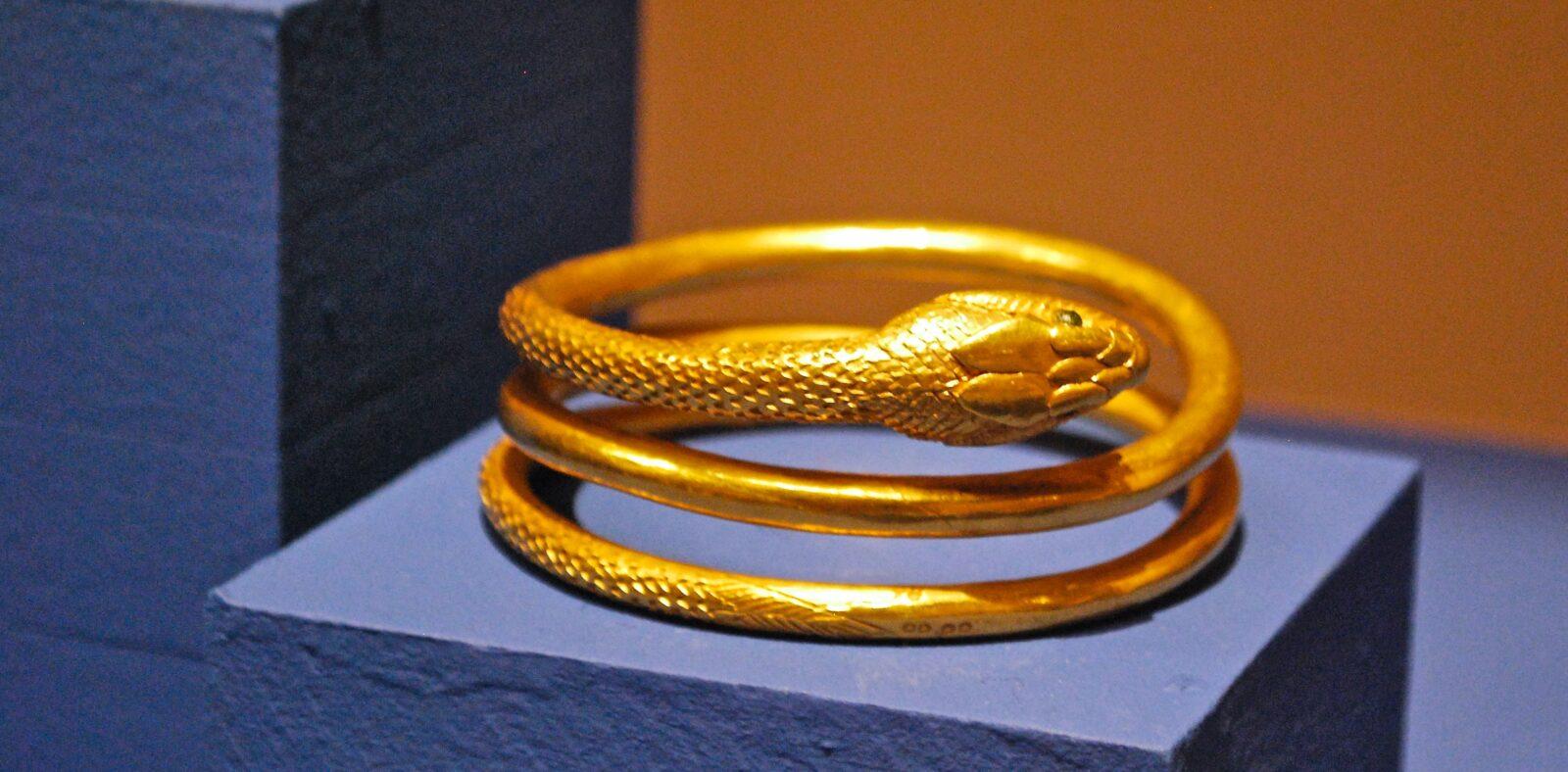
The snake, a symbol of fertility and immortality, was widespread in ancient Egypt.

2nd-1st century BC.
Gold and glass powder
1st century BC–1st century AD.

Bracelet in the shape of a Snake in Gold

Or and Green Glass Paté

2nd century BC – 1st century BC.

Middle 1st century BC–1st century AD.
The art of engraving on stones, glyptography, is developing rapidly and one can appreciate both intaglios (engraving on hard or fine stone in relief that can be used as a seal or mark) and cames (engraving used on stones that have layers and thus reveal different colors in relief).


Cameo

Hellenistic era
18th-century frame in gold and enamel

27 BC.
Sardine in 3 layers
Modern frame (17th century) in gold, enamel and pearl.
Credit Agency Kalima
Cleopatra, a legendary woman, continues to transport us to the beautiful.

Calcédoines, Jaspes and Glass Beads
The Pinacothèque de Paris succeeded in organizing this exhibition; we know more about Cleopatra without losing her myth; the legend continues.

Around 50-30 BC.
Basalte
Pinacothèque de Paris
April 10 - September 7, 2014

Many thanks to Claire Caminati from the Kalima agency .
www.pinacotheque.com