



Esprit Joaillerie invites you to discover Dali Bijoux.
First of all, you have to go to Figueras, in Spain, to the Dalí Museum Theatre to admire this collection of jewels created by Salvador Dalí between 1941 and 1970.

To better understand the role and functioning of this unique place, here is a brief presentation of the Fundació Gala-Salvador Dalí Foundation, which manages the artist’s material and intangible heritage.
It should be noted that the Fundació Gala-Salvador Dalí was created by the will of Salvador Dalí in 1983. Its mission is to promote, popularize, disseminate, and defend his artistic, cultural, and intellectual work. This foundation also protects its assets and rights worldwide. It is a private, non-profit foundation with a global mission and a completely independent management. Moreover, it is oriented towards effectiveness, which allows it to self-finance. Namely, Dali presided over and directed it until his death in 1989.
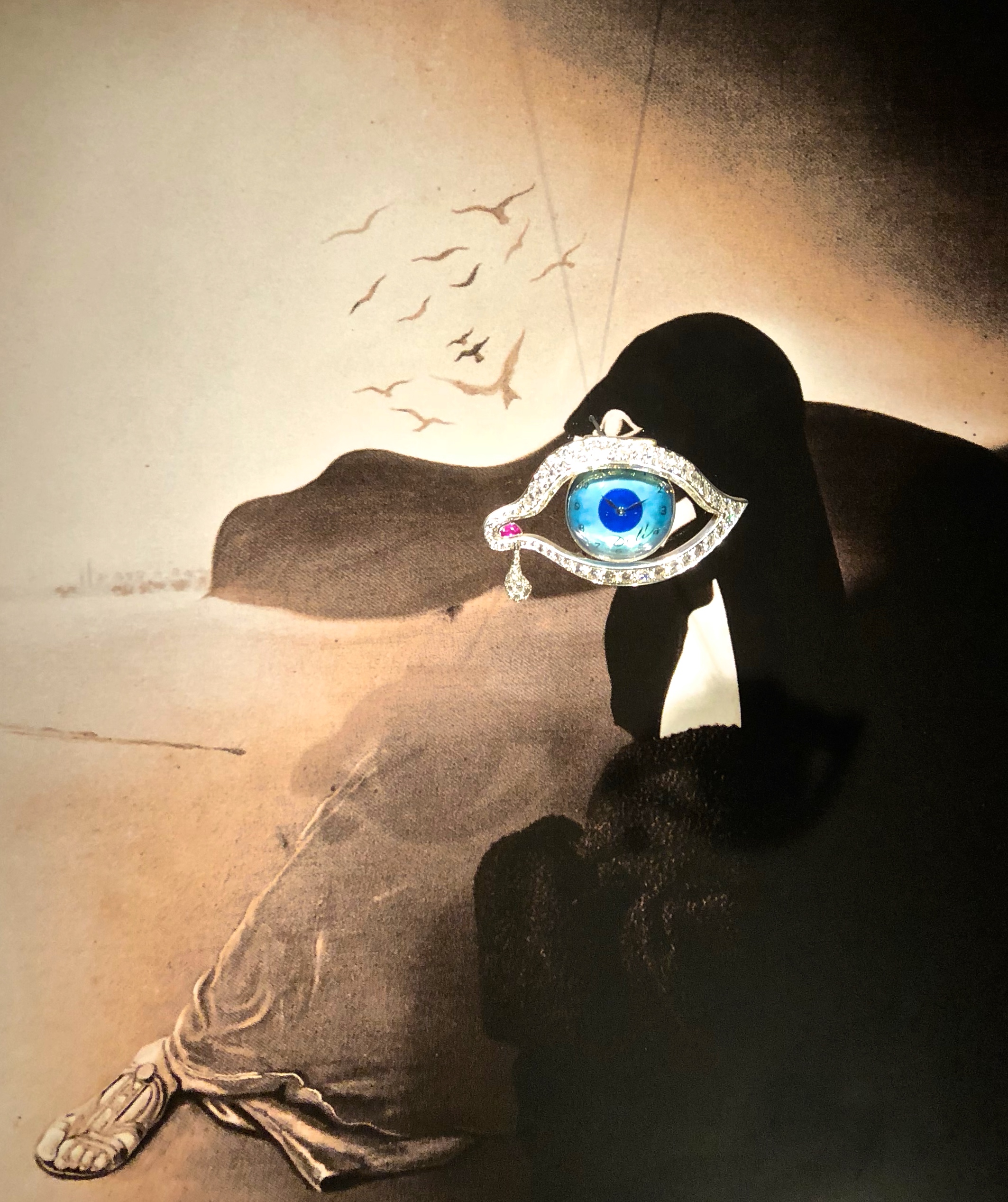
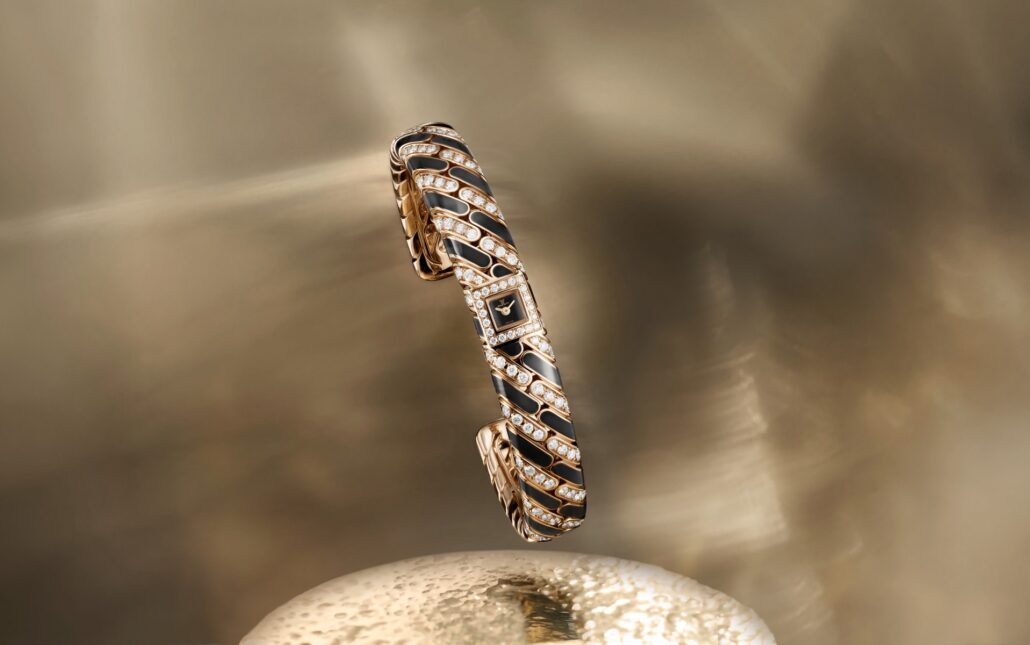
Platinum, Ruby, Diamonds, Enamel, Movado Movement Clock. 1949.
© Ejcw / Hoang Nguyen
More precisely, there are three museum spaces that are managed by the Foundation, acting as a driving force for innovative tourist and cultural activity. These places are the Dali Theatre-Museum, the Salvador Dali Museum House, and the Gala Dali Castle. It forms the Dalinian triangle. This Dalinian Triangle is the geometric figure that would appear on a map of Catalonia if we drew a line between the towns of Puolbo, Portlligat and Figueres. Thus, these three locations explain the trajectory of the internationally renowned artist but are completely connected to his territory. It is worth noting that this space is concentrated on a territory of barely 40 km². This triangle allows us to get a better understanding of Salvador Dalí’s work and life. A universe made up of museums, landscapes, light, architecture, customs and legends.
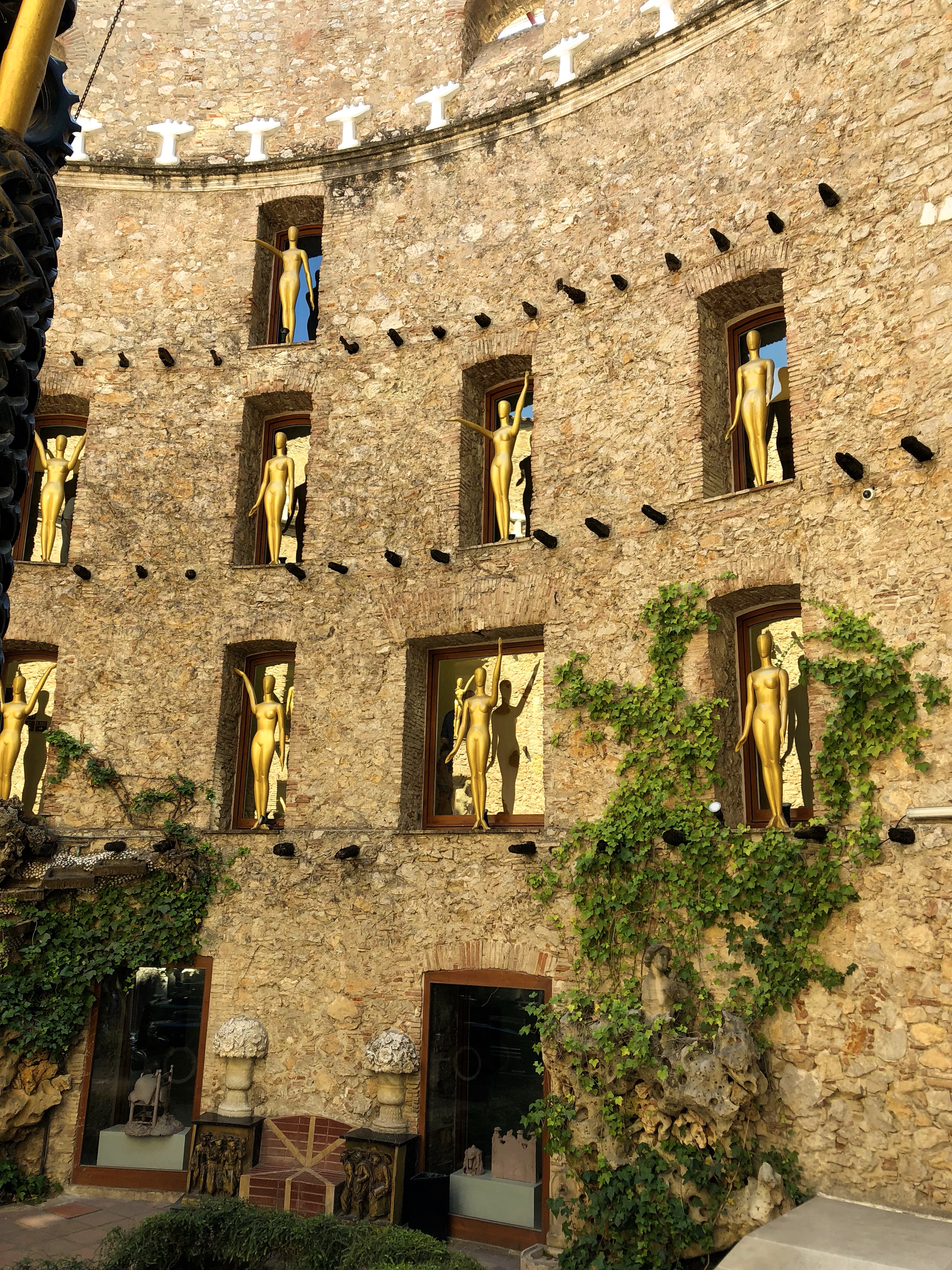
Specifically, the jewelry collection is located in the Dali Theatre Museum. It is a theatrical and fanciful place where the visitor enters another universe, that of surrealism. It is one of the most visited museums in the Spanish territory. Formerly a municipal theater, its construction dates back to the 19th century. It was burned down in 1939 and was transformed into a Theatre Museum based on the criteria and design of the painter himself. This ensemble forms a unique artistic object in which each element is an inseparable part of the whole, a creation of the artist that remains as he conceived it.
In this context, in 1999 the Dali Foundation acquired the jewelry collection that had belonged to the American foundation Owen-Cheatham. It should be noted that this collection was not unknown to the public, since it had already been exhibited at the Dali Theatre Museum during the months of August and September 1973. Therefore, when the artist was alive and a year before the opening of the Museum to promote its opening.
Later in 2001 this space opened to the public. For Salvador Dali, the spectator plays an important role: «Without an audience, without the presence of spectators, these jewels would not fulfill the function for which they were created. The spectator, consequently, becomes the final artist. His vision, his heart, his mind (fusioned and capturing with more or less understanding the intention of the creator) give them life.»
From then on, the jewelry collection consists of 37 pieces of gold and precious stones and 27 preparatory drawings and paintings on paper that the artist had created between the years 1941 and 1970.
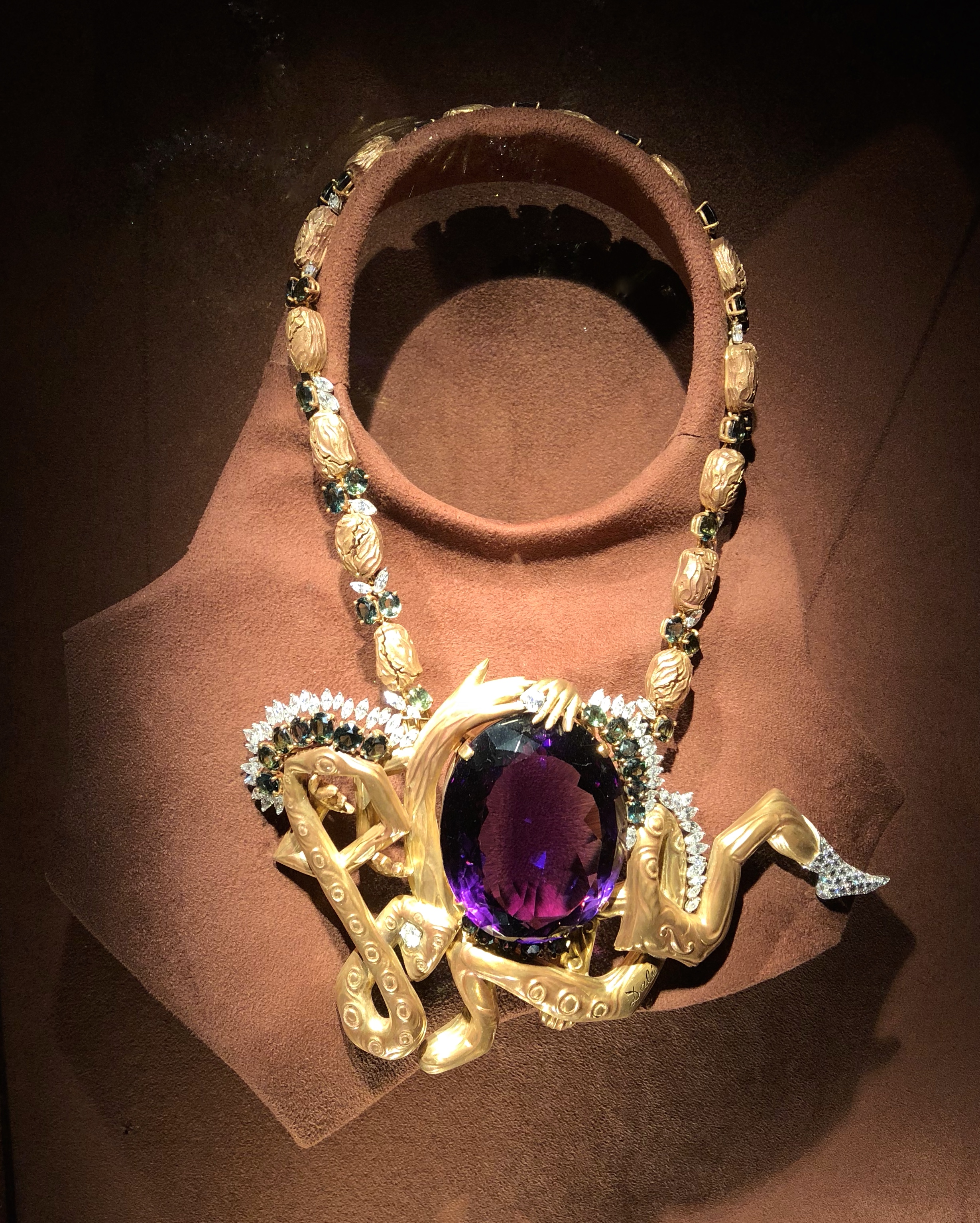
Or, Amethysts, Green Sapphires, Diamonds. 1964.
© Ejcw / Hoang Nguyen
Here is a short selection of jewelry, to delight us with its beauty, uplift our spirits, and expand our imagination.
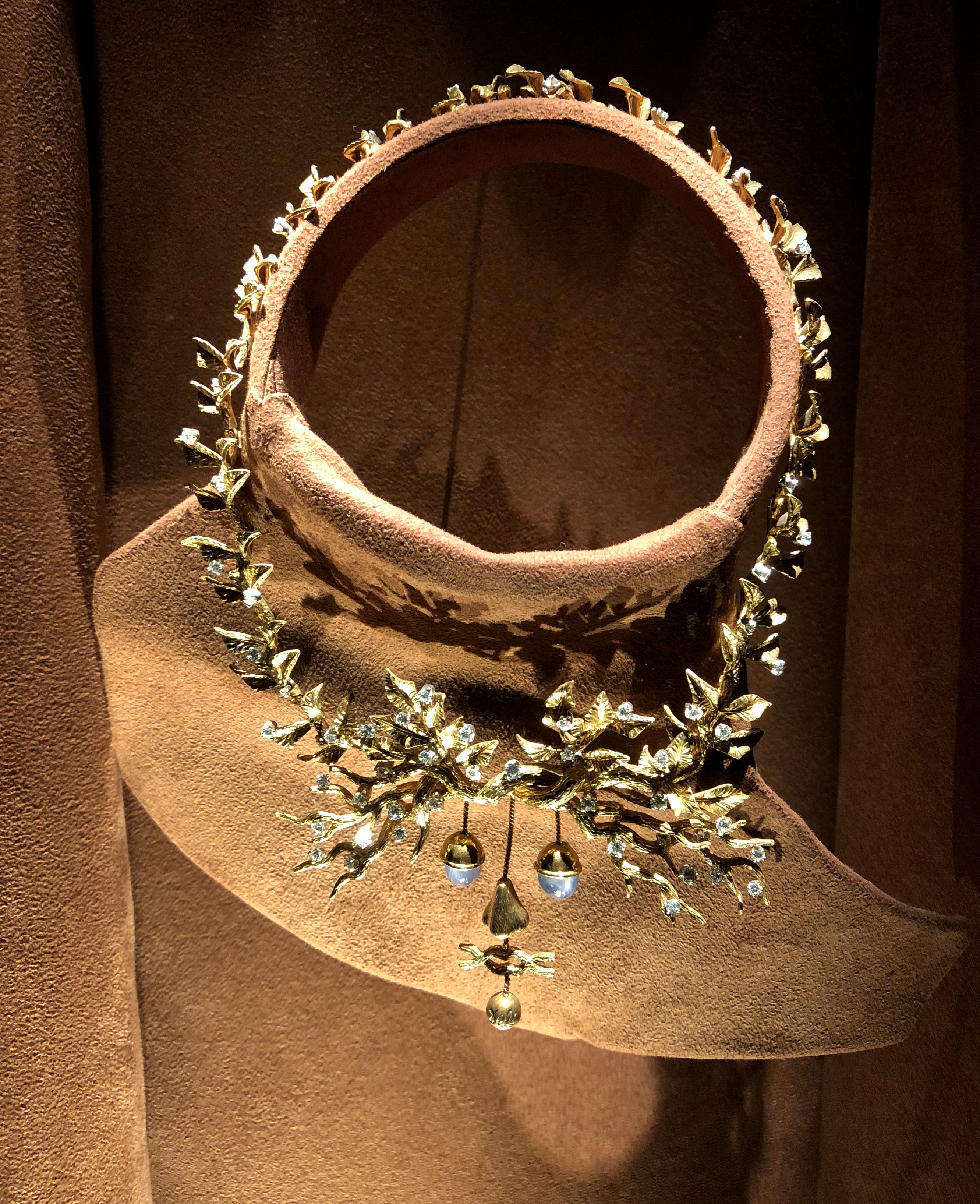
Or, Diamants, Saphir Etoilé.1949.
© Esprit Joaillerie / Hoang Nguyen
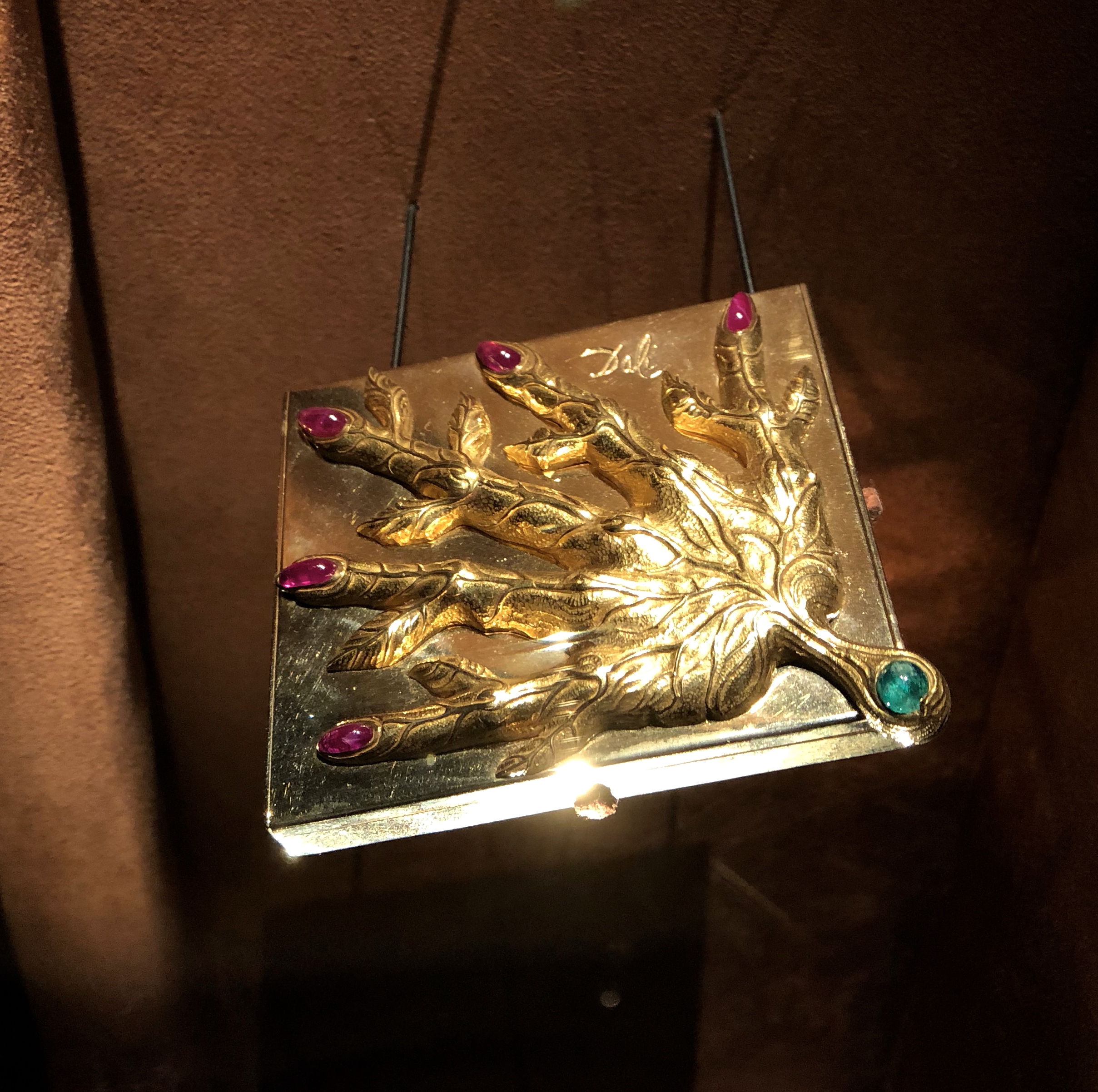
Or, Emerald, Ruby. 1953.
© Esprit Joaillerie / Hoang Nguyen
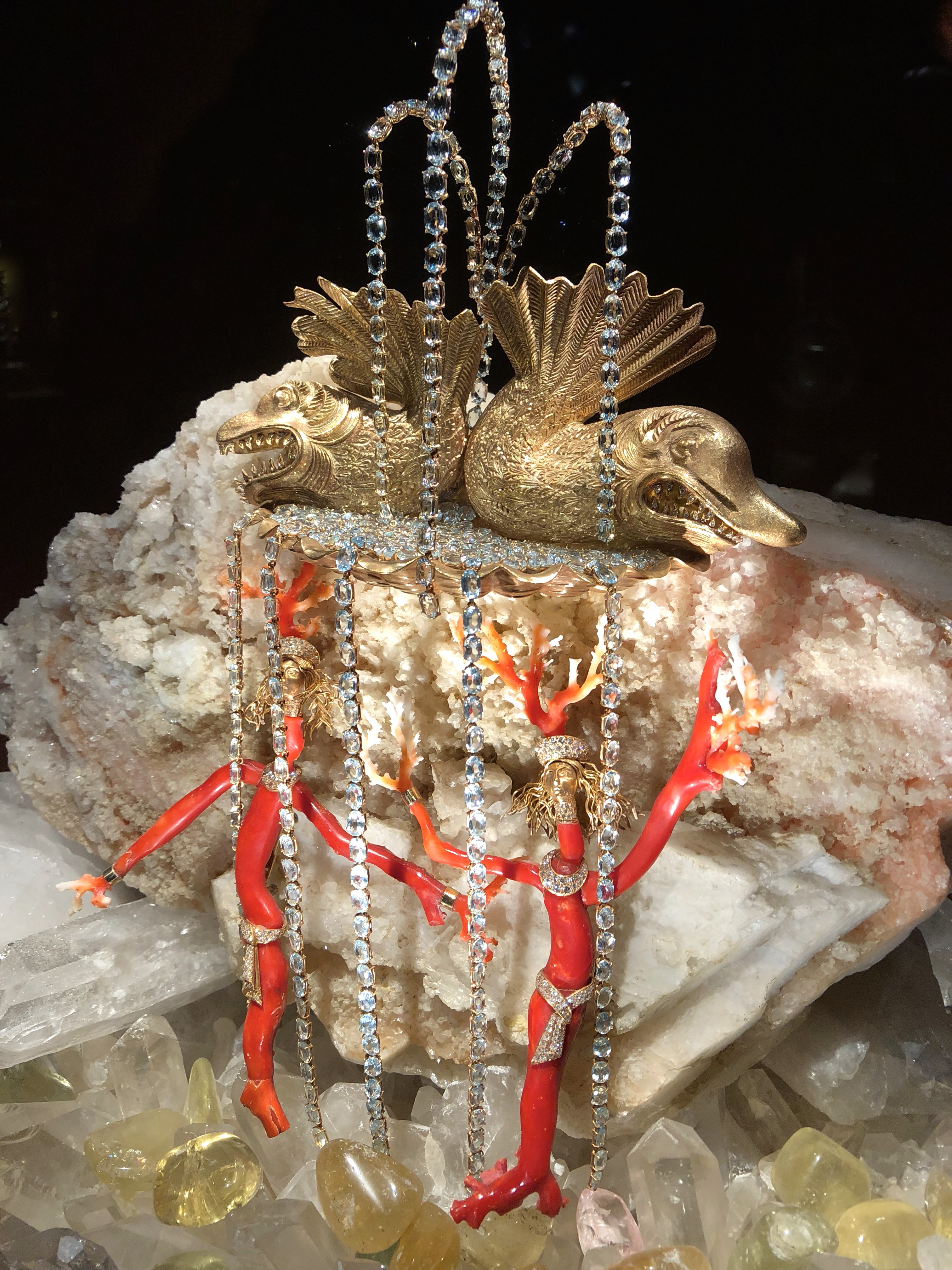
Or, Aigue-marines, Red Coral, Diamonds, Calcite, Rock Crystal, Beryl. 1969.
© Esprit Joaillerie / Hoang Nguyen
To conclude, the visit to this exhibition is a real spectacle. Each jewel designed by Dalí is a theatrical staging. This fascinating place is cLike the last great achievement of Salvador Dalí, it was all designed and conceived by the artist, whose concern was to offer the visitor an immersion in his unique world.
Fundacío Gala-Savador Dalí
5, Place Gala-Salvador Dalí
17600 Figueres
Catalonia Spain