




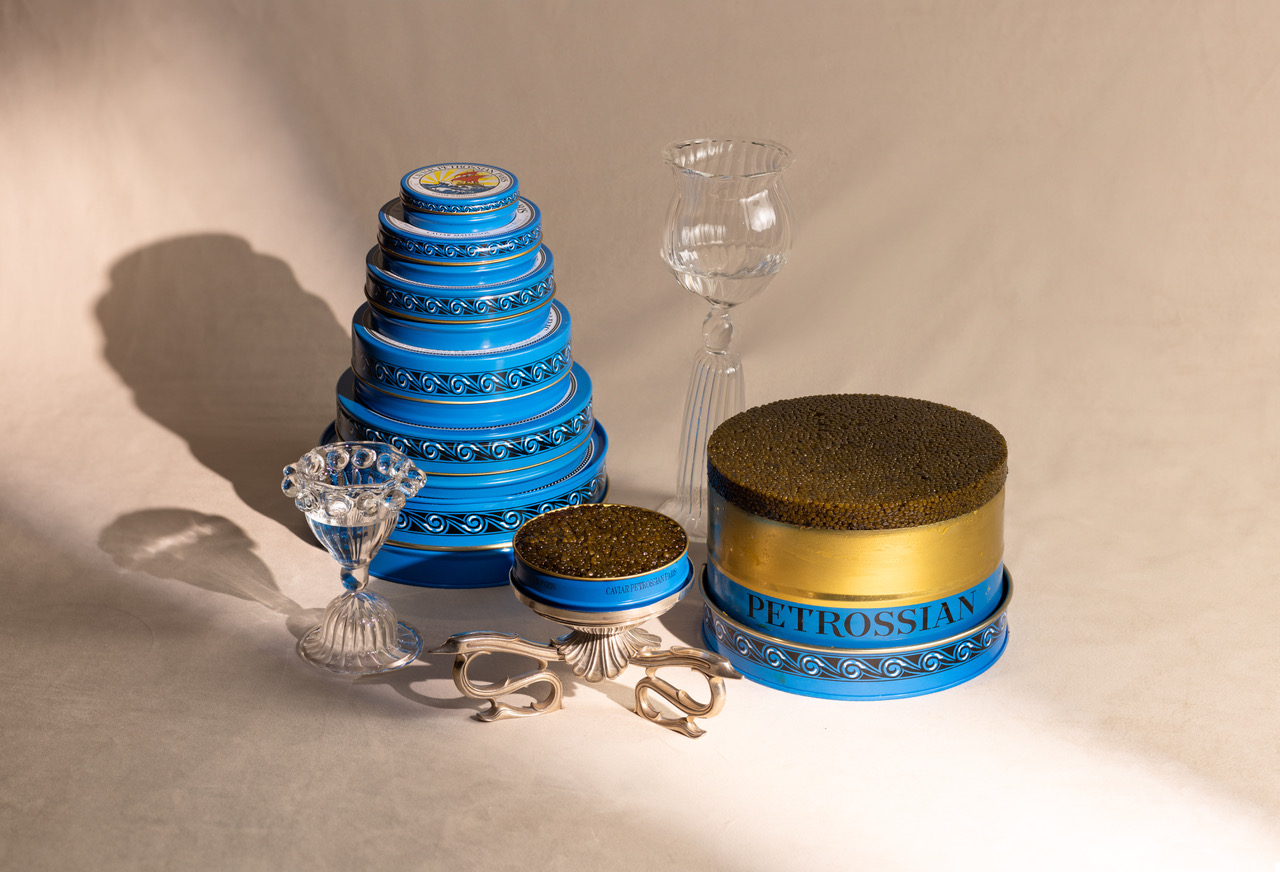
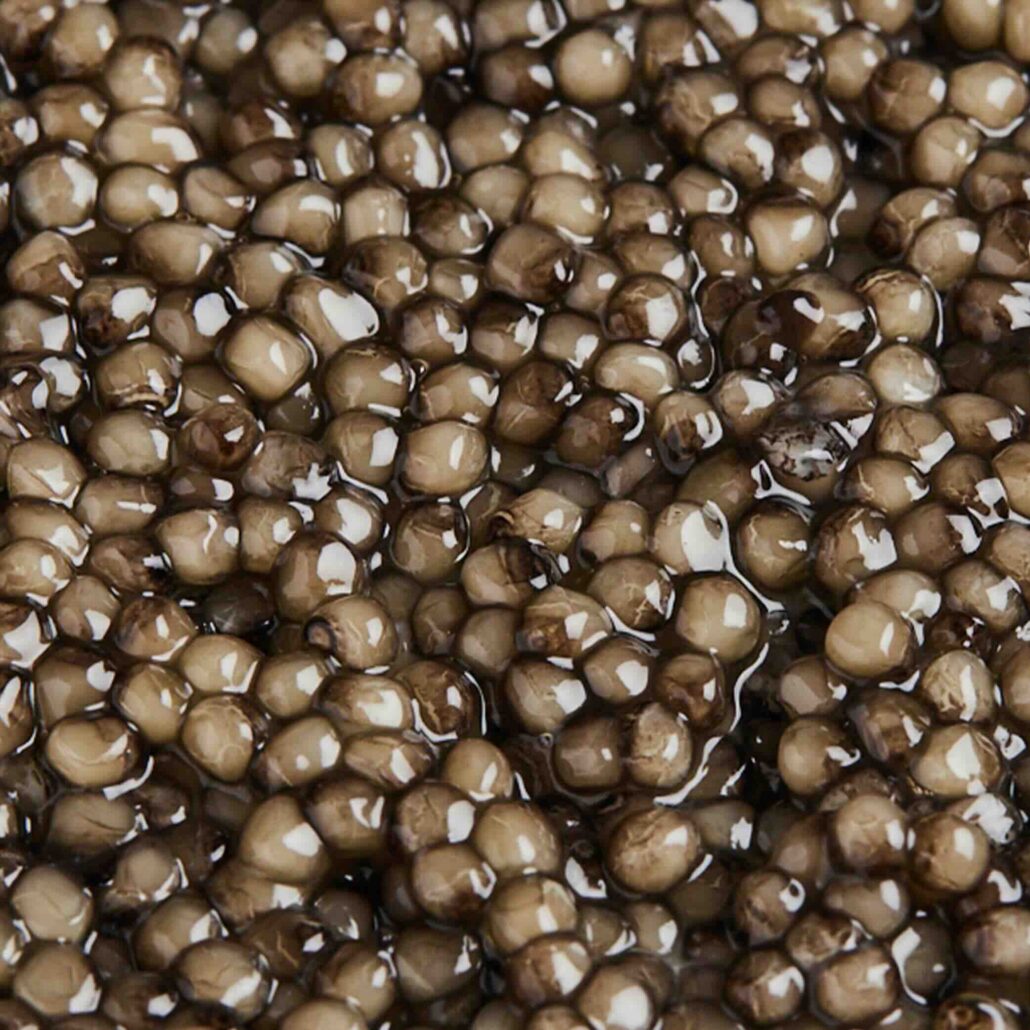
As the festive season approaches, caviar reclaims its place of honor. Dark pearls in a gold-rimmed case, its grains have the quiet brilliance of the finest jewels. Yet what we taste, in the end, is time: that of the breeders, the expert palates and the cellars where each batch matures, away from prying eyes. A guided tour of a goldsmith’s craft, in Paris.
Petrossian, a Parisian House Born in 1920
It was in Paris, in 1920, that the brothers Melkoum and Mouchegh Petrossian, of Armenian descent, laid the foundation stone of their house. Caviar selectors and fine grocers, they would gradually make it their signature. The following century demanded the ability to reinvent oneself: smoked salmon from 1935, then truffle, and above all a profound shift in the industry, from wild caviar to farmed caviar. In 1994, Armen Petrossian took the helm as the resource was collapsing and bet on responsible farming; since 2010, his sons Alexandre and Mikaël have carried this legacy forward.
The common thread has never wavered: here, a great caviar cannot be improvised; it is handed down.
© Petrossian
The Caviarologist, a Goldsmith’s Craft
In the kitchen, we know the sommelier; in the world of caviar, there is the caviarologist. A specialty so rare that only a few dozen people around the world share it. At Petrossian, training is long, tasting after tasting, through exchanges with producers.
Their scope is broad. The caviarologist oversees the partner farms and ensures the quality of the raw material, from the way the sturgeon are raised and fished to the handling of the egg sacs, the roe. These are sieved, then salted with mine salt of a carefully chosen grain size. The fresh caviar is then tinned, the first stage of a long transformation.
Maturation: Six to Eight Months of Patience
This is where everything is decided. Freshly tinned, the caviar is salty but still shy aromatically. To let it blossom, the house entrusts it to its own cellars, in large 1.8 kg piston tins, where it rests for six to eight months.
These containers are only half airtight: a slow, perfectly controlled oxidation takes hold, gradually revealing the palette of aromas, like a great wine in its cellar. Every month, the caviarologists taste, judge maturity, and even strike the tins with a small hammer to listen to their resonance. Their quest: the perfect balance between flavors, aromas and salinity.
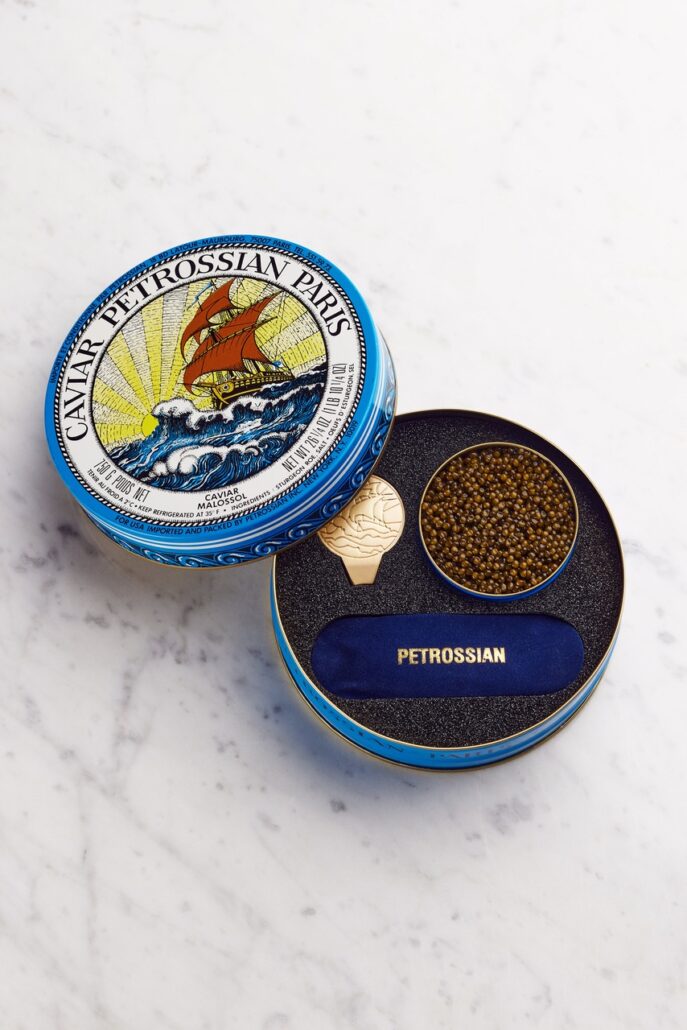
© Aimery Chemin
Their quest: the perfect balance between flavors, aromas and salinity. Since a single batch can yield very different results depending on the farm, the species or the season, the final selection identifies the distinct personality of each tin. This is why leading chefs, including Adeline Grattard, Anne-Sophie Pic, David Toutain and Emmanuel Renaut, have Petrossian compose a bespoke caviar for their tables.
Beluga, Ossetra, Daurenki: The Caviar Palette
Each species has its own temperament. To choose according to your guests and your menu
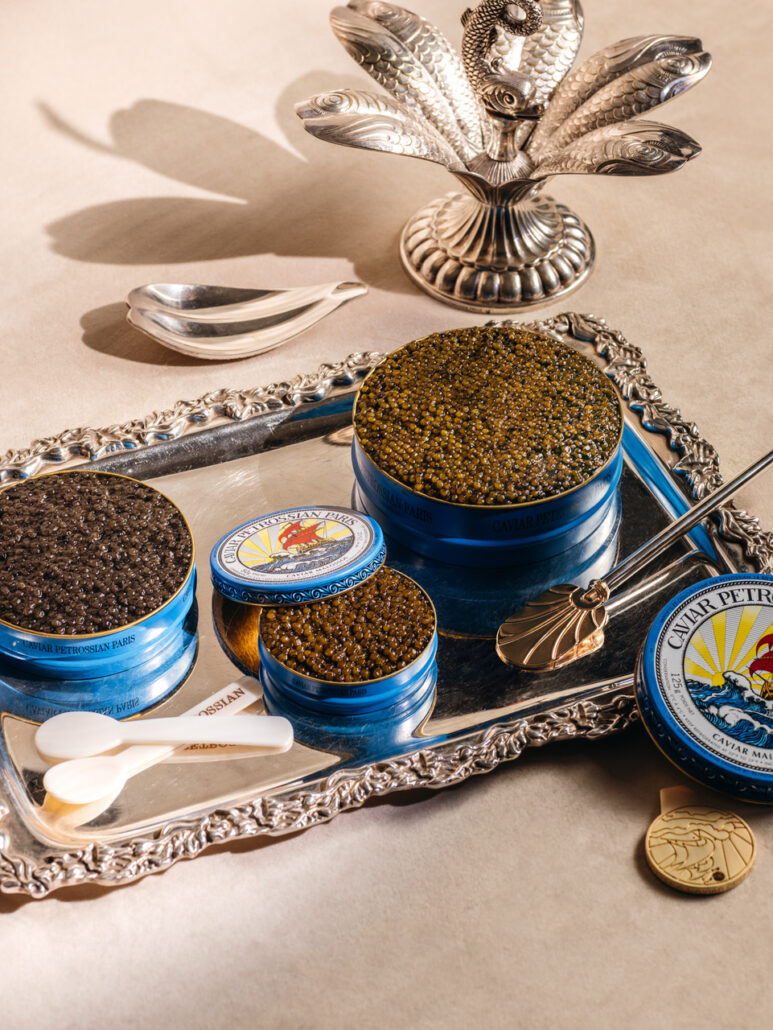
- Daurenki: grains with brown to golden hues and toasted notes. - Ossetra: a firm texture that turns melting, with floral and dried-fruit accents. - Baïka: a small, dark grain, lively and mineral. - Beluga: pale grey hues and a pronounced marine character. - Sevruga: a melting flesh with a powerful flavor. - Acipentris: a light grain with silvery reflections and a strongly marked briny finish.
Protecting the Sturgeon, Broadening the Palette
This savoir-faire does not come without responsibility. Aware of the sturgeon’s fragility, the house has supported the industry’s transformation for more than thirty years and works hand in hand with partner farms, in France and abroad, from Bulgaria to Madagascar, from Uruguay to Poland. Demanding specifications, advice at harvest, ongoing training for breeders: quality is built upstream.
Acipentris is the perfect illustration. This caviar, launched in 2022 after ten years of reflection and seven years of development, comes from Acipenser nudiventris, a sturgeon almost unknown to the general public and not farmed until recently. Its reintroduction into farming, championed by the Petrossian family, helps preserve the species while enriching the range of caviars. On the palate: a firm then melting texture, close to Ossetra, a concentrated and creamy palette and a finish of great briny power.
At Christmas and New Year’s Eve, Serving Caviar with Care
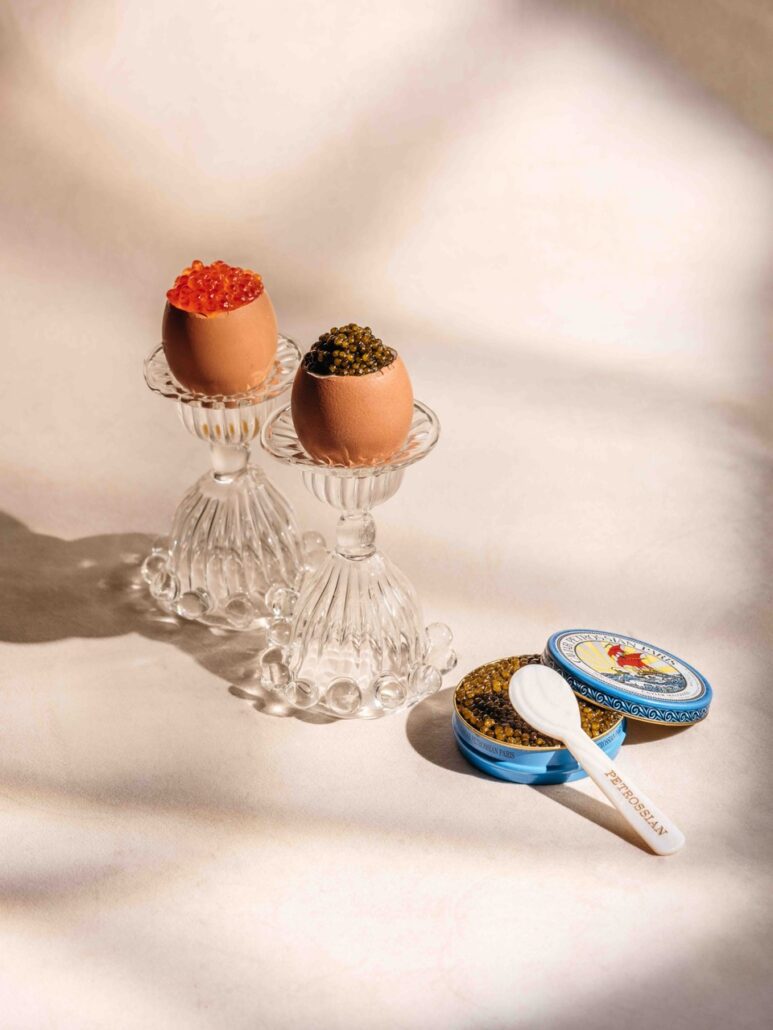
- Keep it chilled until the last moment and open the tin only when serving. - Choose the right utensil: a mother-of-pearl or vermeil spoon, so as not to alter the taste. - Keep it simple: warm blinis, crème fraîche, firm potatoes. Caviar is the star. - Mind the quantity: allow about 30 g per guest for a starter tasting.
The Taste of Time
More than a luxury product, Petrossian caviar is the memory of a gesture, repeated every month in the house’s cellars for over a century. As the festive table is set, to give or share such a delicacy is to bring a little of that patience into the room.