






Art Deco trend
Esprit Joaillerie and the Miller House offer you a journey through time, to the Art Deco era, accompanied by a lively Charleston rhythm.
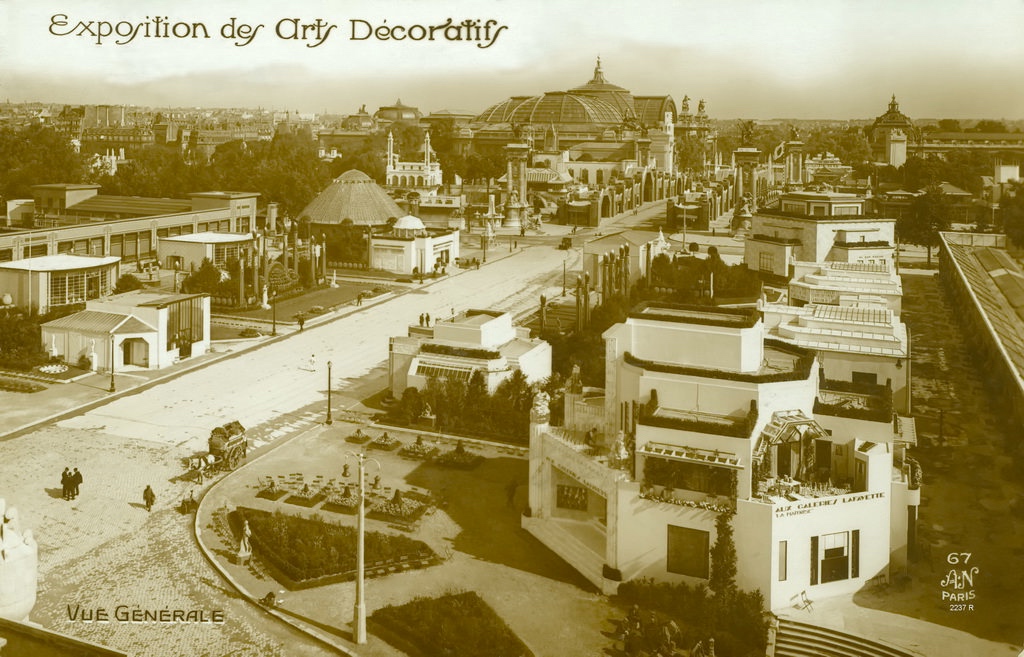
This period of Art Deco began around the end of 1910 and lasted until 1939. It takes its name from the first international exhibition of decorative arts that took place in 1925 in Paris. For 6 months this event showcased both the exterior architecture and interior decoration. Unlike the Universal Exhibition, it nevertheless brought together no fewer than 21 countries that were committed to innovation.
This beginning of the 20th century is marked by a spirit of freedom; there are many innovative artists. In all fields—painting, literature, music, fashion, or jewelry—this sentiment is expressed.
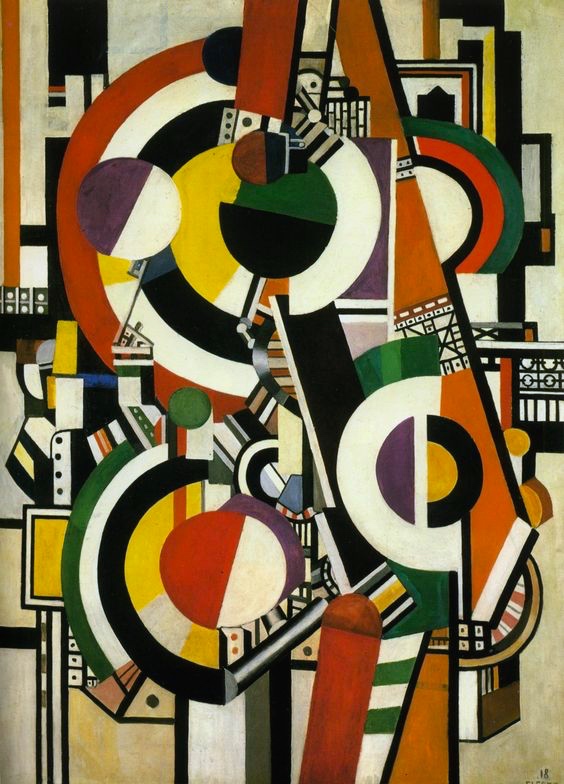
«The Keys» 1928
© DR
Around 1905, the extravagantly ornate Art Nouveau style that preceded it lost its aura; this «new style» gave way to a more rigorous, symmetrical, and colorful form of art as the world became more modern.
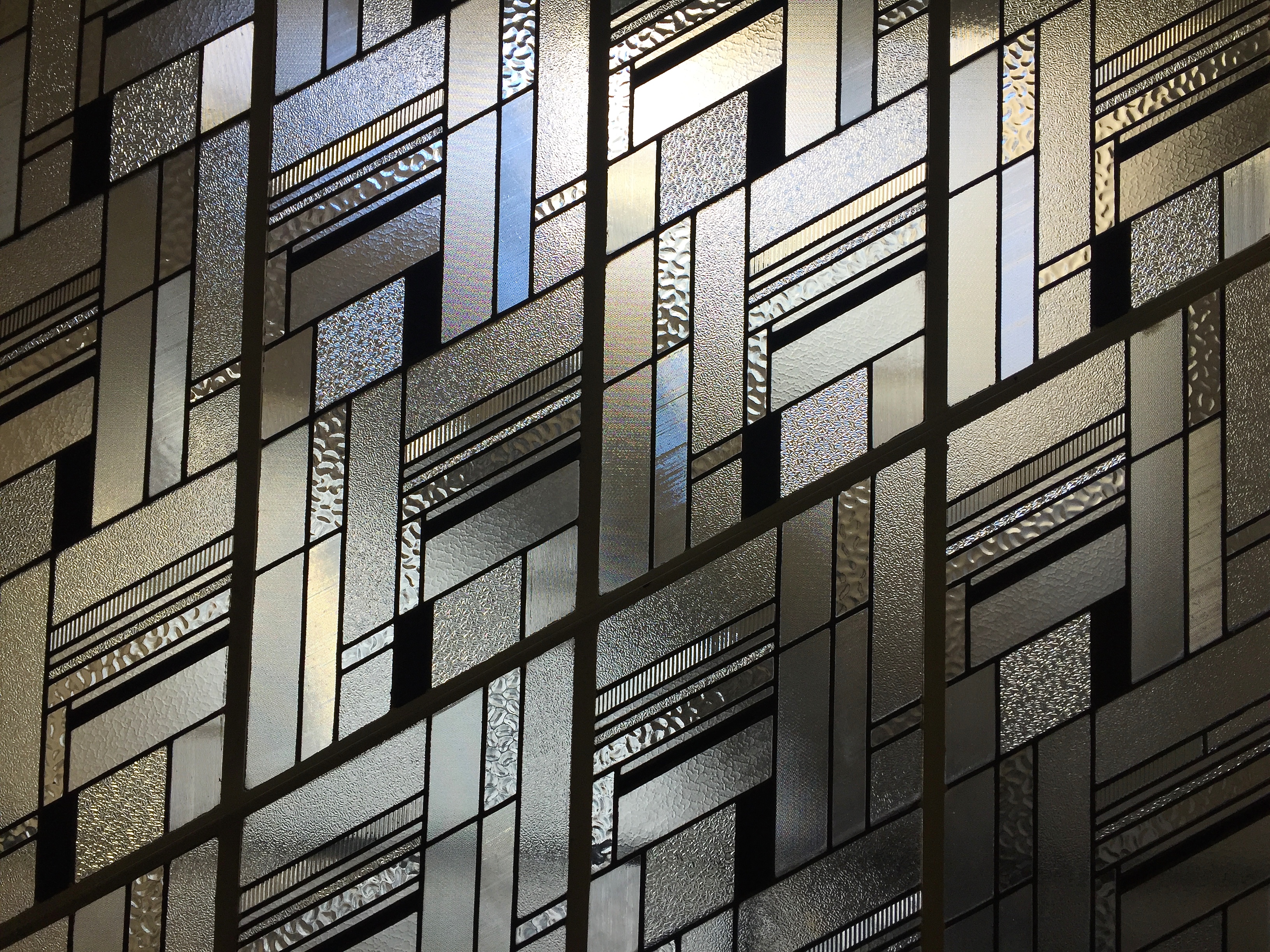
This style, characterized by clean lines, stylized flowers, and geometric patterns, is resolutely functional.
The poet Paul Géraldy will say: «Art Deco finds the meaning of life, progresses towards its perfection and achieves a rigor, a unity, and a style worthy of our greatest epochs.»
A true manifesto of modernity, the architecture is sober and geometric, thus restoring its balance.
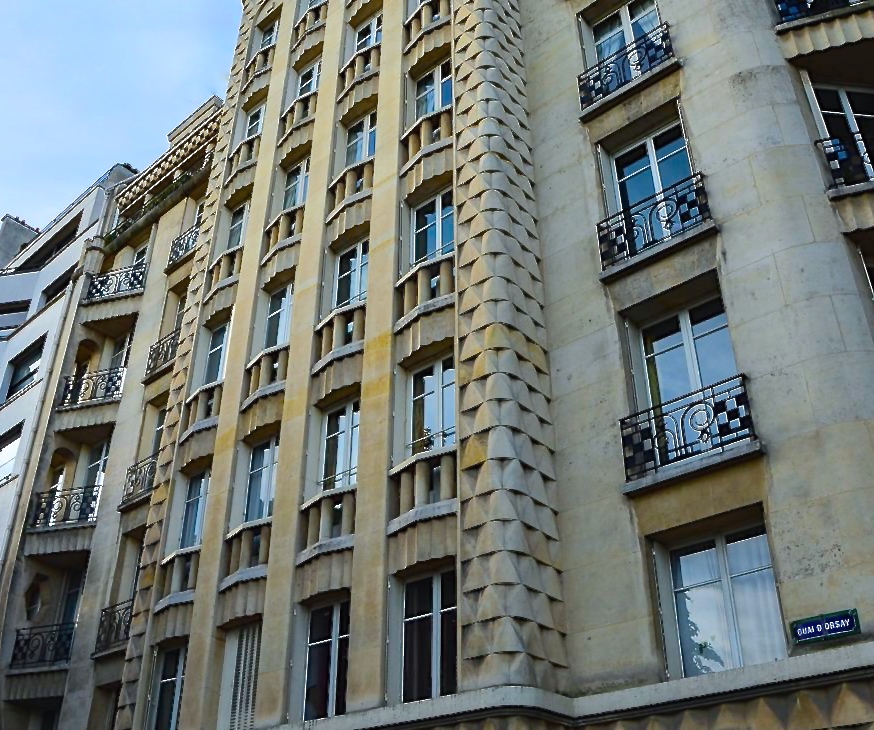
Art Deco is primarily imposed in places where ideas are expressed, in places of entertainment.
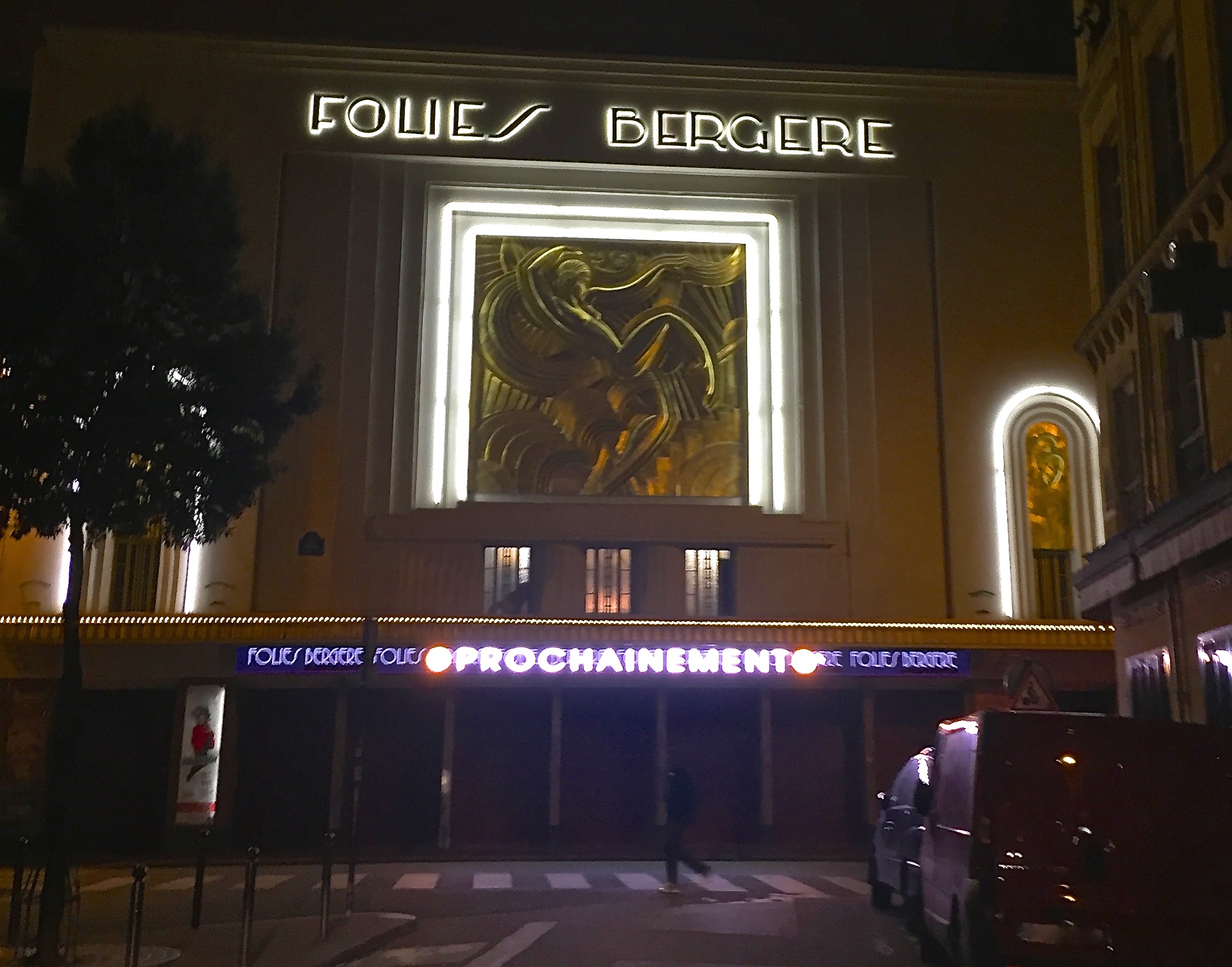
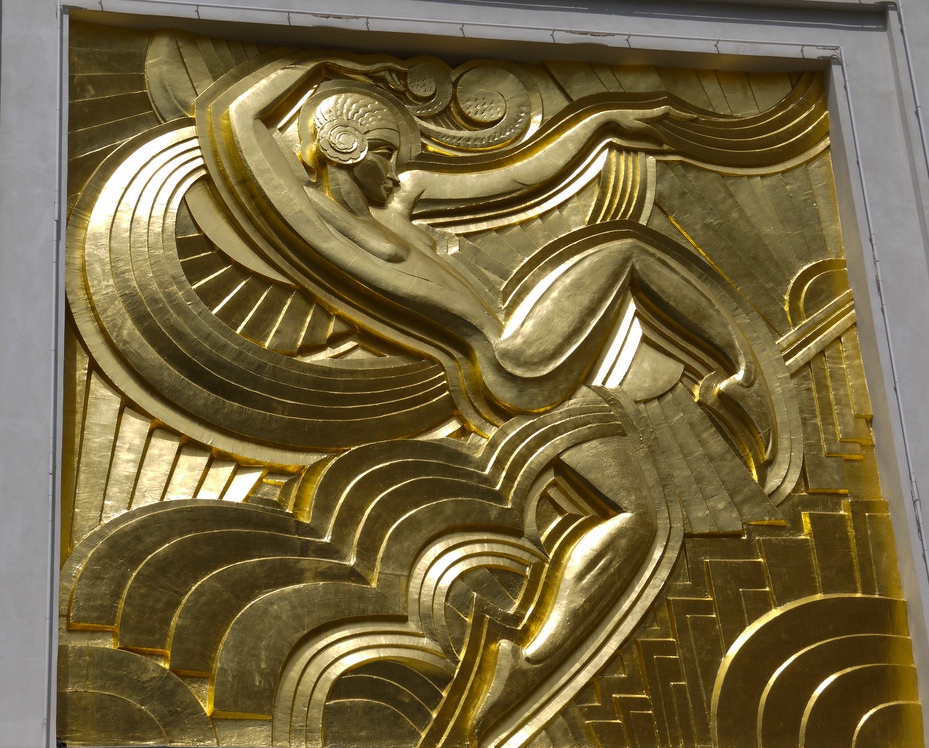
The facade of the Folies Bergères, listed as a historical monument, created by the sculptor Maurice Picaud said Pico This is a famous example of that.
Here we see the famous Russian dancer and model, Lila Nikolska, in the pure Art Deco style.
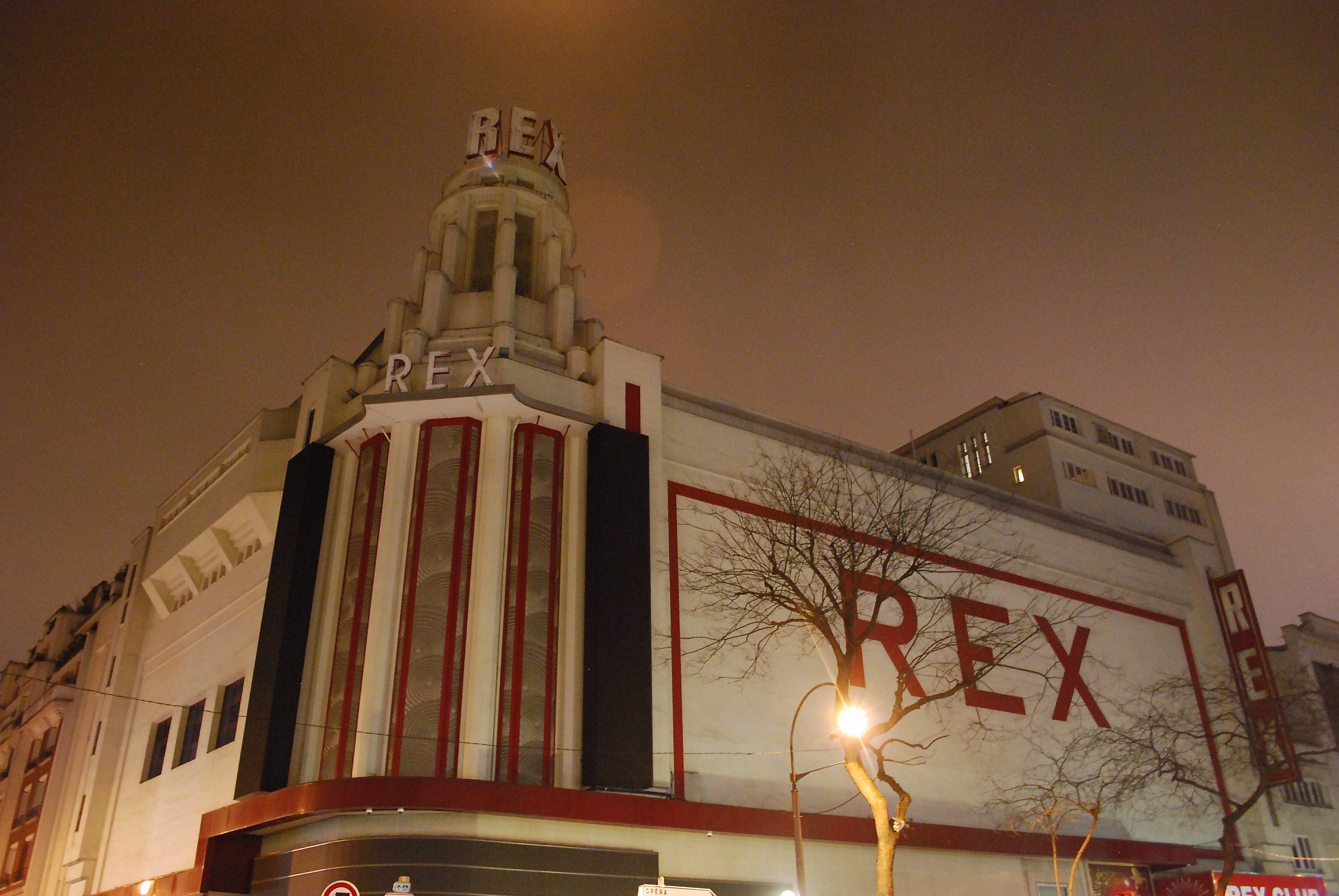
The Grand Rex, one of the largest theaters in Paris, opened in 1934 with architecture borrowed from the Radio City Music Hall in New York. This mythical place of Parisian cinema offers an imposing façade; its designers Auguste Bluysen, John Eberson and Henri-Edouard Navarre conceived a Art Deco style of grandeur, a setting that would captivate all of Paris.
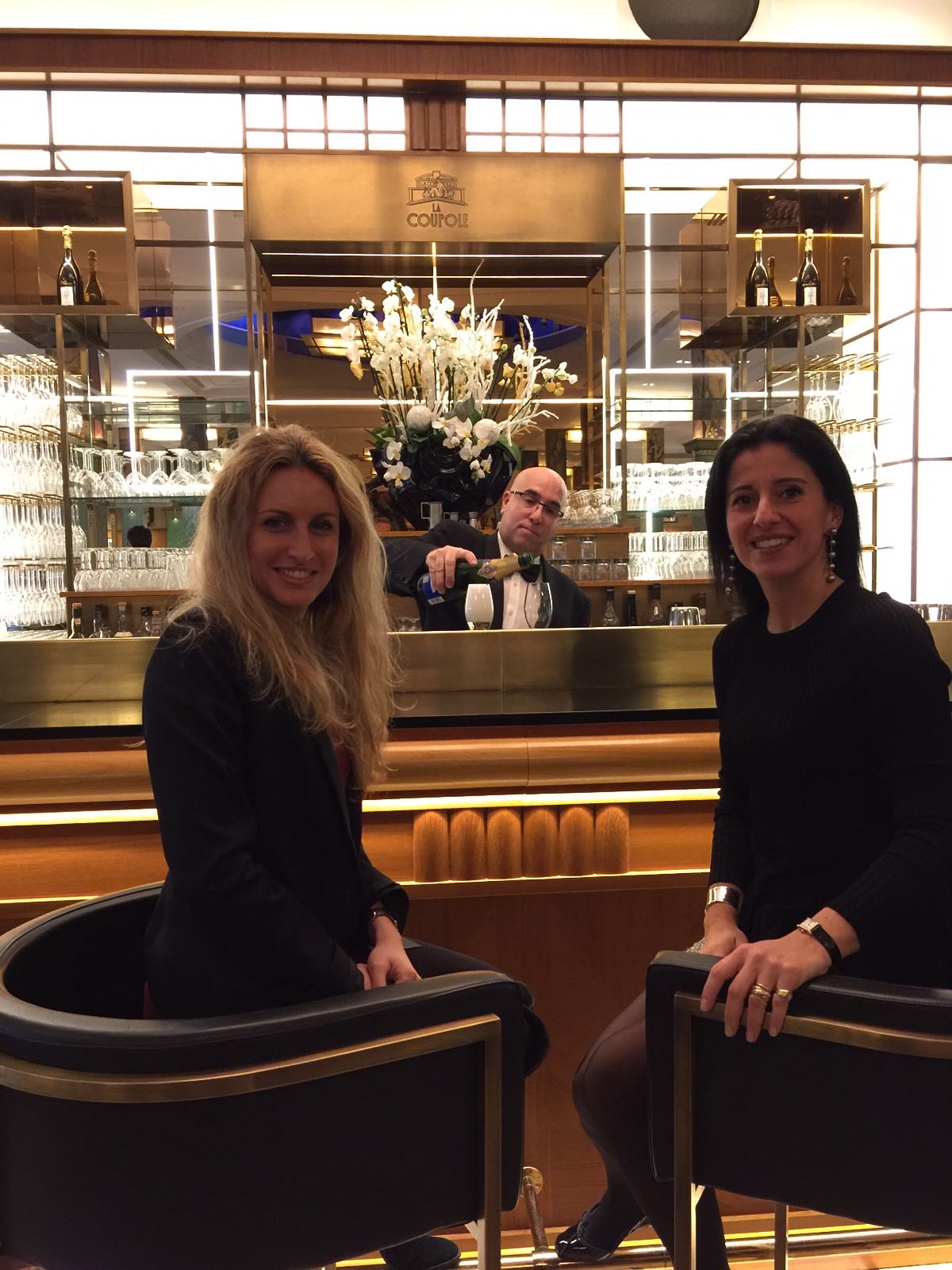
«La Coupole is a Parisian café that celebrated artists and intellectuals of the Roaring Twenties; Jean Cocteau, Foujita, Giacometti, Zadkine, Man Ray, Aragon, Joséphine Baker, etc., were among…
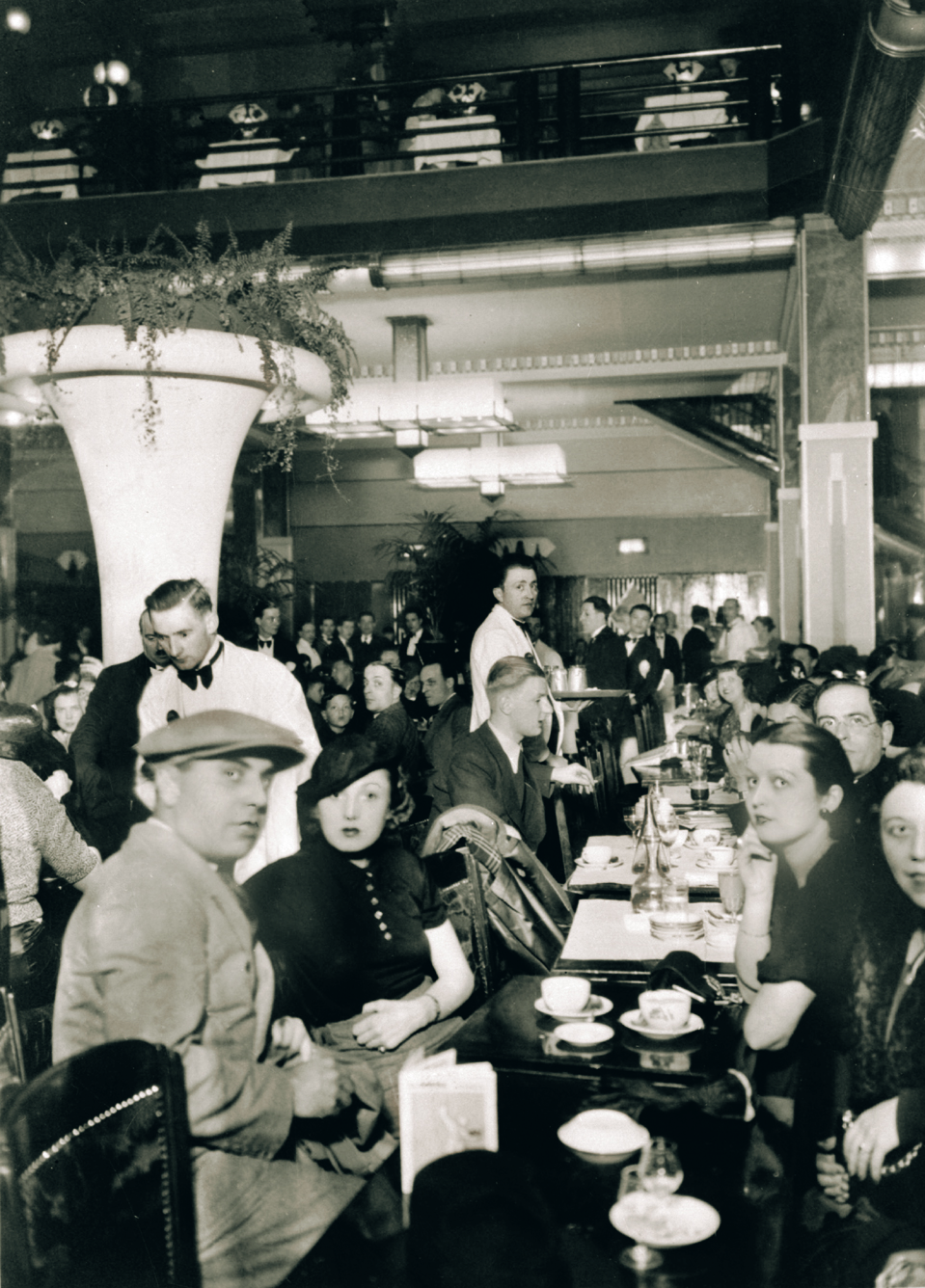
© La Coupole / Flo
A true treasure of Art Deco, the «pilasters» are representative of the place. Comprising 27 pieces, these pillars are covered in marble and Cubist-inspired mosaics. They bear witness to a time when 27 painters faithful to the Montparnasse bohemian scene left their mark.
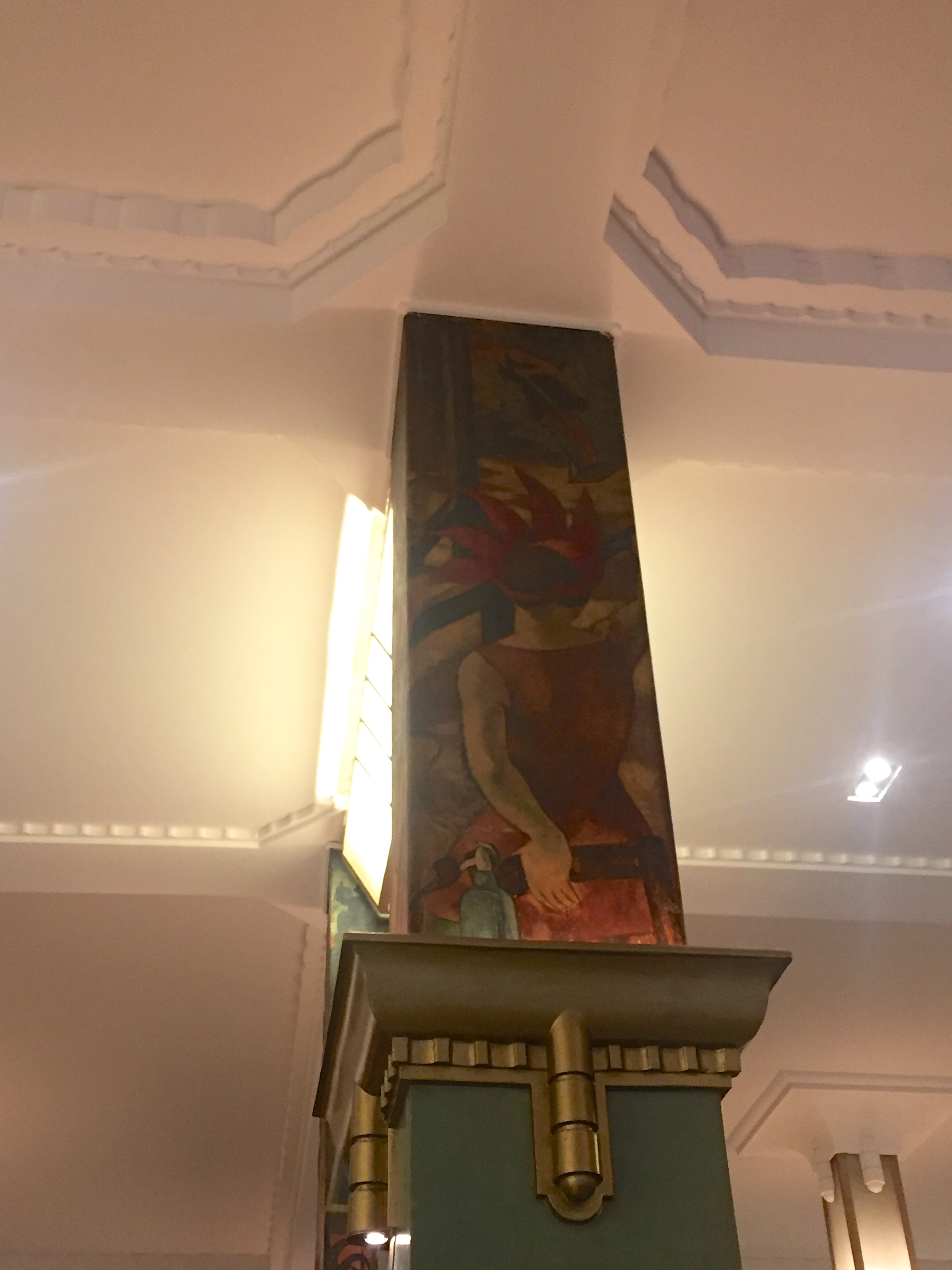
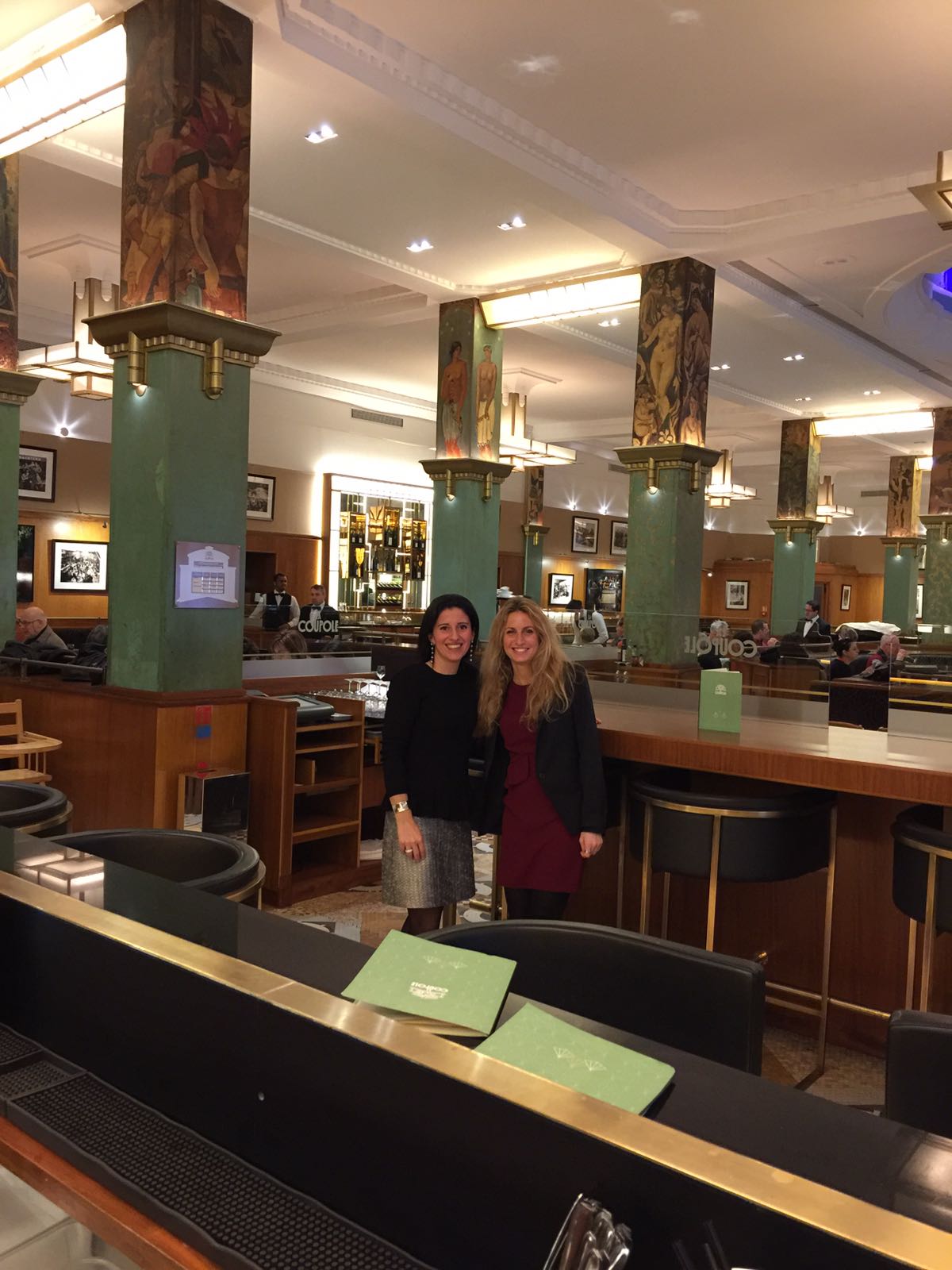
View of the Hall and the Pillars. © Esprit Joaillerie
To go to these high-profile places in Parisian life, one had to follow the prevailing style. The fashion world immediately interpreted this new trend, offering new hairstyles—a «boyish» style. The hair is short and wavy, styled with a hat worn very low on the forehead.
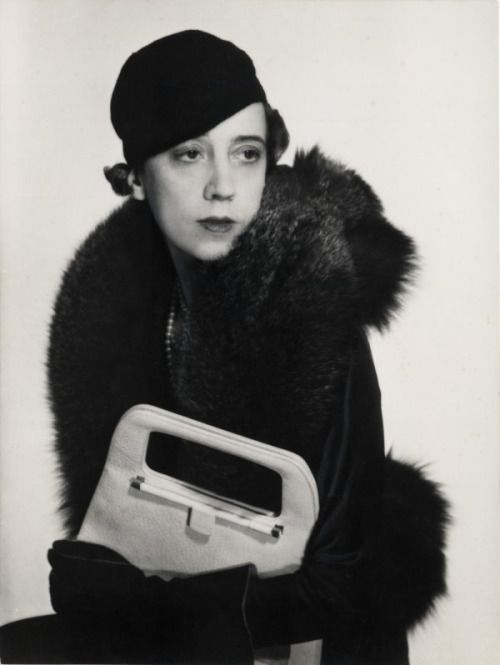
Elsa Schiaparelli by Man Ray 1933
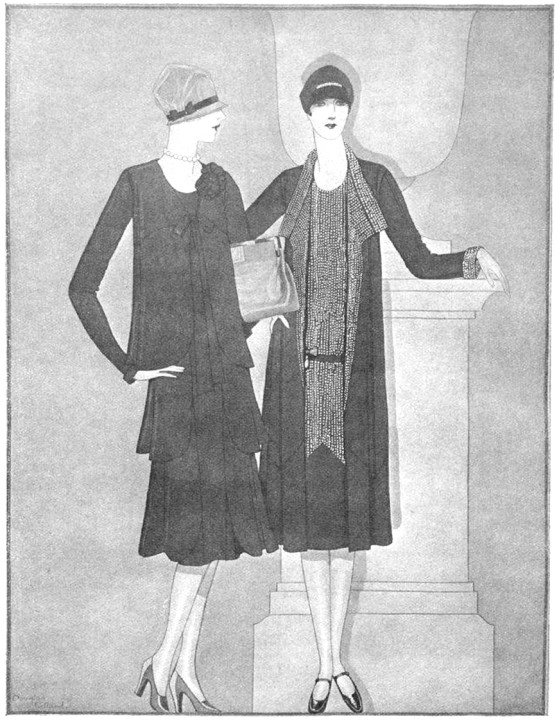
1926
© Vogue
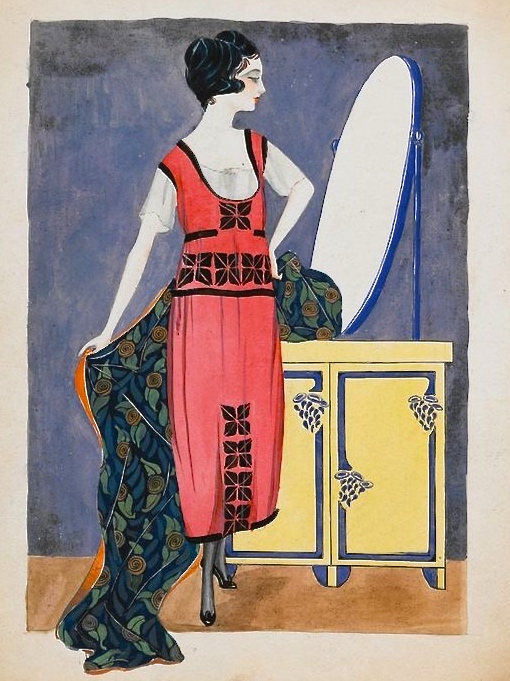
© Photo Les Arts Décoratifs, Paris
It’s about staying feminine, comfortable and with style!
The dresses are precious, flowing and active; materials such as silk, feathers or fur are highly sought after.
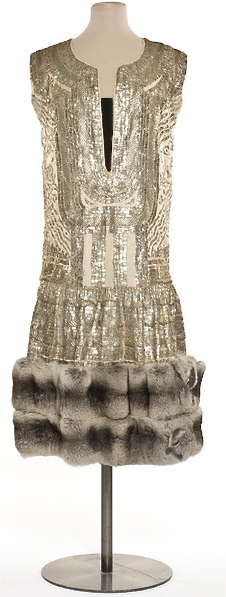
Silk satin dress, silver lame embroidery, chinchilla fur, silk velvet.
© Les Arts Décoratifs Paris / Jean Tholance. ADAGP, Paris
At that time, couturiers played an influential role, because creating a garment was a way of expressing oneself. This importance of fashion has always remained present ever since.
The elegance of the Parisian woman therefore had its own existence! Snobbery extended to the interiors as well, where names like Bourdelle, Brandt, Catteau, Daum, Perriand, Poiret, Puiforcat, Ruhlmann, Sandoz… were a guarantee of good taste and social status.
We must live up to this «total style»; what we display on the outside must be as elegant as our interior.
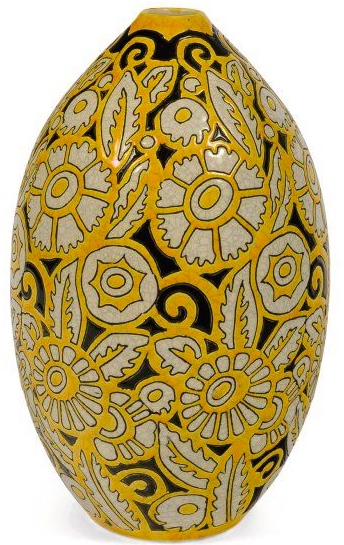
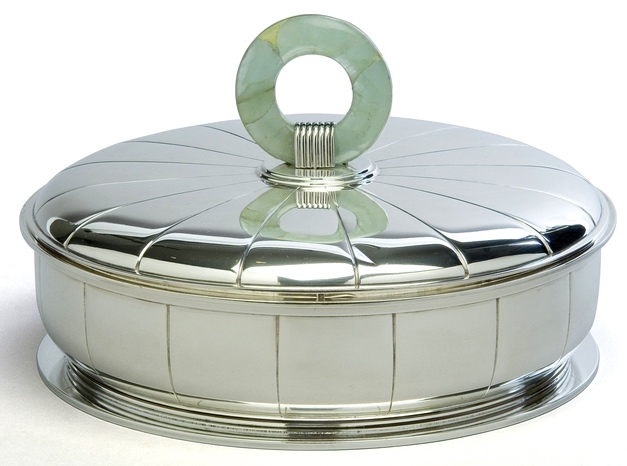
Silver fern, Jade.
Around 1925.
©Photo Les Arts Décoratifs, Paris/Jean Tholance.
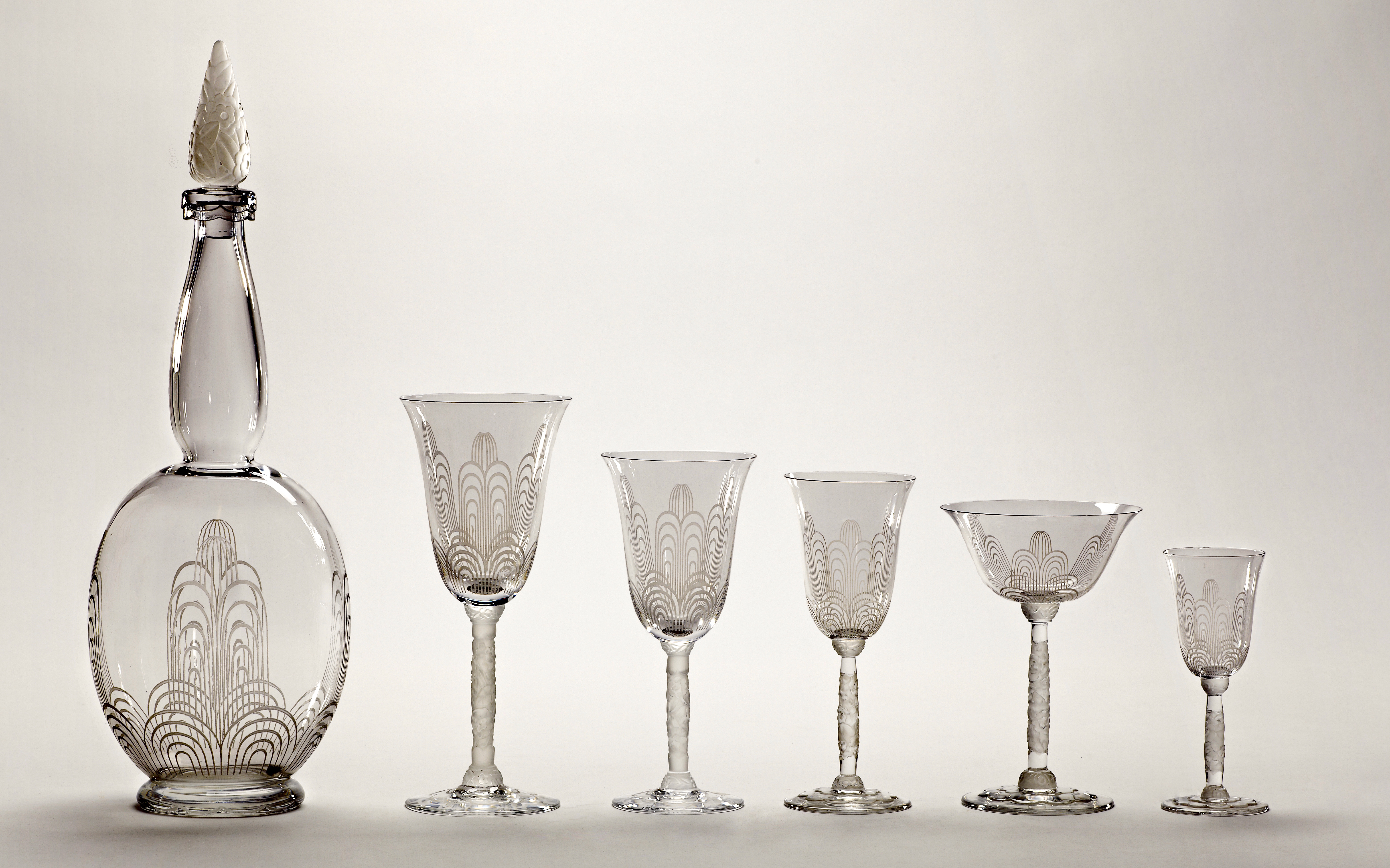
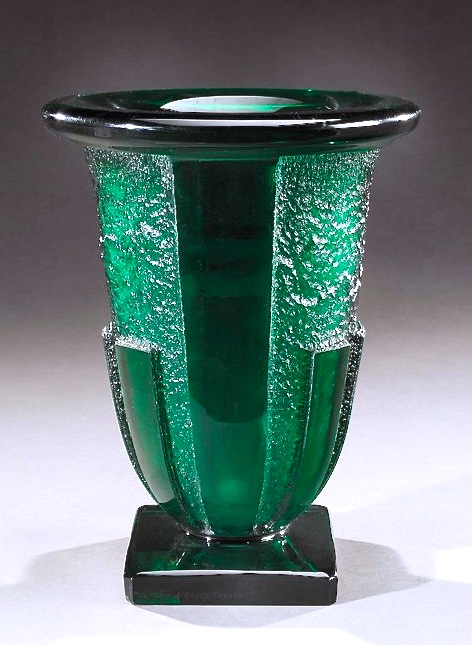
Water Jets Service. 1925
Presented at the International Exhibition of Decorative and Industrial Arts in Paris
©Patrick Schuttler / Baccarat
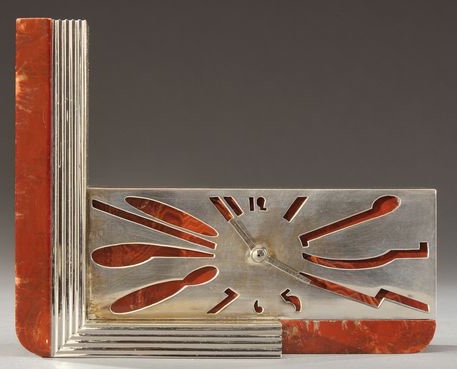
Around 1930
Pendulette Serre-Livre
Silver, Red Marble.
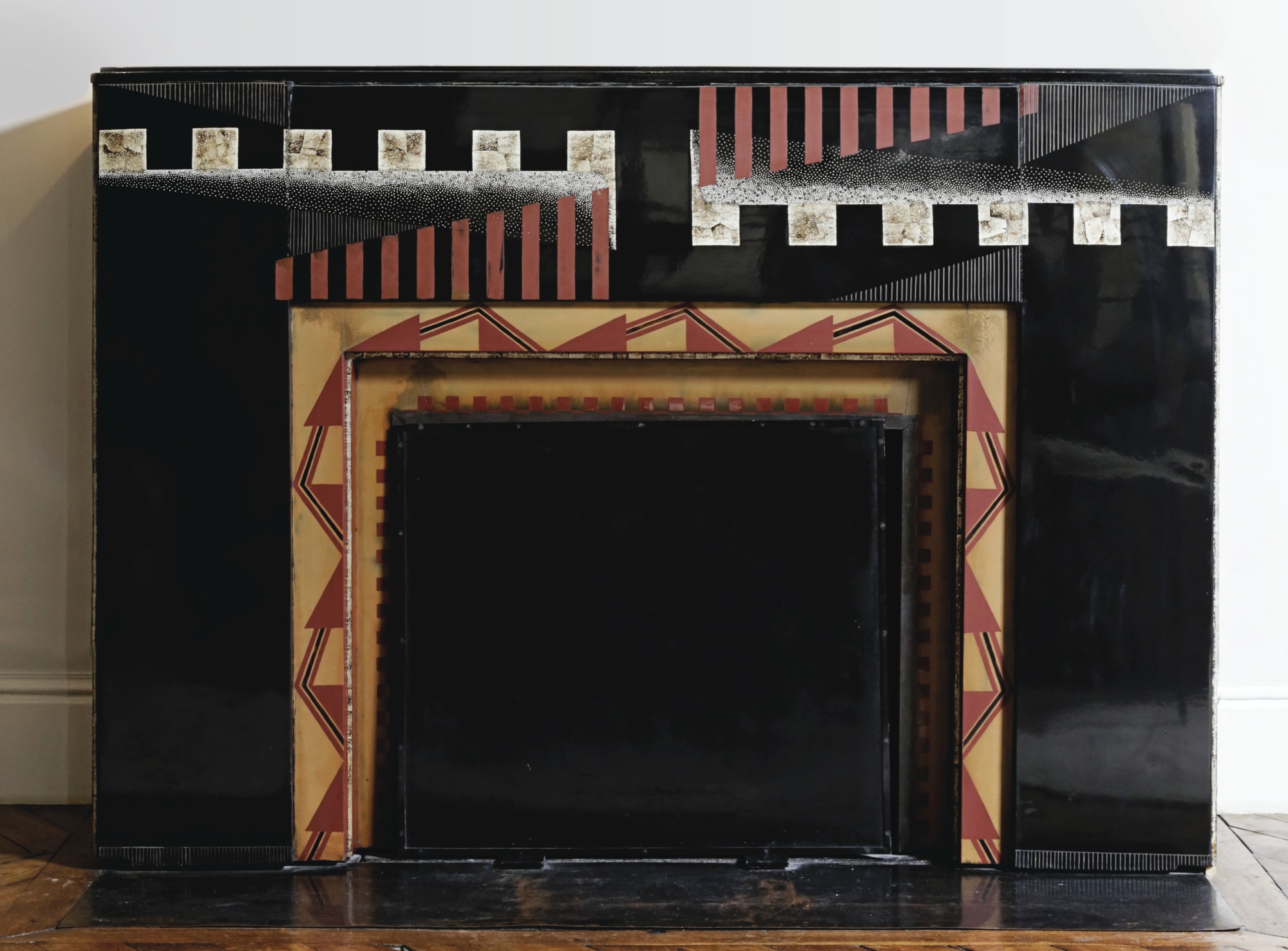
Fireplace coat
Black, Red and Brown Lacquered Wood, Eggshell
© Sothebys
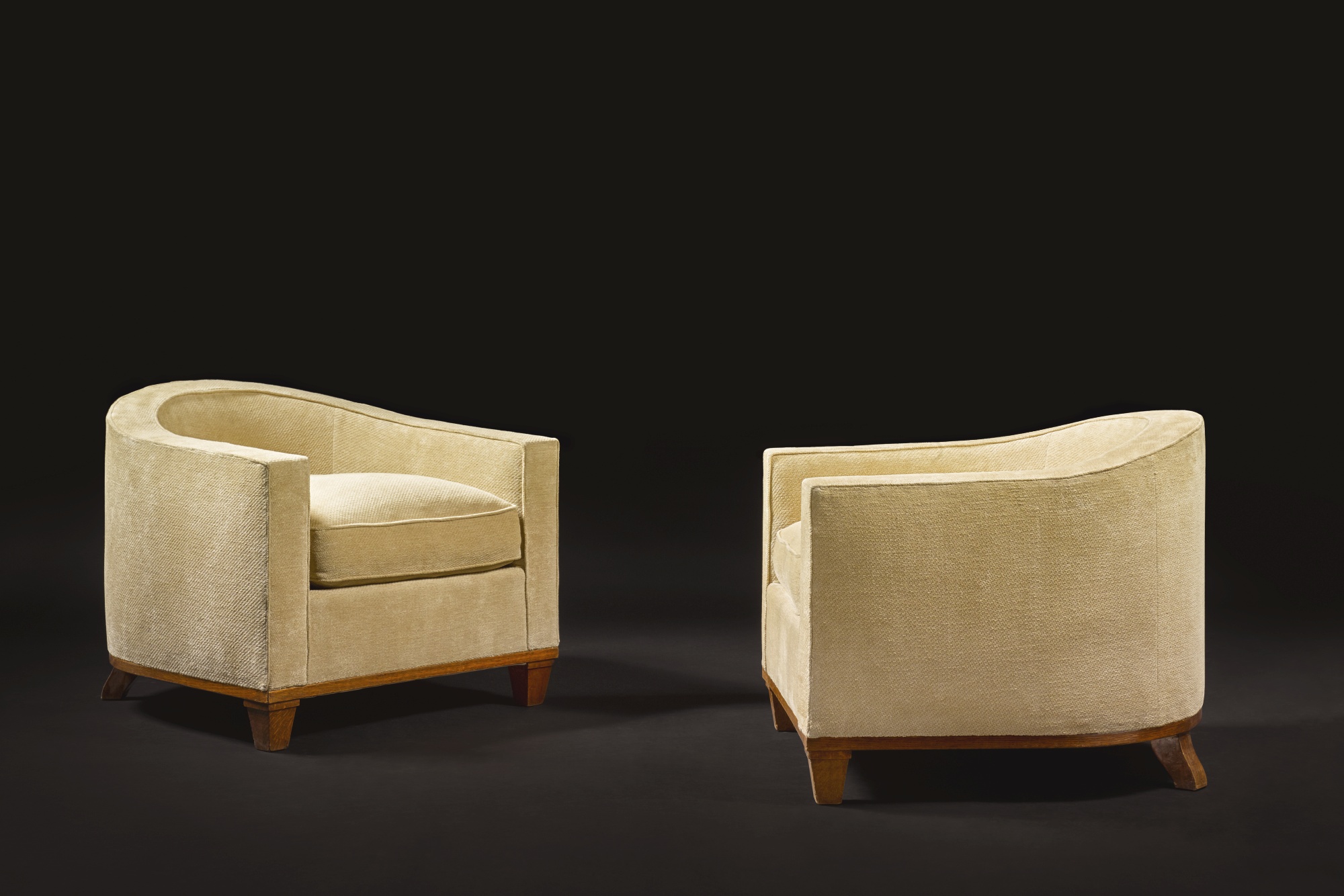
Pair of «Frog» Chairs 1925
© Sothebys
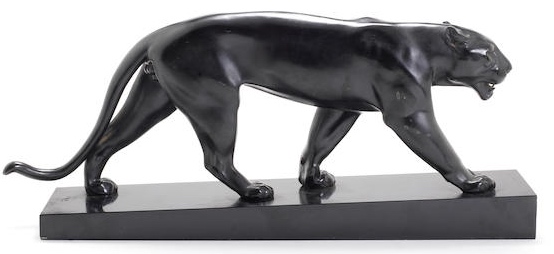
Panther. 1925.
© Bohnams
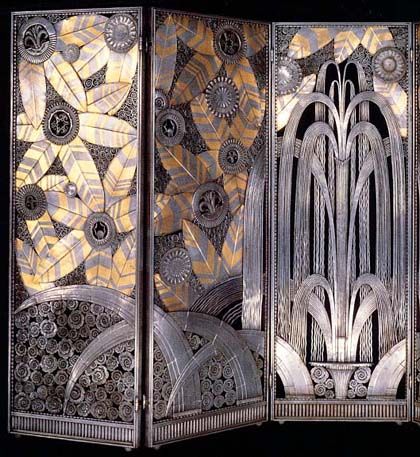
© Atelier Forge & Design
Art is perceived as a means of selling more production, and technological advances allow for the reproduction and standardization of objects.
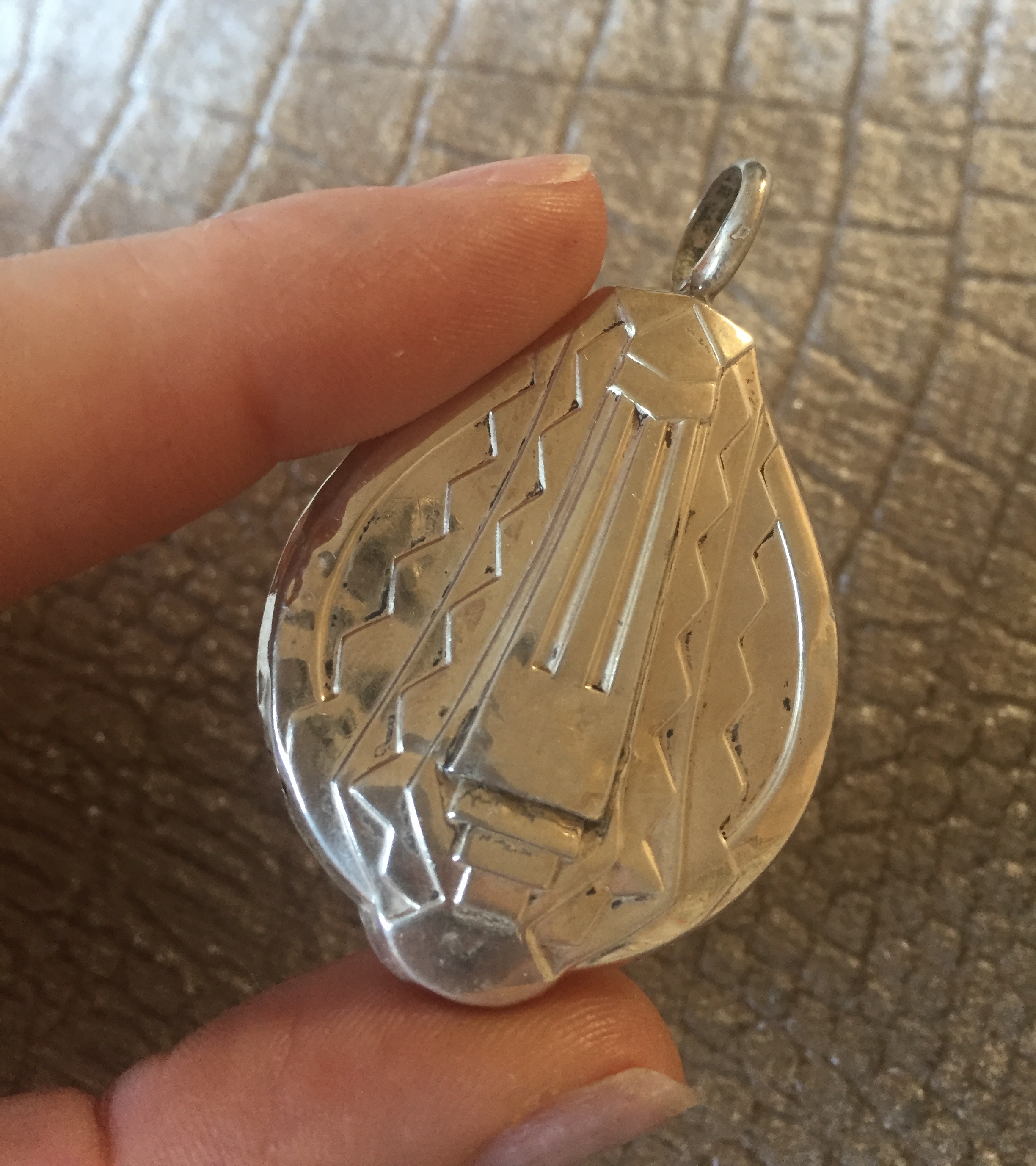
Silver. Around 1925
© Esprit Joaillerie
Fashion accessories are very popular. Luxury perfume bottles, cigarette cases, and umbrellas compete with jewelry. Considered a luxury, they enhance style.
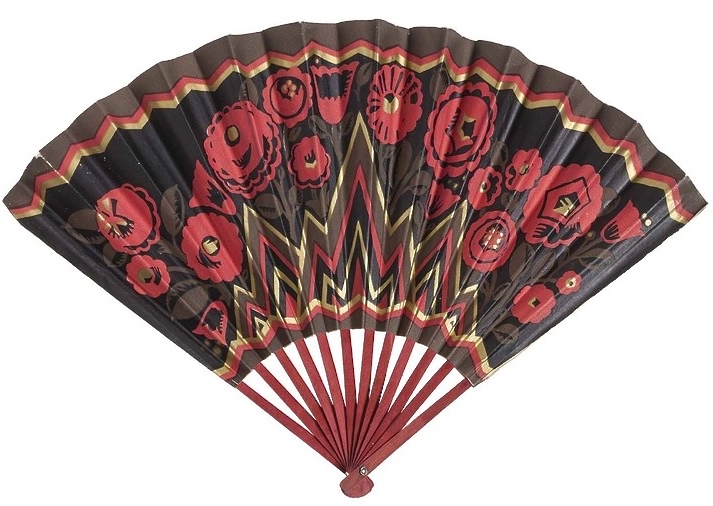
1925-1930
© Photo Les Arts Décoratifs / Jean Tholance
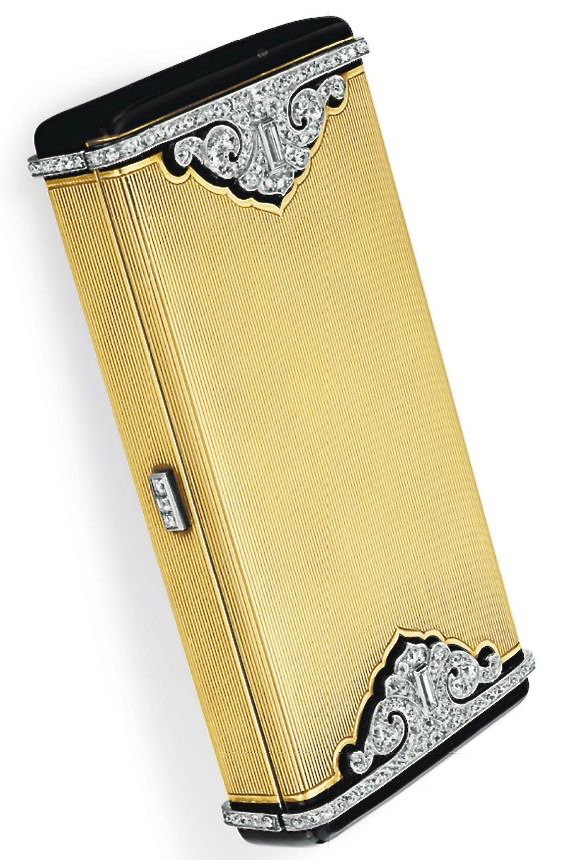
Vanity Case Around 1925
Onyx, Diamonds, Gold.
© Christies
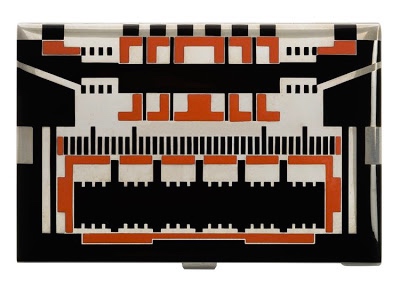
Cigarette Case, 1930.
© Photo Les Arts Décoratifs / Jean Tholance
The jewelry of this era is bold, dazzling, and often playful. They also borrow from the new, and are choreographed by Jean Després, Jean Dunan, Suzanne Belperron, Boivin, and Raymond Templier.
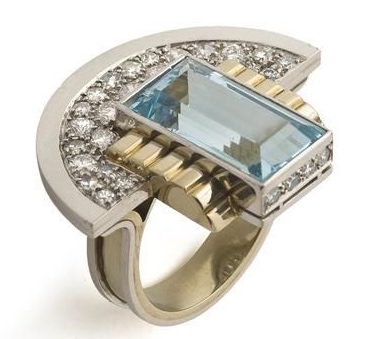
Aquamarine ring, diamonds, gold, platinum.
1937.
© Photo Les Arts Décoratifs / Jean Tholance
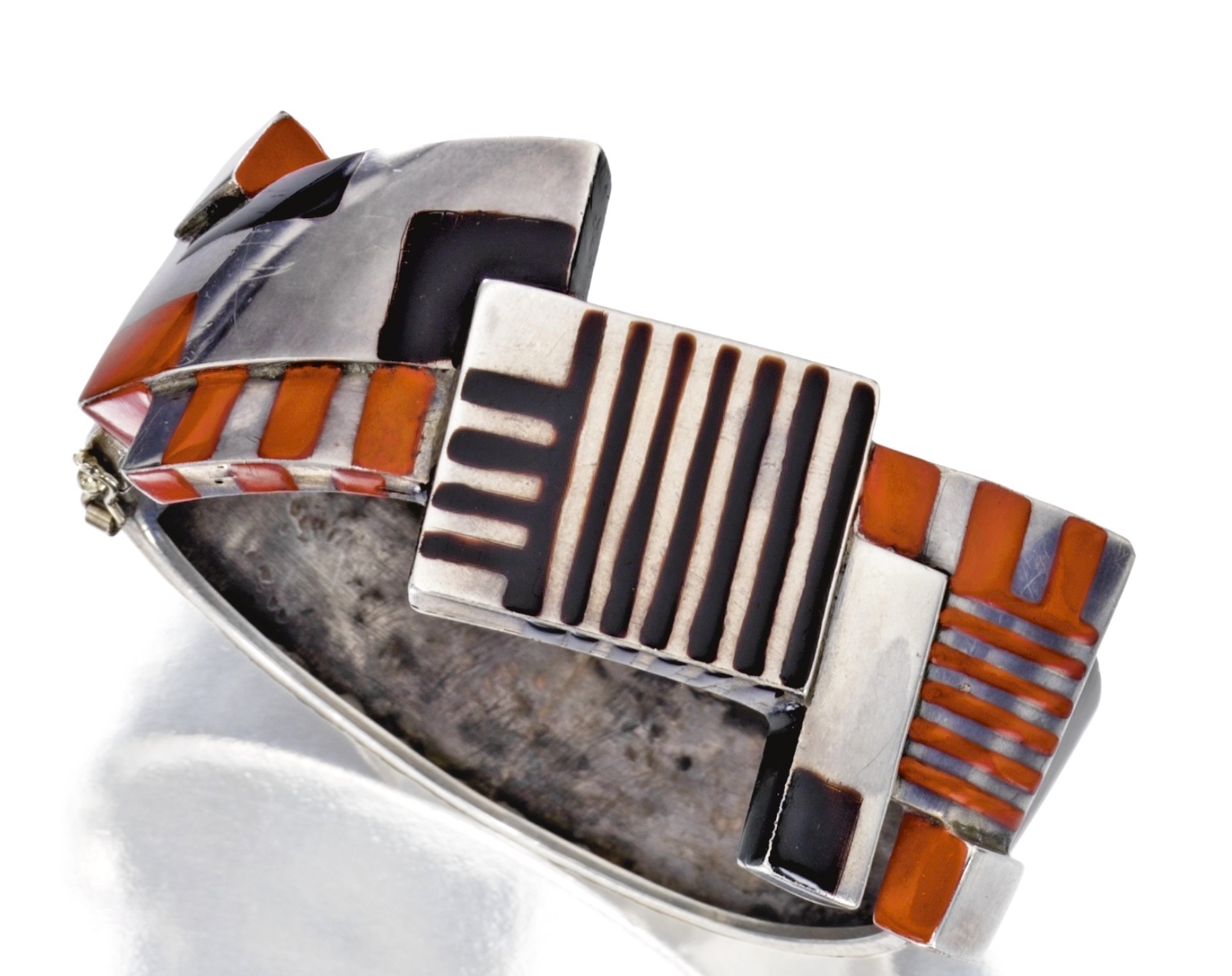
Laque Bracelet, Silver.
1924.
© Sothebys
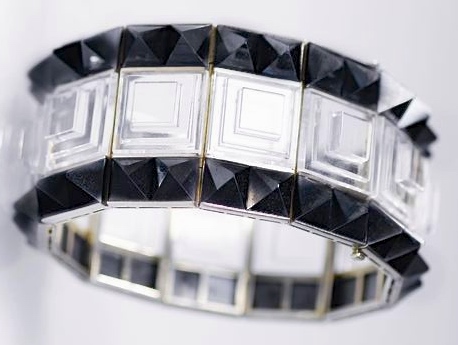
Crystal of Roche bracelet, Hematite, Gold. 1930.
© Sothebys
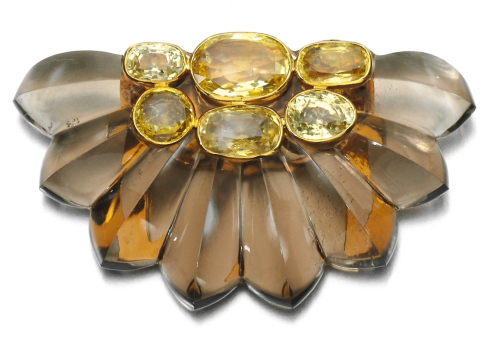
Smoky Quartz Brooch, Yellow Sapphires, Citrines, Gold. 1935
© Sothebys
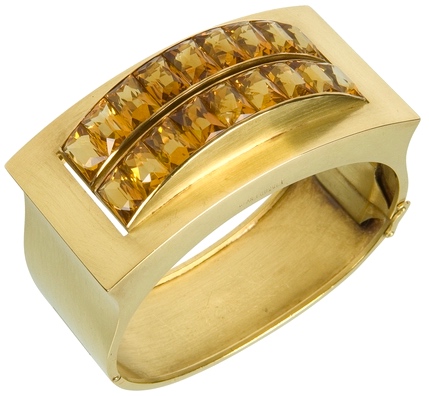
Topaze bracelet, Gold.
©Photo Les Arts Décoratifs / Jean Tholance.
This generation of jewelers draws inspiration from Cubism, and sometimes from Russian Constructivism, to create refined and architecturally designed lines.
The jewel then becomes a sculpture.
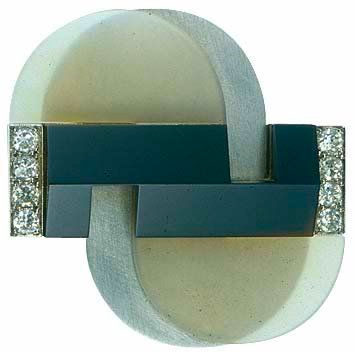
Crystal brooch by Roche, Onyx, Diamonds, Platinum.
1937
© Photo Les Arts Décoratifs / Jean Tholance
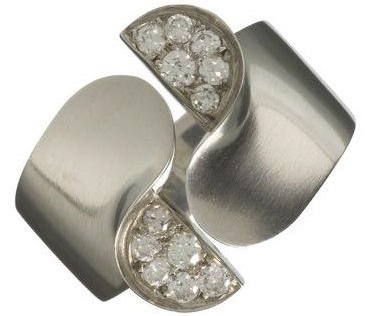
Diamond ring, platinum.
1937
© Photo Les Arts Décoratifs / Jean Tholance
Robert Mallet Steven Fonde in 1929 with René Herbst, Stevens, Raymond Templier, Jean Puiforcat, Hélène Henry and Pierre Chareau formed the Union of Modern Artists. The members of this movement emancipated themselves from decorative notions to focus on function and structure, exploiting new materials and new techniques in order to adapt them to a modern and revalued vision of decorative arts.
Technological and scientific advances bring vitality; jewelry then borrows from mechanics and ball bearings; they are an integral part of the jewelry.
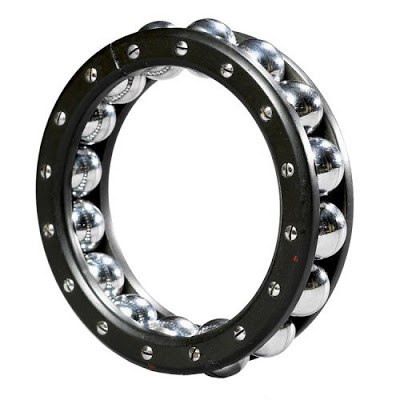
Ball bearing bracelet, Chromed metal, Ebony. 1931.
Always more modern and surprising, jewellers also aim to be accessible, and it is not uncommon to find innovative materials such as silver, steel, aluminum, bakelite, ebony, shellac, and even plastic. Stones such as topaz, citrine, amethyst, rock crystal, enamel, and galuchat are also associated with them.
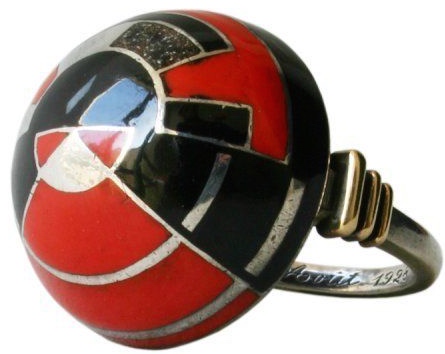
Silver, Gold, Enamel Ring.
1928
© Photo Les Arts Décoratifs / Jean Tholance
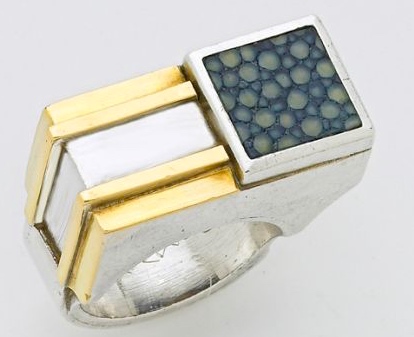
Silver, Gold, Galuchat.
© Primavera Gallery
But while the Deco style appreciates simplicity, it is also valuable; the usually geometric style, or even abstract style, sometimes reveals realistic elements such as flowers that are merely suggested. Hairstyles reveal the ears, thus leaving a great scope for creativity; from long pendants to clip-on earrings that make their appearance. As in this typical Deco composition, where we see a pair of platinum earrings studded with diamonds and a platinum ring studded with diamonds and onyx.
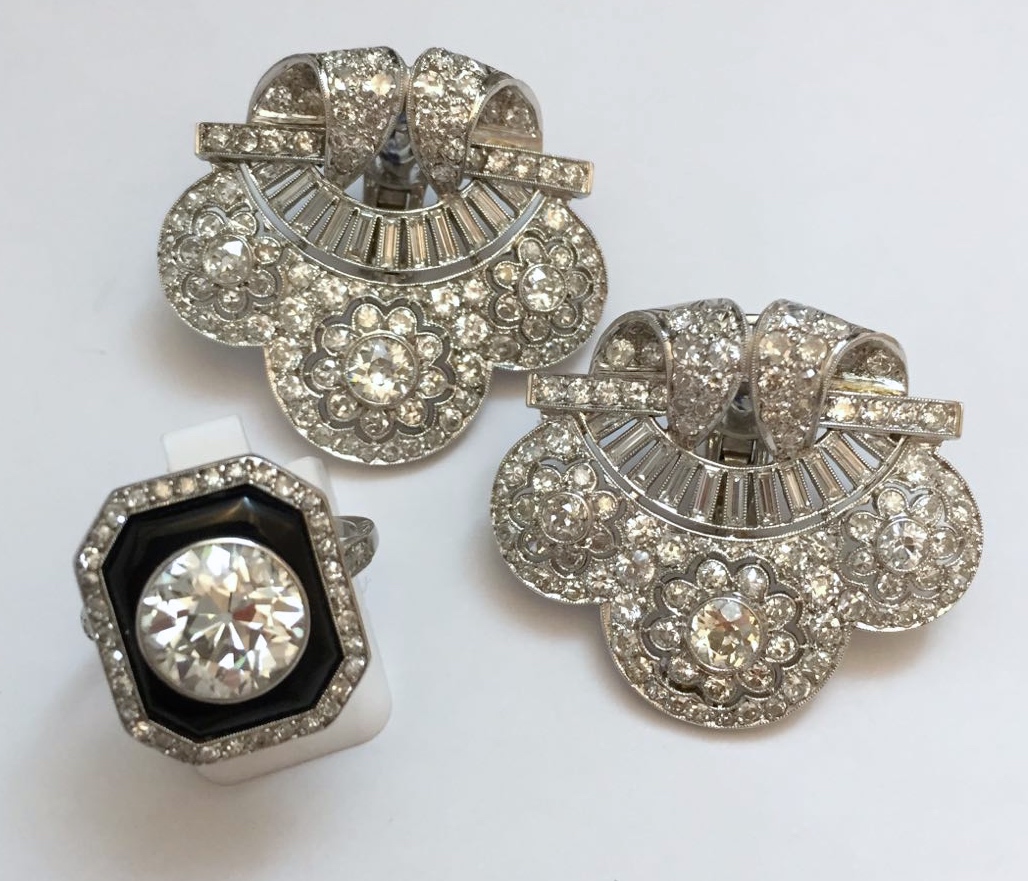
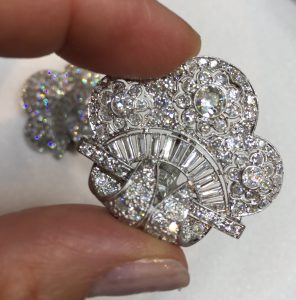
© Esprit Joaillerie
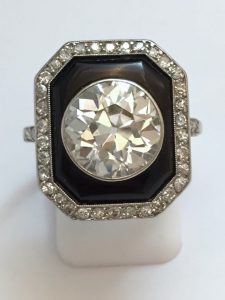
Diamond ring, onyx, platinum. Circa 1925. © Esprit Joaillerie
The «white jewelry» is also very popular, in platinum, studded with diamonds; their geometry allowed for multiple combinations.
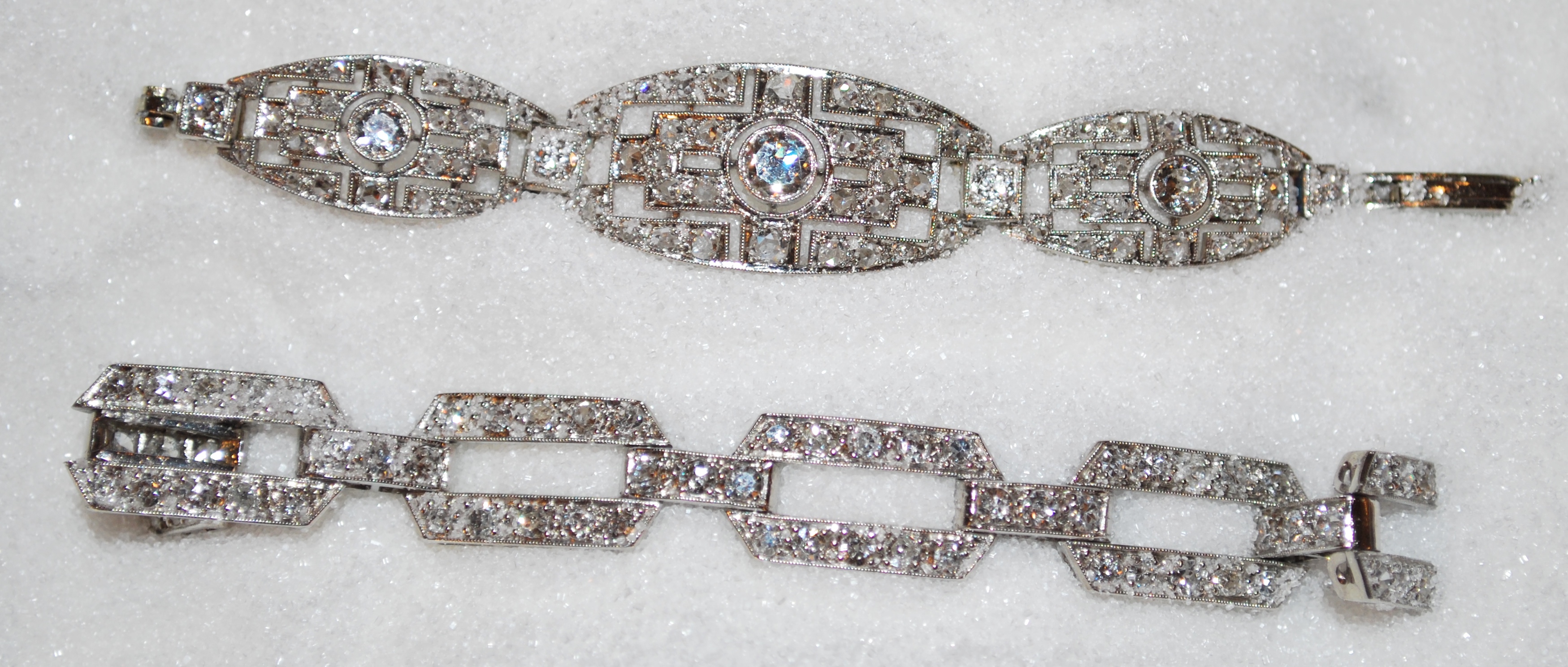
Art Deco Bracelets
Diamonds, Platinum.
© Esprit Joaillerie
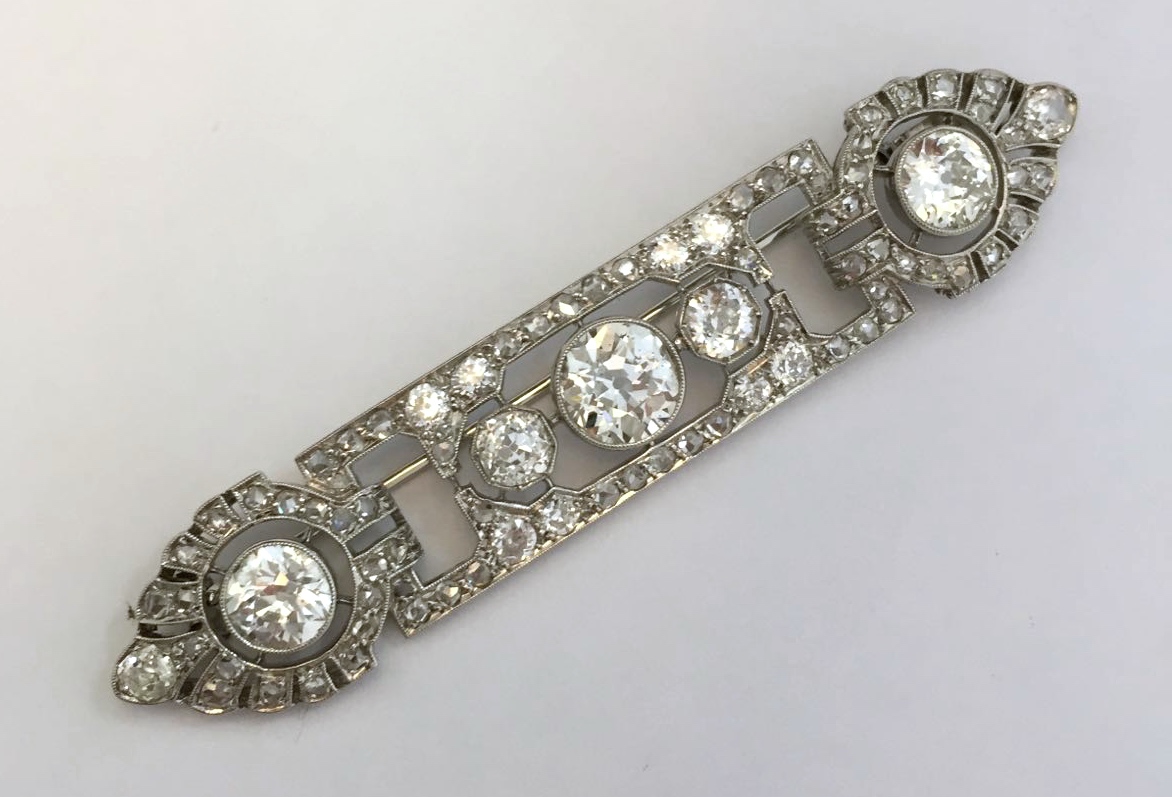
Mauboussin brooch
Diamonds, Platinum.
Around 1929. © Esprit Joaillerie
These great classics of Art Deco are created by the great French goldsmiths, and they are truly works of miniature art; it is also a triumph of color.
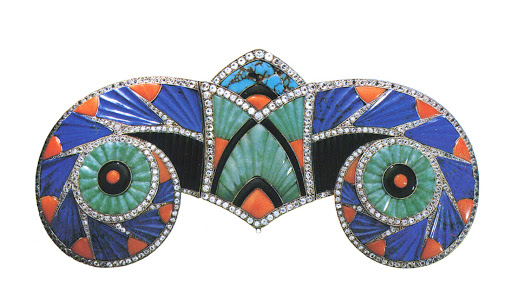
Jade brooch, Lapis Lazuli, Coral, Turquoise, Diamonds, Platinum. 1925
© Boucheron
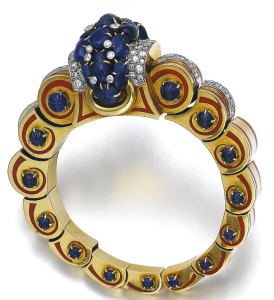
Sapphire Bracelet, Diamonds, Enamel, Gold, Platinum
1935.
© Sothebys
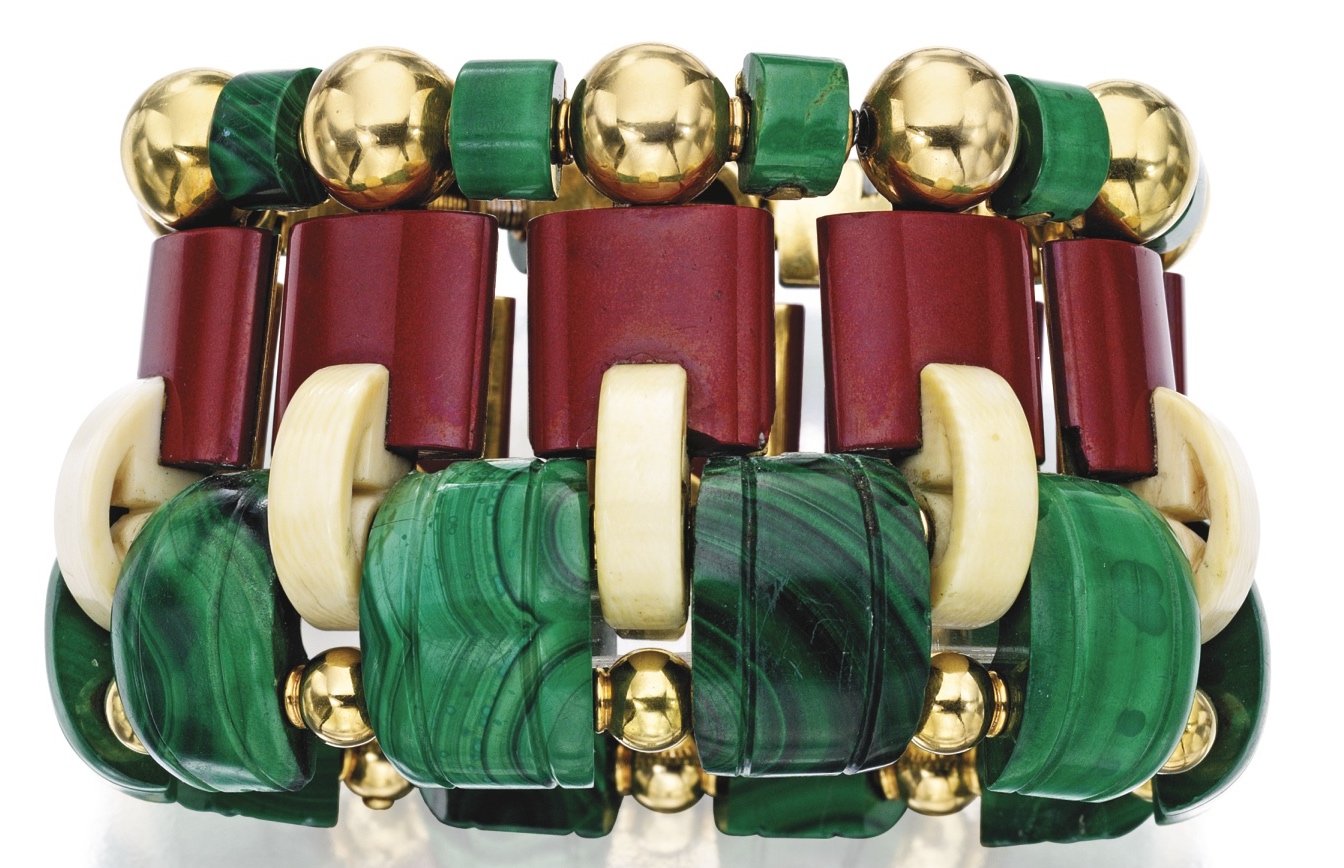
African Inspiration Bracelet.
Malachite, Ivory, Purpurine, Gold.
© Sothebys
Always geometric, some of the creations sometimes have an Egyptian or Oriental inspiration, a taste for the exotic, and fashion is all about travel.
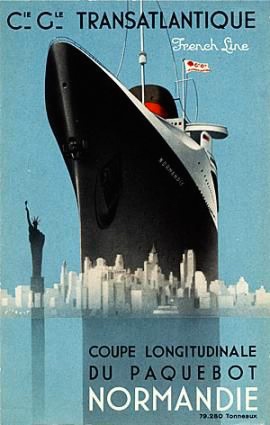
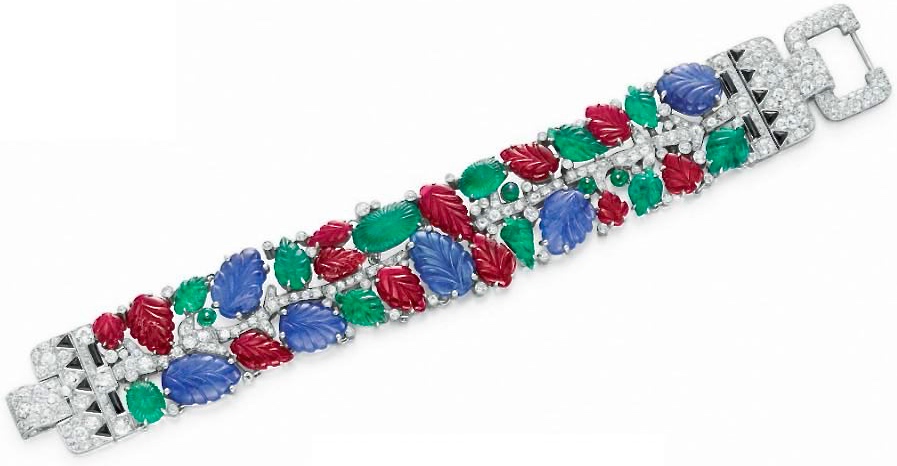
Bracelet «Tutti Frutii»
1930
Rubies, Emeralds, Sapphires, Diamonds, Platinum.
© Cartier
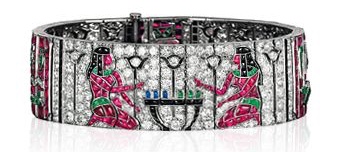
Bracelet inspired by the tomb of Tutankhamun.
Diamonds, Rubies, Emeralds, Sapphires, Onyx, Platinum. 1924.
© Van Cleef & Arpels
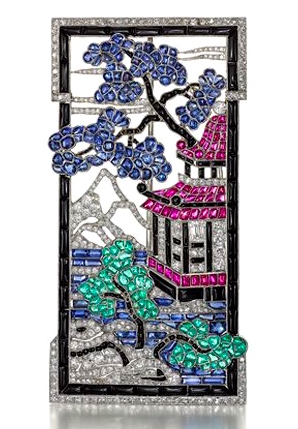
Chinese Inspiration Brooch.
Emeralds, Sapphires, Rubies, Diamonds, Onyx, Platinum. 1924
© Van Cleef & Arpels
Art Deco remains one of the most admired styles of the 20th century.
This visit concludes, bearing in mind that the past is constantly to be rediscovered and that the jewel follows history. It can only be understood if one knows the era in which it was created. We will meet very soon for another trend...