





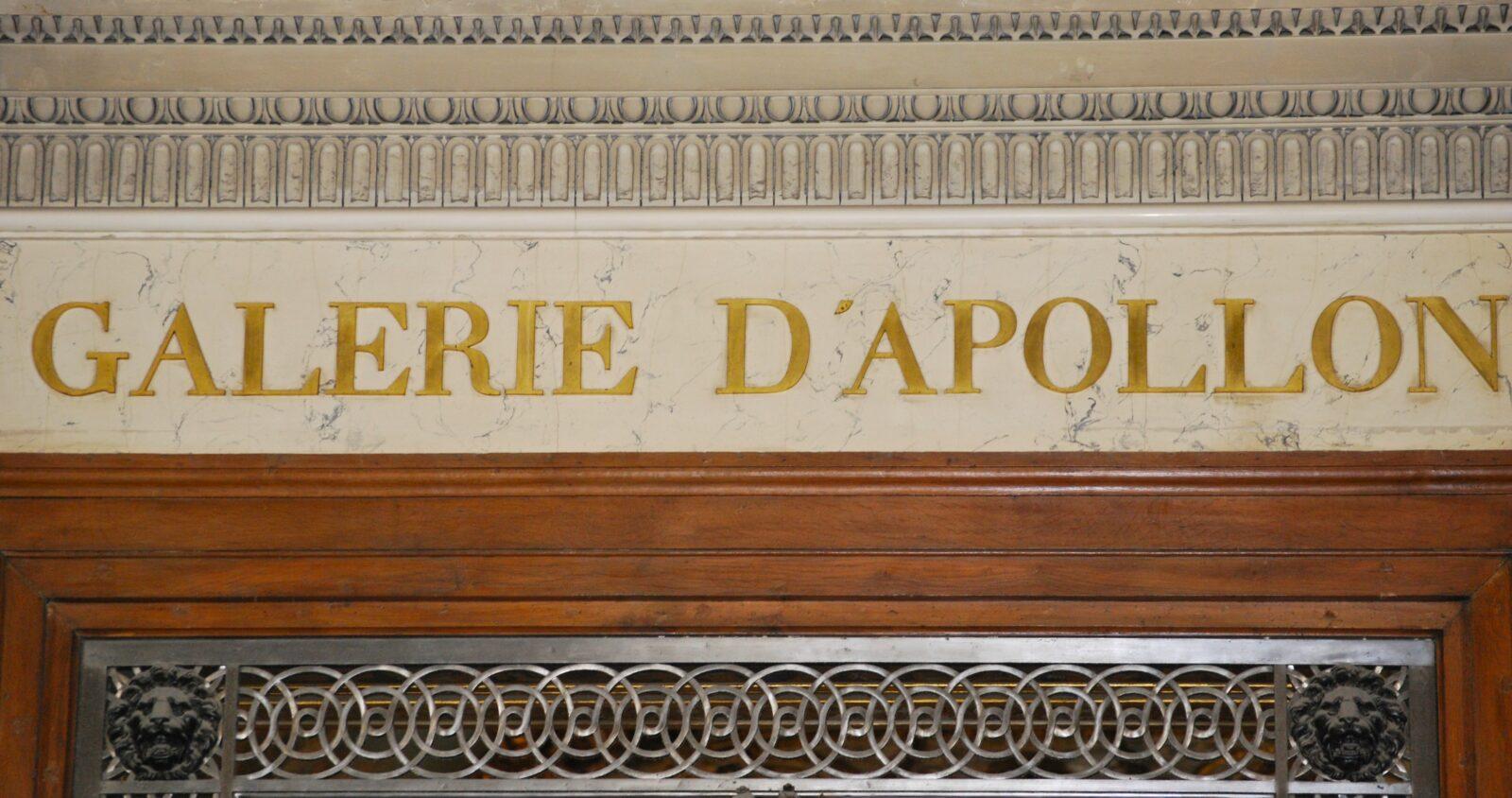
One night at the Gallery of Apollo.
On the occasion of European Night of Museums The Louvre Museum presents its treasures at night.

Thus, the magic of the night leads us to the Apollo Gallery. It should be noted that it was designed for Louis XIV’s receptions. Today, it serves as a showcase for the Crown Jewels.

Indeed, this display gallery of the Louvre Museum celebrates the Sun King. To this end, Le Brun, the king’s painter, imagined a painted and sculpted decoration themed on the sun, the stars, and time. Thus, the myth of Apollo, the sun god, glorifies Louis XIV. While at the same time, it gives an idyllic vision of the universe that is harmonious.

Also, since the end of the 19th century, the gallery houses the collection of hardstone vases of Louis XIV. And especially the historical treasure of the Crown’s Diamonds.

In this regard, here are two beautiful pieces. The first one, in lapis lazuli, is adorned with stones. The second one, in amethyst, represents a shell. At ten bailes, its foot is formed by balustrade, its paw is adorned with gold enamel, 27 rubies and thirty-four diamonds. It dates from the 16th century and was acquired by Louis XIV in 1687.


To attract attention, this path of cuts in hard stones leads us to the jewels.
There is no doubt that this is a true epic story, as these jewels have been passed down through the generations of the sovereigns. It should be noted that this treasure, founded by François I, grew in wealth under Louis XIV. It reached its peak under Louis XV with the purchase of the famous Régent.

Diamond of 140.64 carats
Credit to the Louvre Museum
However, after the Revolution, this state treasure was reconstituted by Napoleon I.


Let’s continue our walk through history and treasures.
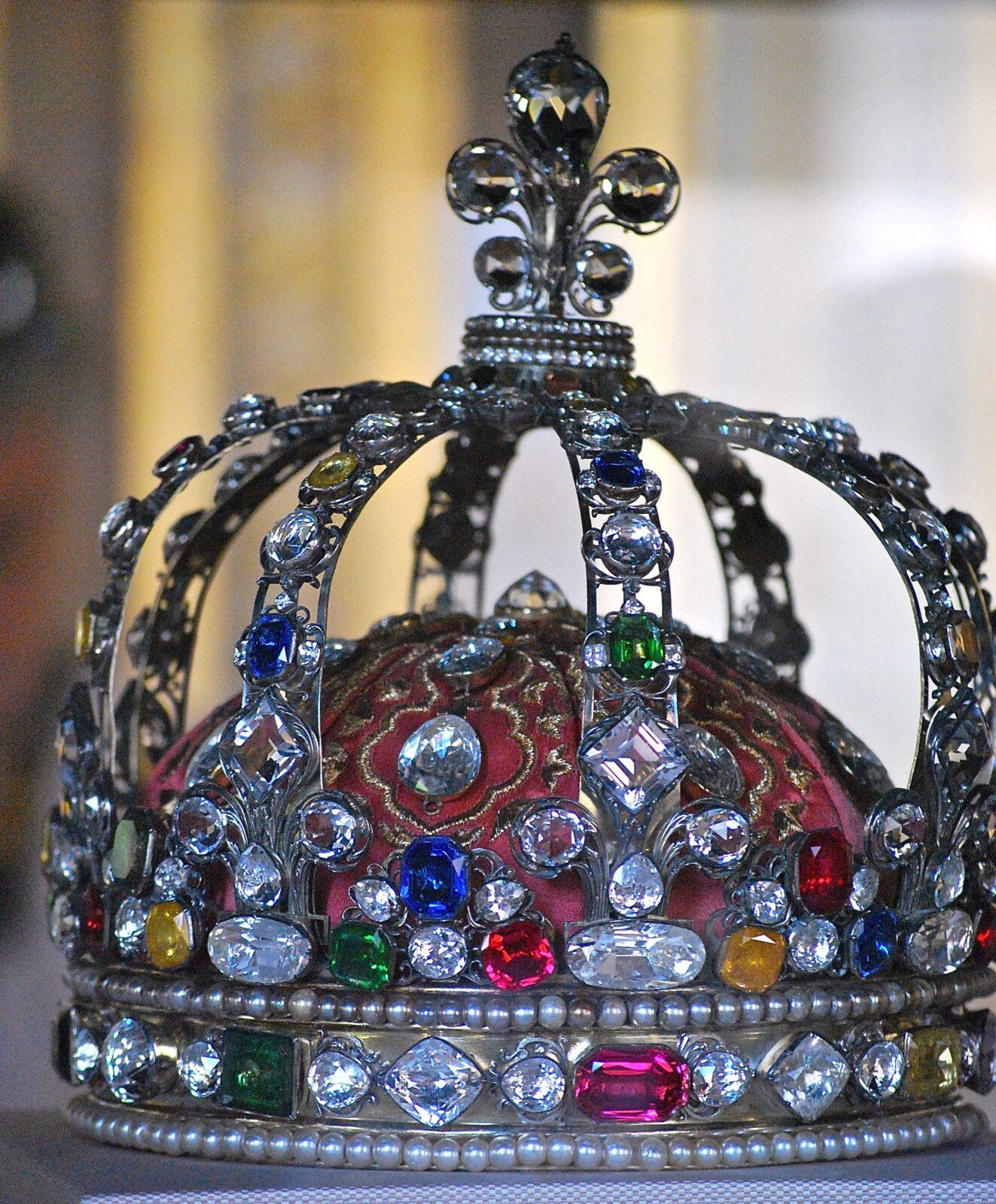
It is undeniable that the crown of high-heeled head of Empress Eugénie from the jeweler Gabriel Lemonnier amazes us. It should be noted that it was made for Empress Eugénie on the occasion of the Universal Exhibition of 1855. Napoleon I wanted to impress the world by presenting the jewels of the crown brought back for this event.

Furthermore, Martin Guillaume Biennais, a Parisian goldsmith, created the crown for the coronation of Napoleon I at Notre Dame. Let’s take a closer look: it is adorned with camellias and lace.

Similarly, Louis XV's crown is adorned with sapphires, rubies, topaz and emeralds and diamonds. It should be noted that in 1729, at the request of Louis XV, pearls and stones were replaced by copies.
In this regard, the crown originally contained 282 diamonds (including the Régent), 64 colored stones, and 237 pearls.
Let us continue with this jewel that symbolizes the ties between the sovereigns of France and Poland in the 17th century. This emblem of Poland was added to Louis XIV's collection in 1669.

Embossed gold, garnet, ruby, emerald and pearl
Also, we stop in front of a magnificent red spinel, which belonged to Anne of Brittany, Queen of France. It represents a dragon.
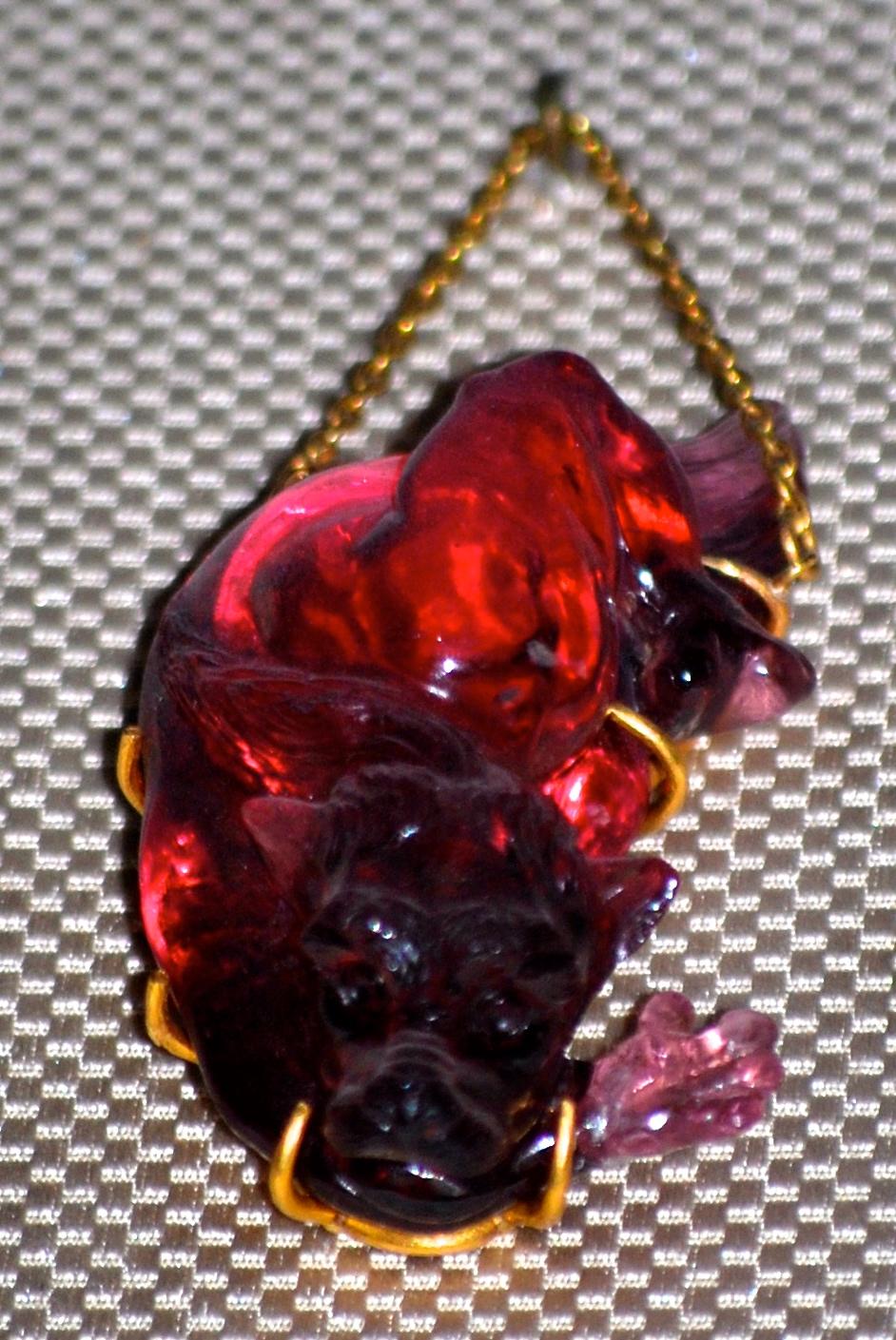
Red spinel, 107.88 carats.
Finally, you might also be able to admire these beautiful ornaments.

Or,
Credit to the Louvre Museum

Diamonds and Sapphires
Credit to the Louvre Museum
Like this tiara created by the jeweler Bapst. This work is adorned with 1031 diamonds and 40 emeralds.

Credit to the Louvre Museum
The jewelry stores Nitot père et fils created these bracelets from a set of diamonds and rubies that included, among other things, a crown and earrings…

Diamonds and Rubies
Credit to the Louvre Museum
To conclude, a final nod to the Galerie d’Apollon with this 19th-century engraving, in which a ray of moonlight welcomes the last visitors.
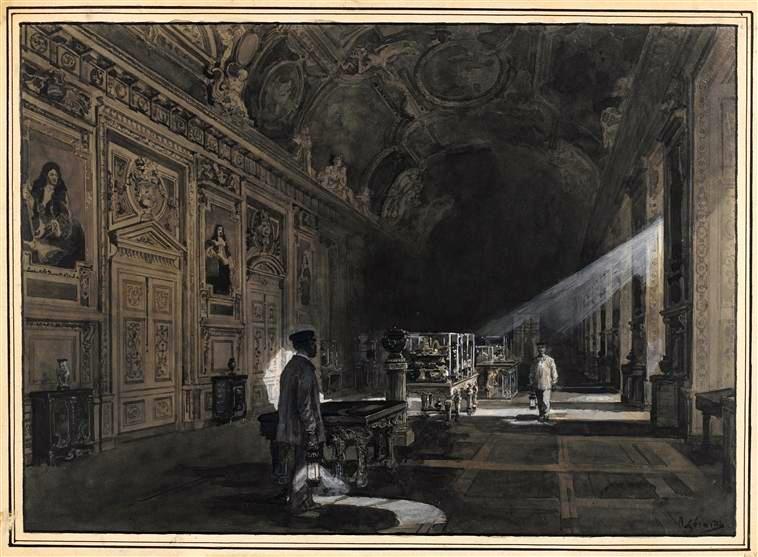
The Apollo Gallery at Night
Drawing from the 19th century
Credit RMN-Grand Palais/ Hervé Lewandowski
My thanks go to Marion Benaiteau, Musée du Louvre.
www.louvre.fr