



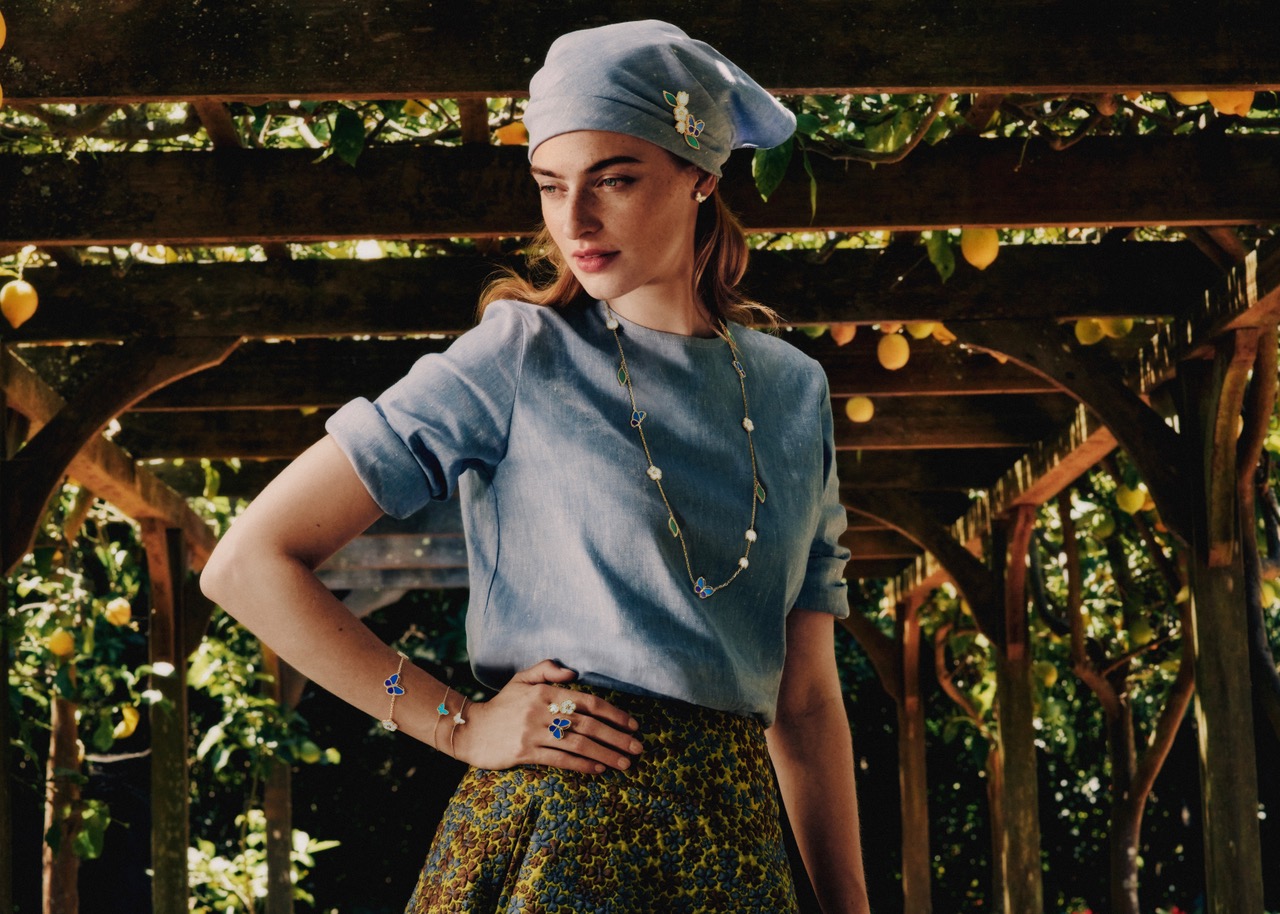
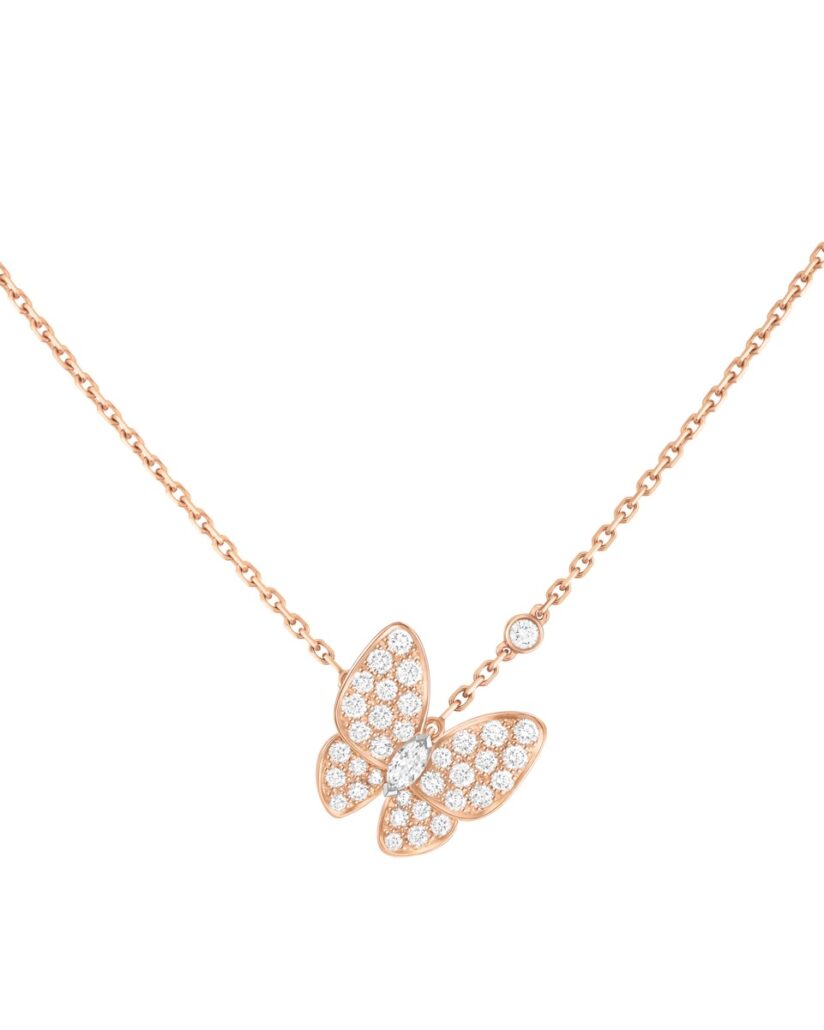
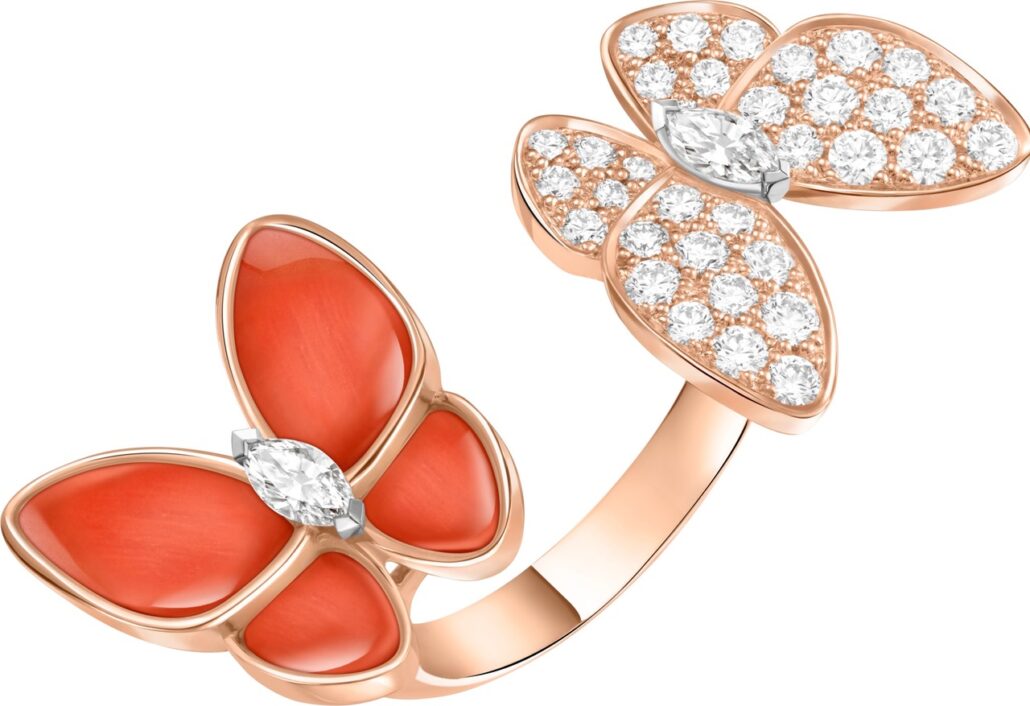
Launched in 2001, the Two Butterfly collection is instantly recognisable. The motif is stylised and asymmetrical, wings spread, as if hesitating for a second before taking flight. For the first time, it is dressed in coral, which the Maison pairs with diamonds and pink gold.
The showpiece is the Between the Finger ring, a style that first appeared in the Maison’s creations in the early 1970s. Here it brings together two dissimilar butterflies, one set with diamonds, the other in coral. Their wings overlap slightly to create volume, and each body is drawn by a marquise-cut diamond. A pair of earrings continues the dialogue of materials. Finally, a pendant in diamonds and pink gold shows a tilted butterfly that seems to chase the round diamond on the chain.
The Craftsmanship Behind the Colour
The coral is not chosen at random: each piece is selected and then matched so that the stones in a pair share a perfectly even tone. The diamonds remain within the highest grades, D to F for colour and IF to VVS for clarity.
The setting techniques each play their part. Grain setting pavés the wings, corner setting holds the marquise, and bezel setting encircles the pendant’s diamond. The mount is openworked so that light can pass through the stones, and the carefully polished pink gold softens the outlines.
Sweet Butterflies: Turquoise and Lapis Lazuli
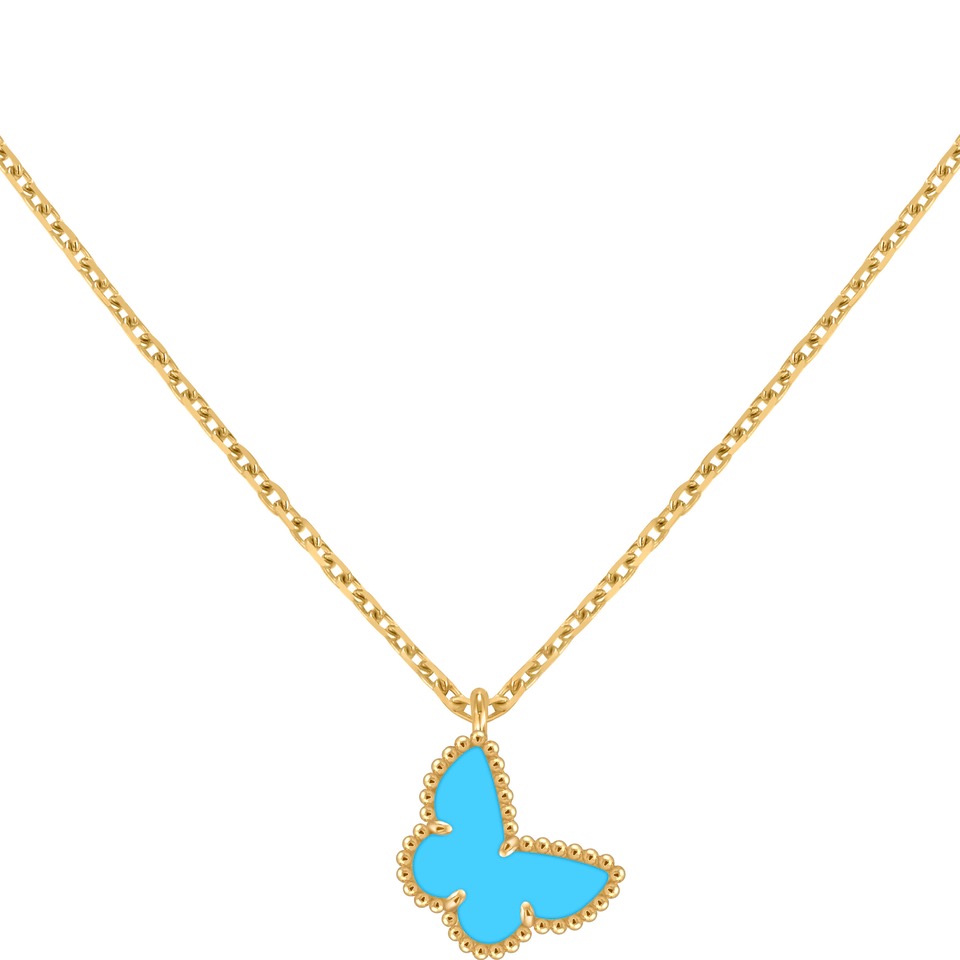
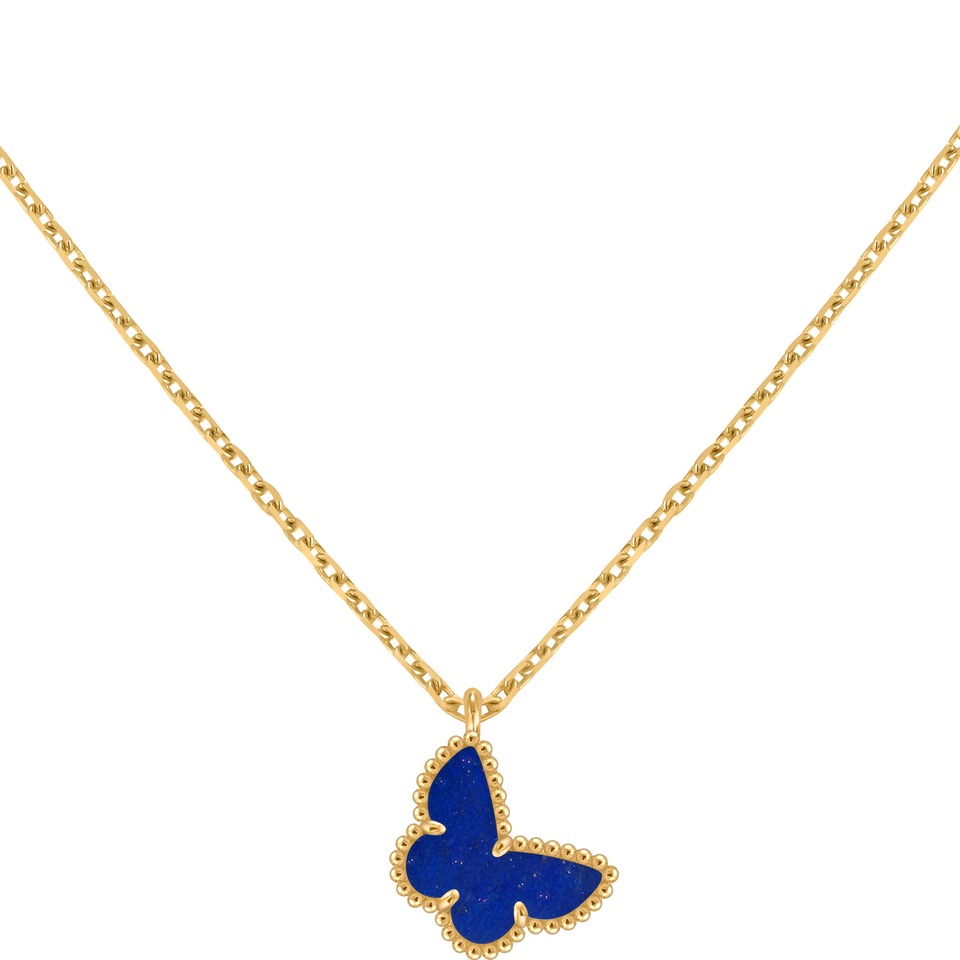
With Sweet Butterflies, the Maison opts for gentleness. Its butterfly, with clean lines and a slight tilt, suggests a flight already under way. This winter, yellow gold is paired with turquoise, vivid and luminous, ranging from pale to intense blue, or with lapis lazuli, a deep night blue barely flecked with pyrite. The line-up: two pendants, two bracelets and a pair of earrings.
Each gem is cut, polished, then set within a double beaded border, a Van Cleef & Arpels signature that the artisan finishes by hand to bring out the gold’s brilliance. The dimensions are deliberately miniature. These pieces can be worn every day, alone or layered, with an elegance that never tries to impose itself.
The Butterfly, the Maison’s Common Thread Since 1906
It is no surprise that the butterfly keeps returning: the archives mention a creation in pearl, ruby and emerald dating from 1906, the year the Maison was founded. Since then it has travelled through the decades on bracelets, necklaces, precious boxes and above all clips, a format dear to Van Cleef & Arpels. Van Cleef & Arpels.
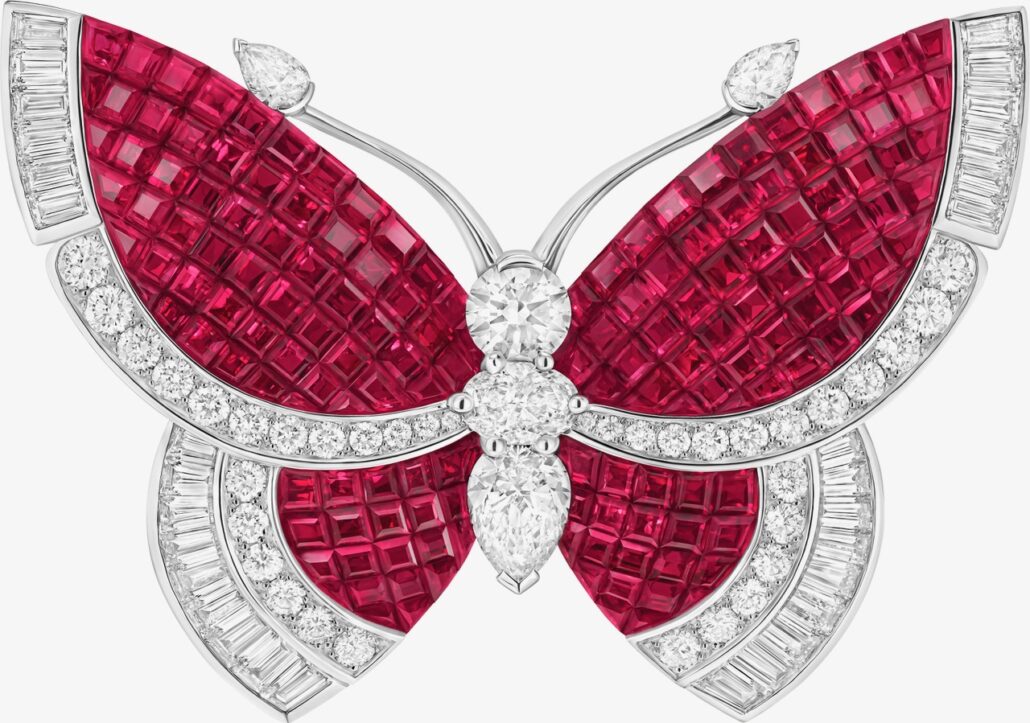
Materials have followed: precious or ornamental stones, coral, enamel, lacquer. From the 1970s, it adopted the Mystery Set, a technique patented by the Maison in 1933, which gives the wings a velvety sheen close to the reflections of the insect itself.
From Springtime to High Jewellery
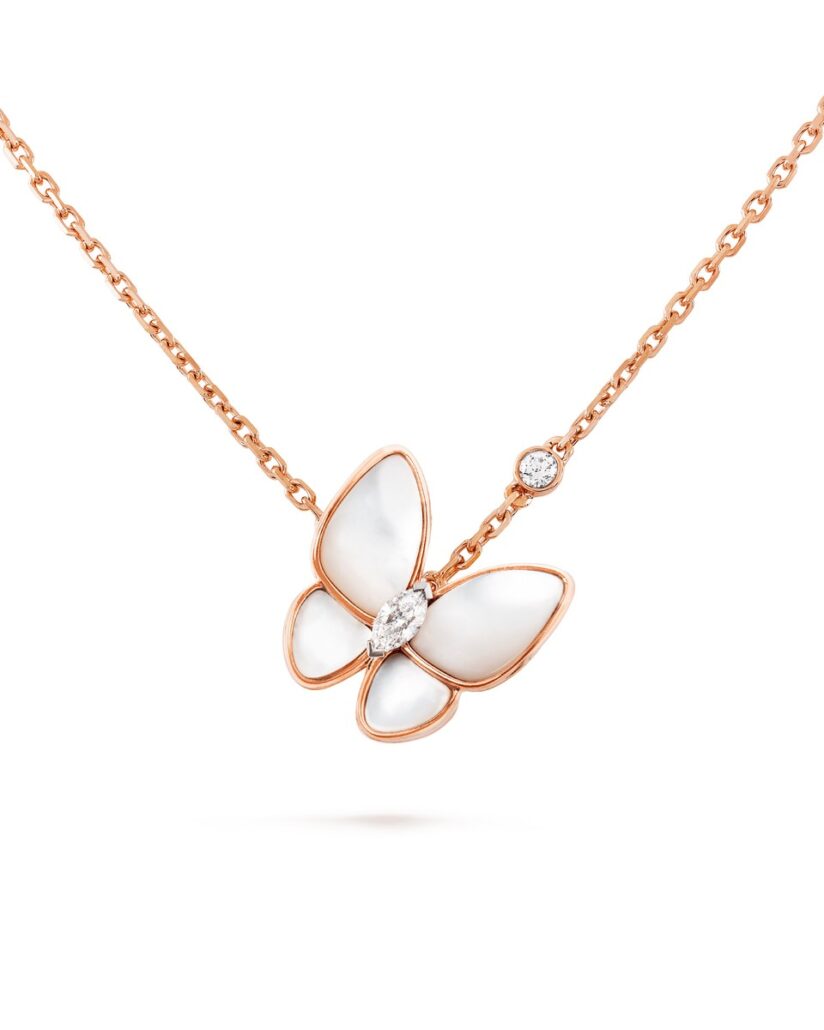
The motif now appears across all the Maison’s worlds. The Lucky Spring collection brings together butterflies, ladybirds and flowers in a cheerful palette. The Papillon clips spread their wings in white or grey mother-of-pearl. The Lacquered Papillons, born of a collaboration of more than twenty years with Japanese artist Junichi Hakose, turn each wing into a miniature painting through ancestral lacquer art.
In high jewellery, the design becomes finer still: delicate antennae, a body set with one or several gems, wings in Mystery Set, ornamental stone marquetry or textured gold. Emeralds, rubies, sapphires, garnets and tourmalines compose a masterfully controlled rainbow, as on the Kallima ring, the Flying Butterfly Between the Finger ring or the Jour Mystérieux clip.
When the Butterfly Comes Alive
In the world of Poetic Complications, the butterfly begins to move. The Lady Arpels Papillon Automate watch animates its motif in rhythm with the wearer. Lady Arpels Brise d’Été sends two butterflies racing across the dial on demand while flowers sway. It received the Ladies’ Complication Prize at the Grand Prix d’Horlogerie de Genève in 2024. The Fée Ondine, Éveil du Cyclamen and Brassée de Lavande automata extend this poetry on a larger scale, beating their wings on command.
Whether in radiant coral or deep blues, these Van Cleef & Arpels butterfly jewels prove that winter can also be a season of colour.