





De Beers Group member of the Natural Diamond Council
We continue our exploration of the mining companies that constitute the Natural Diamond Council, With
De Beers Group.
First of all, this mining company was founded in 1888. It is said to be one of the most important diamond mining companies in the world with expertise in exploration, mining, and marketing of diamonds.Moreover, it has been present historically in South Africa since the end of the 19th century. The De Beers Group is also active in Botswana, Namibia and Canada.

In collaboration with its partners, it employs more than 20,000 people across its entire pipeline. diamonds.The De Beers Group is committed to « Building Forever». We emphasize a different approach to limit the impact of mining activities on nature. This while encouraging the economic growth of producing countries, stimulating job creation to create a better future.
Indeed, from mines in South Africa through Botswana, Namibia and Canada, the De Beers Group produces approximately 35% of the global supply of rough diamonds. Upon its opening, the Voorspoed mine became the first major new diamond mine in South Africa in nearly two decades. It is noteworthy that this is the first of a new generation of mines of the 21st century. Because they meet the highest standards in terms of environmental and social performance.
© De Beers Group / NDC
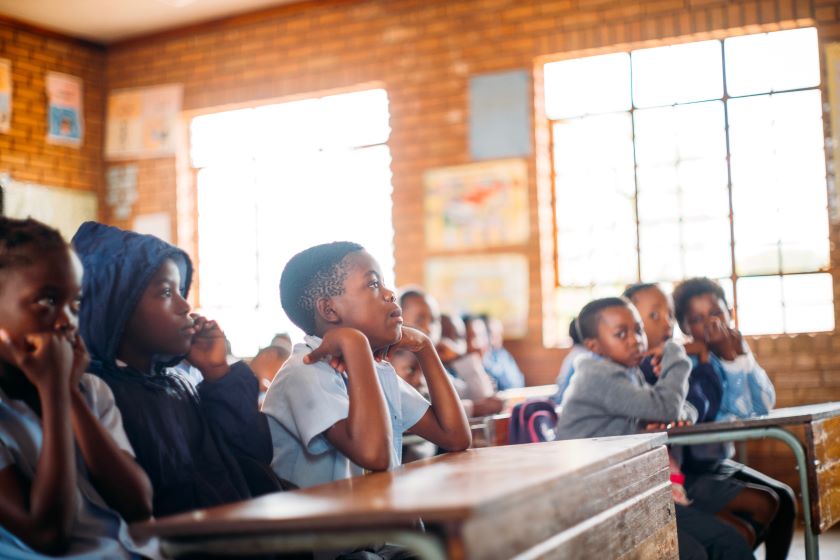
Voorspoed employs 451 people, including 23 in community projects such as the rural schools development program and the teacher development program.
from Ngwathe and Moqhaka. Also, this mine has a total potential of four million carats. It is also known for its large colored diamonds that it produces occasionally.
In addition, the Venetia mine employs approximately 4365 people; it minimizes the impact of its operations on the environment. Located in the Limpopo province in northeastern South Africa, its potential was discovered in 1903. It is expected to last until 2046 to produce approximately 94 million carats.
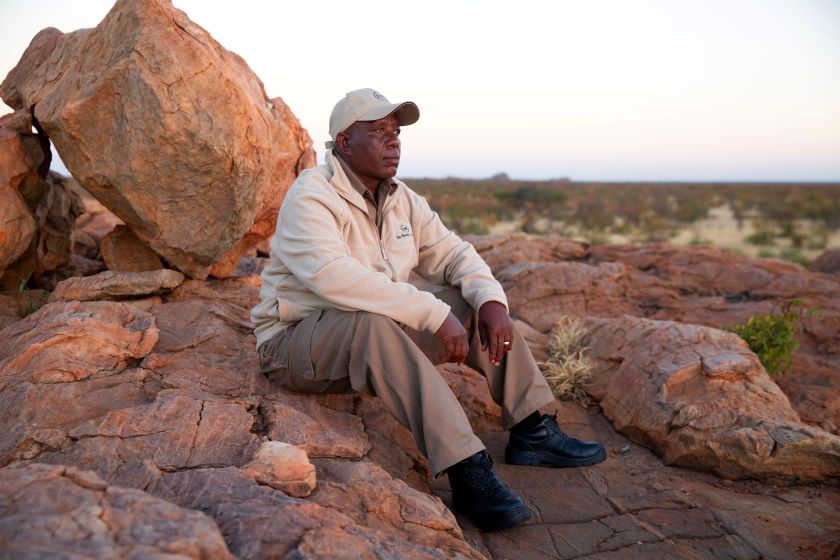
Picture: James Oatway
© De Beers Group / NDC
Jwaneng is the mine diamonds the richest in the world in terms of value.
It was discovered in 1971 in Botswana.
Jwaneng means «a place of small stones» in Setswana. This open-pit mine is located in the south-central part of Botswana, approximately 250 km southwest of Gaborone on the edge of the Kalahari Desert.
In 2019, production there was 12.5 million carats.
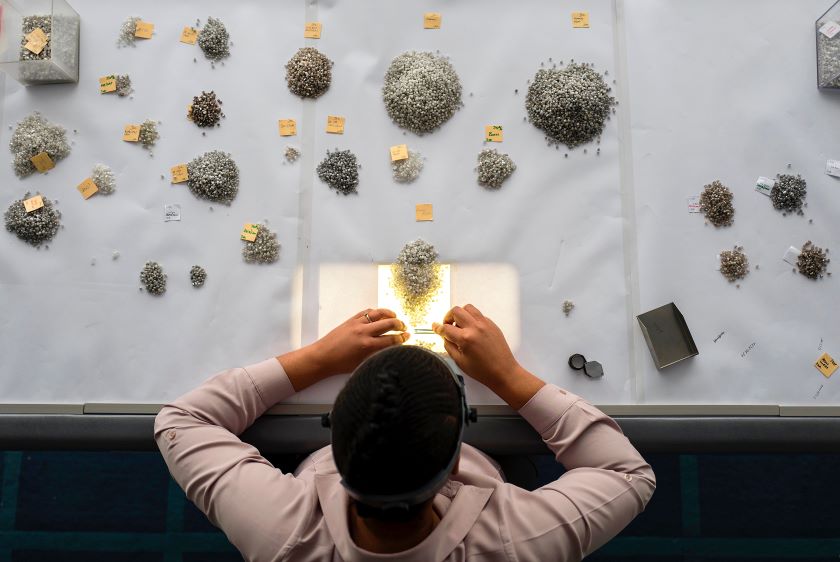
DTC Botswana, Gaborone, Botswana.
Employee permission form signed.
© De Beers Group / NDC
In the east of Botswana, 240 km west of Francistown, the center of the first rush to the gold mines of southern Africa is the Orapa mine. It is the oldest mine in operation at Debswana and the largest open-pit diamond mine in the world, just behind Jwaneng in terms of production value. Orapa has the second largest kimberlite diamond deposit in the world, consisting of two separate veins that merged near the surface about 100 years ago.
93 million years.
The kimberlite diamondiferous rock, the host volcanic rock that brings the diamonds On the surface, it was discovered in 1967, a year after Botswana’s independence, by Manfred Marx, a young geologist newly graduated from the University of Cape Town.
The following year, it was declared a major discovery.
This mine employs 2,800 people today and produces about 12 million carats of diamonds.
In the kimberlite zone of Orapa is Letlhakane,
«Little reeds» in Setswana, which is the deepest mine in Debswana.
The latest mine of Debswana, and a joint venture with the people of Botswana, is Damtshaa.
It opened in 2003 and is located in the center of Botswana and also produces 12 million carats of diamonds.
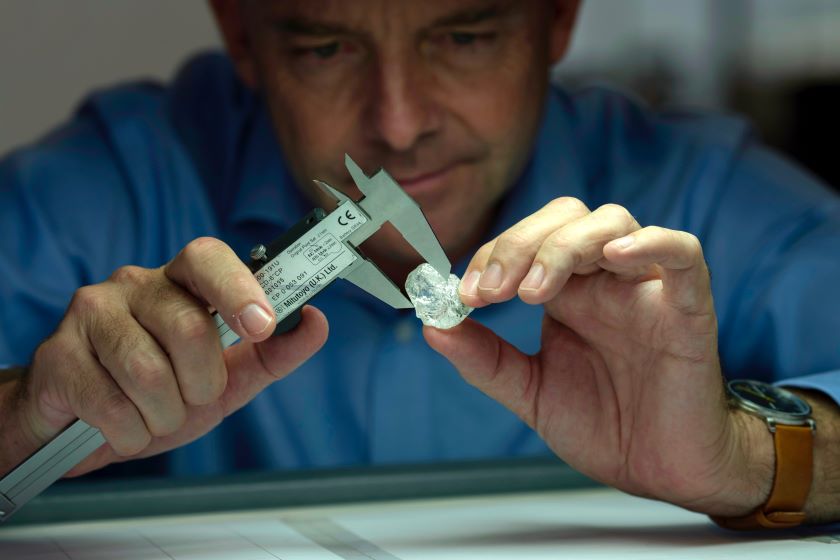
DTC Botswana, Gaborone, Botswana.
Steve Millan.
Employee permission form signed.
© De Beers Group / NDC
The Namibian deposits along the north and south coasts are so rich that the first prospectors could sometimes find sparkling diamonds on the sandy surface of the valley bottoms. diamonds The most important ones are located in the south while the north offers smaller diamonds.
De Beers Group also has a fleet of six vessels capable of exploring and recovering diamond-bearing materials from the Namibian seabed.
It is certain that Namibia has the deposits of diamonds The richest sailors in the world, estimated at more than 80 million carats.
The recovery of diamonds marins now produces more in annual volumes than
the terrestrial exploitation of diamonds From the country!
To conclude, let's go to Canada where there are three mines Victor Mine,
Gahcho Kué Mine and Snap Lake Mine.
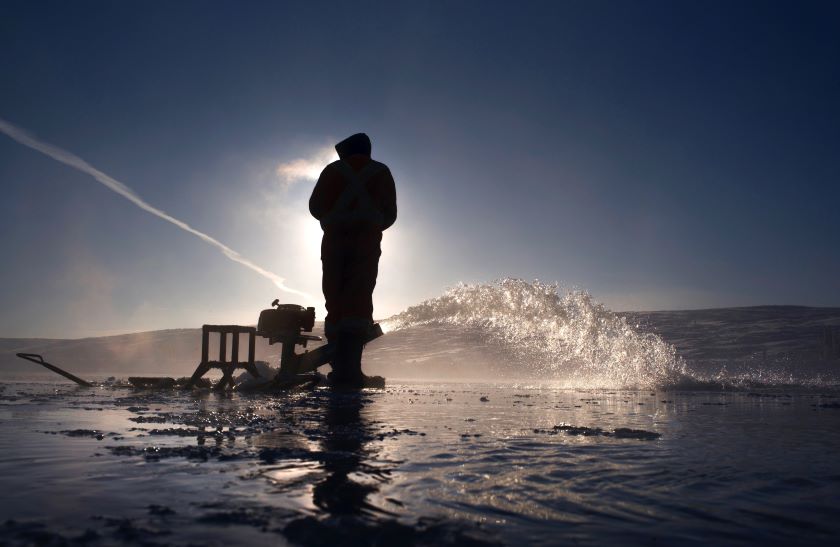
A worker with Nuna Logistics is silhouetted against the sky as he monitors a pump used to flood a section of the ice road.
© De Beers Group / NDC
First of all, the Victor mine is located in the lowlands of James Bay. In northern Ontario, about 90 km west of the coastal community of the Attawapiskat First Nation. Victor Mine is an open-pit mine and the first open-pit mine in the world. diamonds from Ontario. There are 18 kimberlite deposits, 16 of which are diamondiferous. The kimberlite is a diamondiferous volcanic rock, rich in magnesium and iron.
Then, Gahcho Kué Mine is an open-pit mine located in the Northwest Territories. It extracts between 4 to 5 million carats per year. Finally, Snap Lake is located in the Northeast of Yellowknife; it is a fully mechanized mine. underground deposit that produces about 2 million carats of rough diamonds once a year.
Each diamond It is exceptional. For it was forged at the same time as the Earth; discovered by explorers and adorned by jewelers, it amazes us.
Aware of this treasure, the De Beers Group, in partnership with the countries in which it operates, feels responsible for protecting the natural world. And to improve people’s lives throughout the diamond journey. To do this, the De Beers Group is thinking of a model to have a positive and lasting impact, Building Forever.
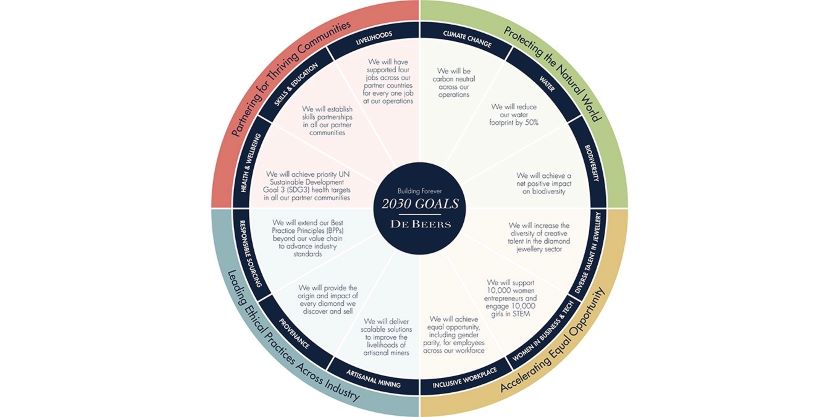
To put it simply, there are 12 ambitious projects that the De Beers Group has decided to achieve by 2030. These projects focus on 4 pillars. These are cutting-edge ethical practices, partnerships for thriving communities, the protection of the natural world, and accelerating equal opportunity.
Building Forever has the power to support a better future in a fundamental and lasting way.