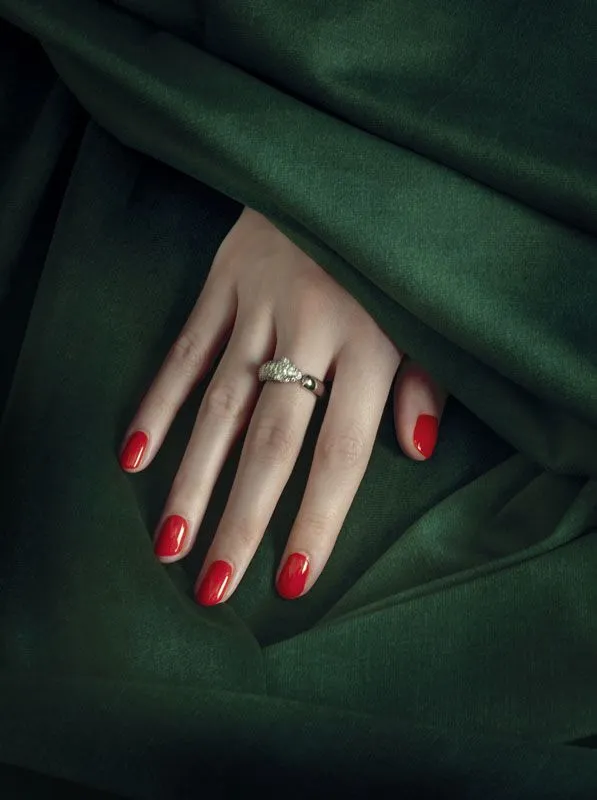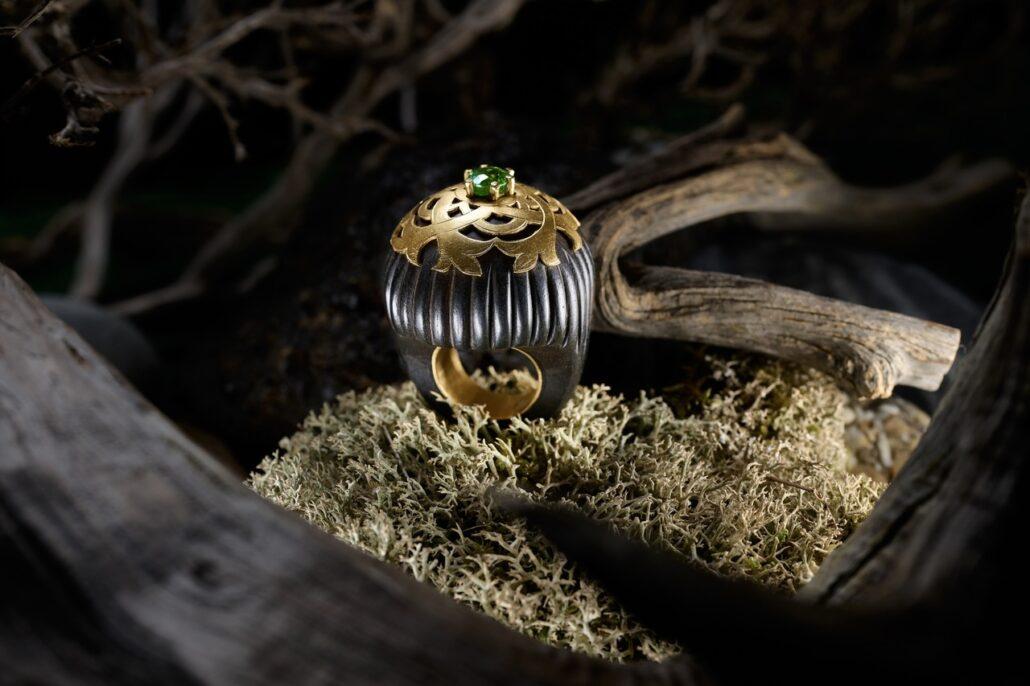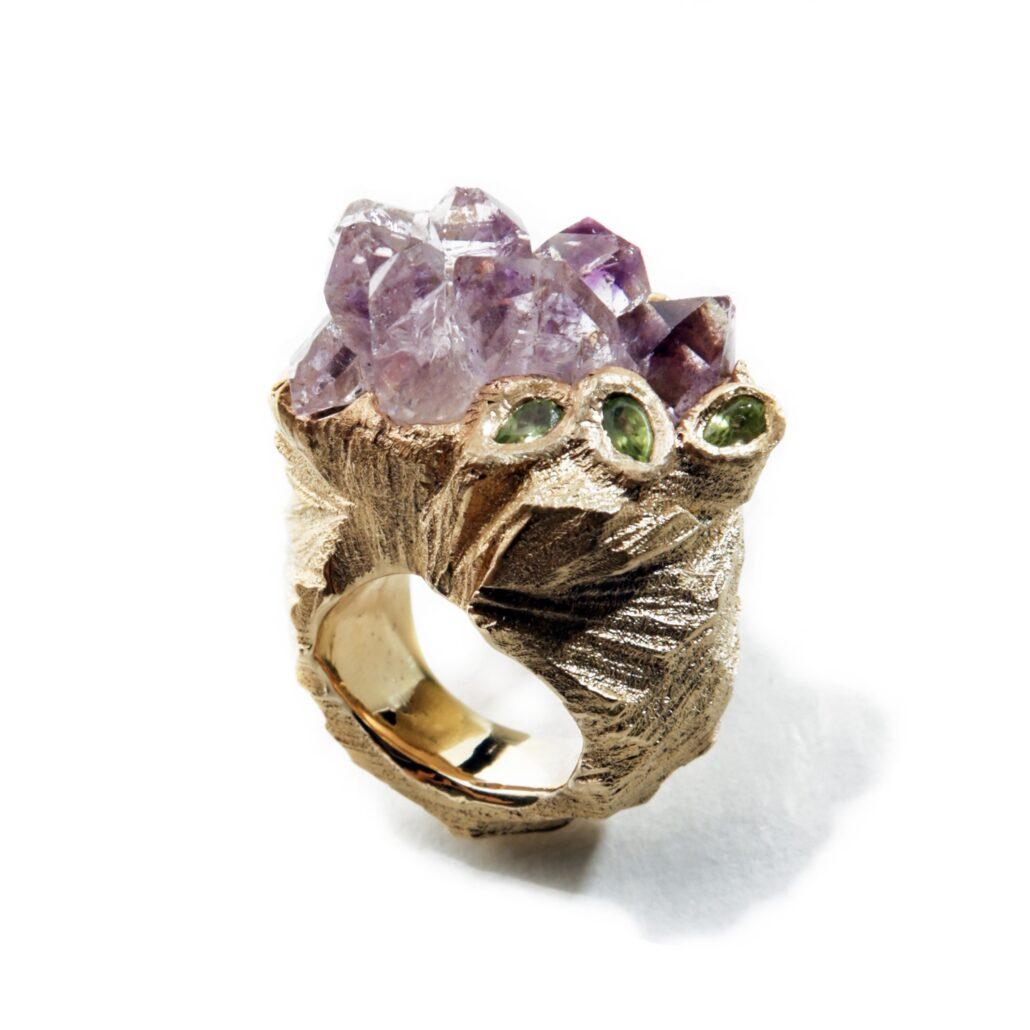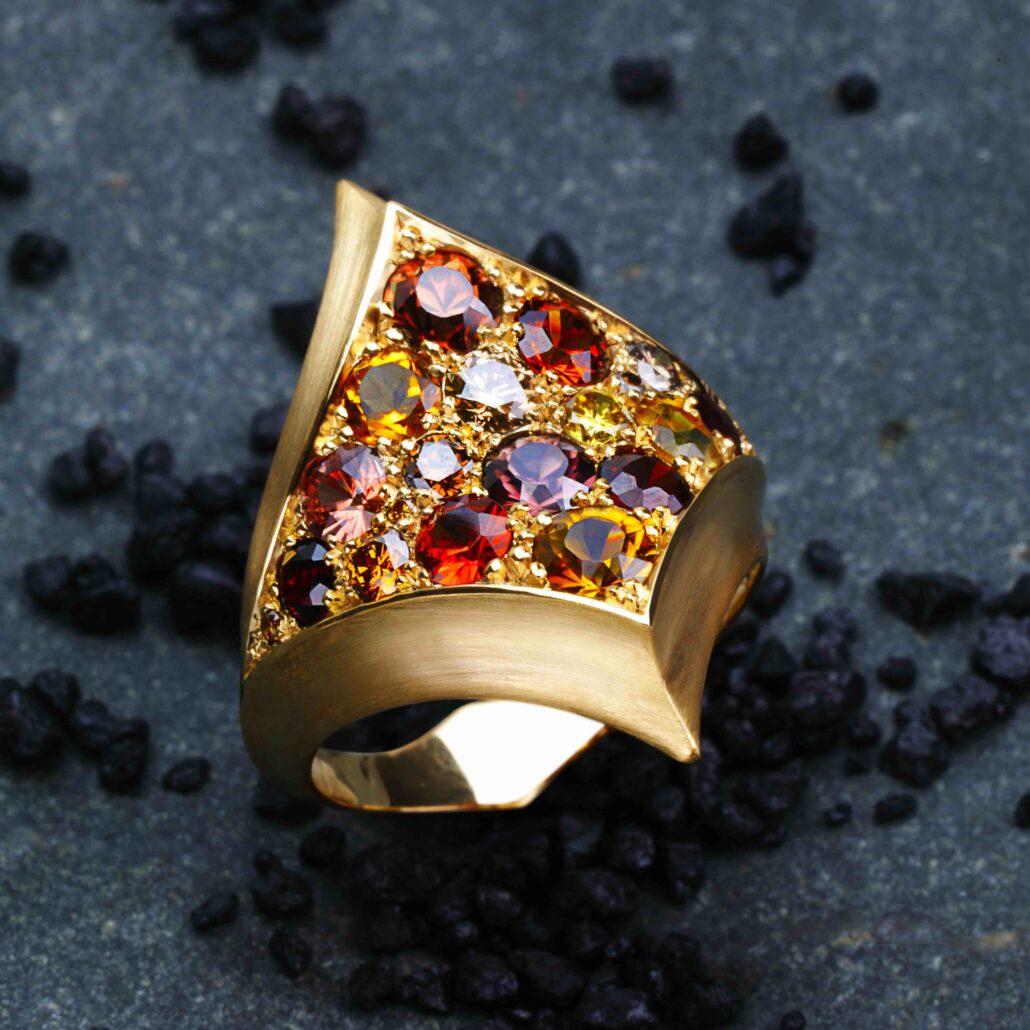







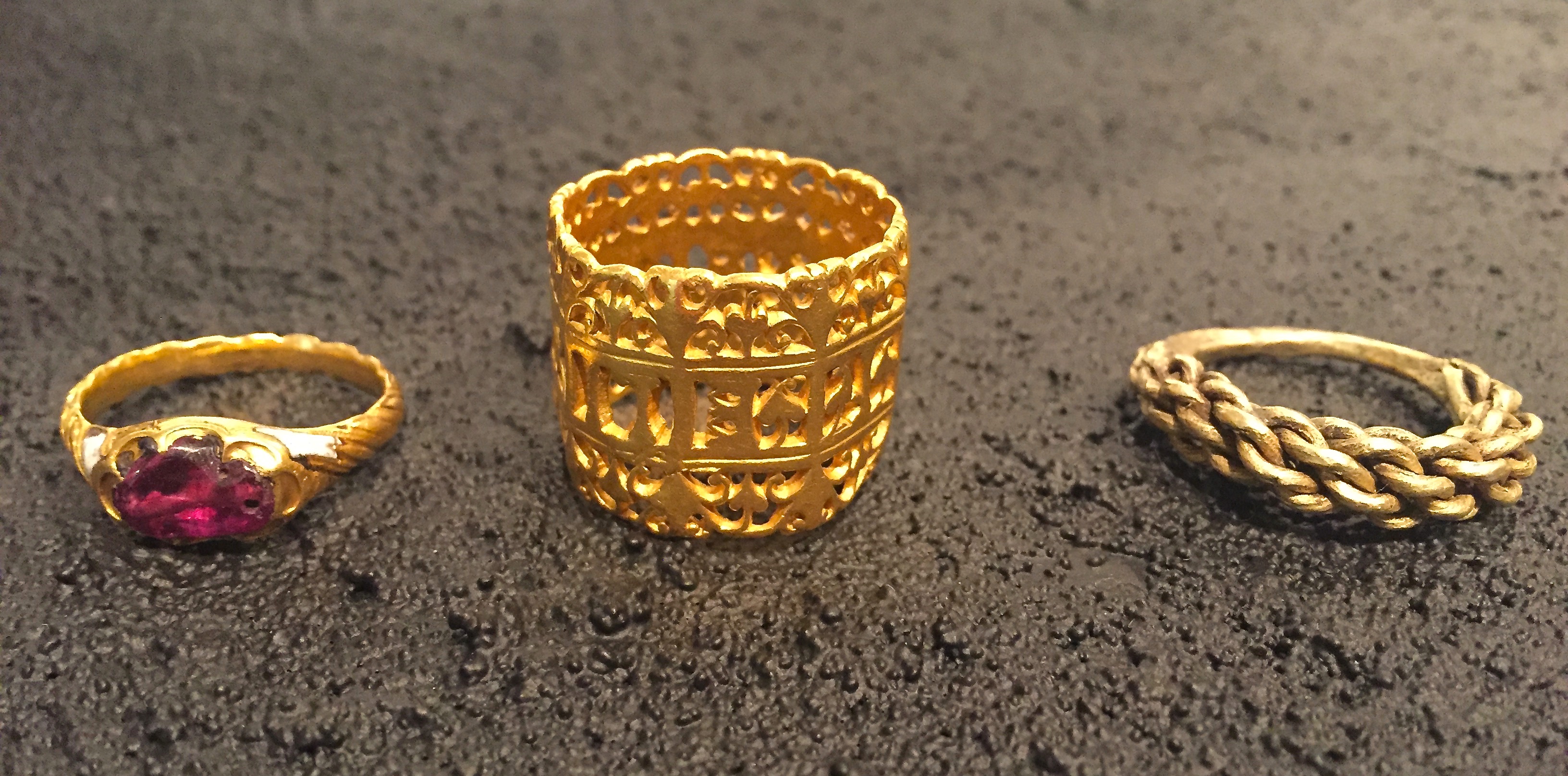
The art gallery The Illuminations is a place beyond time where one finds true treasures.
To begin with, this is a fabulous journey through time that Esprit Joaillerie offers you. A meeting with the owner of the gallery The Illuminations, the fascinating Sandra Hindman. A great specialist in the Middle Ages and Renaissance, For Esprit Joaillerie, she presents some of her masterpieces.

How do you become an expert in ancient manuscripts and antique jewelry?
Indeed, it’s a good question, especially because «expert» is a very commonly used term (sometimes misused). I have a PhD in history of the’Medieval art, with a specialism in medieval manuscripts. I have taught most of my life in graduate programs. In the major universities (my former students are curators and museum directors and high-level professors at important colleges and universities). During my academic career, I have published more than ten books on medieval art and Renaissance, mainly on manuscripts.

Well, that’s a good question, especially because “expert” is a word much used (and perhaps misused). I have a PhD in medieval art history, with a specialty in medieval manuscripts. I’ve taught most of my life in graduate programs at major universities (my former students are curators and directors in high-profile museums and professors at important colleges and universities). During my academic career, I’ve also published more than ten books on medieval and Renaissance art, mostly on manuscripts.

© Esprit Joaillerie
However, in terms of the rings and jewelry, That’s another story. We never studied the rings and the jewelry when I was at university. They were simply not considered part of traditional art history. In fact, it was an extra workload on my time as a student to create a true history of jewelry.
However, my research on medieval rings, their styles and their historical context was facilitated by my training as an art historian. To delve a little deeper into the techniques of jewel, I took a series of courses at the GIA (Gemological Institute of America).
As far as rings and jewelry They are concerned, that’s another story. I never studied rings and jewelry when I went to university. They simply weren’t considered part of mainstream art history. In fact, efforts to construct a real history of jewelry This postdates my time as a student. However, trained as an art historian, it was not a big jump for me to learn about medieval rings, their stylistic forms and historical context. To better understand technical considerations, I became certified through a series of courses I completed with the GIA (the Gemological Institute of America (the premier program for jewelry)).
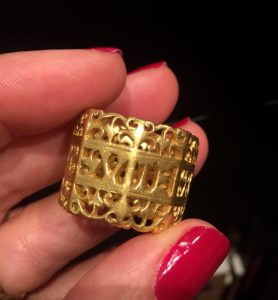
«Utere Felix»
Porte-Bonheur
© Esprit Joaillerie
I like to think that this dual training, as well as the experience that leads to hundreds, probably thousands of manuscripts and medieval rings, They really qualify me as an ’expert«. But one person never knows enough. Dialogue with other specialists, conservators, dealers, and collectors around the world enriches my expertise.
I like to think that this dual training – as well as the on-the-spot experience handling hundreds, probably more like thousands – of medieval manuscripts and rings It truly qualifies me as an “expert.” But, one person never knows enough. Dialogue with other scholars, curators, dealers, and collectors around the world is an important part of being an “expert.”
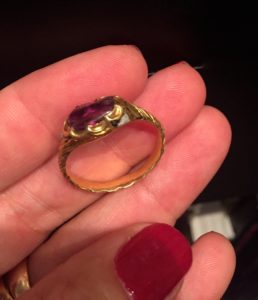
© Esprit Joaillerie
Have you been to archaeological sites?
No, not at all, except as a visitor like in Pompeii and Herculaneum. I have always thought it would be romantic to carry out archaeological excavations during the summer, but I never had the time or opportunity. Admittedly, it would have been a great learning experience.
No, not at all, except as a visitor to places like Pompei and Herculaneum. I always thought it would be romantic to work on a dig one summer, but I never had the time or occasion. Surely, it would have been a great learning experience.
Which ancient period do you like?
I am a medievalist; I love the Middle Ages. And I suppose what I like the most is the period I know best: the Gothic art from 1200 to 1500.
I’m a medievalist. I love the Middle Ages, and I guess what I like best is the period I know best about Gothic art from about 1200 to 1500.

What is the oldest book you have ever owned?
Twice I have manipulated fragments of the manuscripts of the Dead Sea, dating from the time of Jesus Christ 2,000 years ago; this is certainly the most important archaeological discovery of modern times, including an incomparable number of fragments from the Old Testament. The fragments of the manuscripts of the Dead Sea have been found in museums. After this, the oldest manuscripts date from the Carolingian and Ottonian periods (approximately 800 to approximately 1000 AD).
Twice I have handled fragments of the Dead Sea Scrolls, dating from the time of Jesus Christ 2,000 years ago, and certainly the most important archaeological find of modern times, including an incomparable number of fragments of the Old Testament. The Dead Sea Scroll fragments ended up in museums. After that, the oldest manuscripts date from the Carolingian and Ottonian eras (e.g., from about 800 to about 1,000 AD).
What is the oldest and most mysterious jewel?
The one you love the most?
These are very difficult questions. I am like a mother with her many children; I love them all for different reasons, in different ways, and find them all fascinating.
Big and small, old and new.
But these two rings are truly memorable.
Those are really hard questions. I’m like a mother with many children — and I like them all for different reasons, in different ways and find them all fascinating, big and small, old and not-so-old.
But, these two rings are truly memorable.
It’s probably the first ring I’ve worked on, the most incredible one, a octagonal diamond Roman from the 3rd century AD.
It is one of the first and most important rings with diamonds Known. The diamond He himself comes from Golconde mines in India.
This ring, unlike most others, antique diamonds The existing one has a provenance dating back to the nineteenth century.
It is now in the Griffin collection on deposit at the Metropolitan Museum of Art.
Probably the most incredible ring I ever handled is the first, a Roman Octahedral diamond from the 3rd A century AD, one of the earliest and most important diamond rings known. The diamond It itself comes from the mines of Golconda in India. This ring, unlike most of the other extant Ancient diamonds, The Griffin Collection is a collection of works of art from the nineteenth century. It is now in the Griffin Collection on deposit in the Metropolitan Museum of Art.
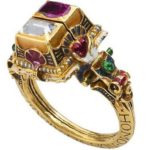
The second ring is a Renaissance ring A gimmel dating from 1631. It was a wedding ring for a German couple whose names are inscribed on it, reminding them of their birth and death through the presence of an enamelled baby with a skeleton. Set with a ruby and a diamond, the ring was in the Rothschild collection, stolen from the family in Paris and then hidden by the Nazis in the salt mines with works such as Jan van Eyck’s Ghent Altarpiece and returned. The story of its origins and subsequent history is incredible. It is also in the Griffin collection on deposit at the Metropolitan Museum of Art.
The second ring of special note is a Renaissance gimmel (meaning “twin”) ring dated 1631. It was a marriage ring for a German couple, whose names are inscribed, reminding them of birth and death, through the presence of an enameled baby and skeleton. Set with a ruby and a diamond, the ring was in the Rothschild Collection, stolen from the family in Paris, then hidden by the Nazis in the salt mines with works like Jan van Eyck’s Ghent Altarpiece, and eventually restituted. The story of its origins and subsequent history is amazing. It is also in the Griffin Collection on deposit in the Metropolitan Museum of Art.
It is no accident that both of them come from the collection of Benjamin Zucker, a dealer in antiques. diamonds and colored stones in New York. Benjamin is surely one of the smartest collectors of modern times and also one of the kindest and most generous people in the world.
It is not an accident that they both come from the collection of Benjamin Zucker, a diamond and colored stone dealer in New York. Benjamin is certainly one of the most astute collectors of modern times and (incidentally) one of the nicest, most generous people in the world.
How do you obtain these treasures?
I like to say that the rings find us. There is no real reliable market or auction for these. jewelry. False expertise is widespread. We buy rings mainly from dealers in other fields of art or even from jewelers that are not specialized in the Middle Ages or the Renaissance. Renaissance. We buy from private collectors who are refining their collections or from people who have inherited jewelry from their ancestors.
I like to say that the rings Find us. There is no reliable auction market for rings. Fake expertise is rife. We buy rings mostly from dealers in other areas of art or even jewelers not specialized in the Middle Ages and Renaissance. We buy from private individuals, collectors who are refining their collection, or people who have inherited rings from their ancestors.
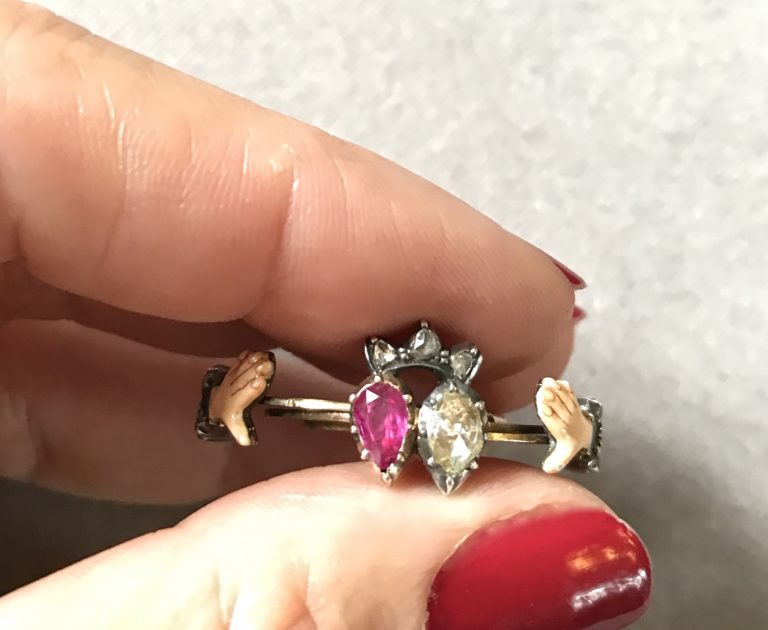
Ruby, Diamond, Gold.
© Esprit Joaillerie

Ruby, Diamond, Gold.
© Esprit Joaillerie
Thanks to our dedicated website www.medieval-rings.com, We receive many requests for ring sales, perhaps up to once a week. We are very cautious and do not hide behind dubious scientific expertise. For each ring, we try to obtain the opinions of the best connoisseurs in each micro-specialty, usually more than one for each ring.
It takes time and money, and it’s not easy.
But in the end, it’s rewarding. It’s a very complex field.
Partly because of our dedicated website www.medieval-rings.com, We receive many inquiries for rings for sale, perhaps as many as one a week. We are very careful. We do not hide behind dubious scientific expertise. For every ring, we try to get input from the very best specialists in each micro-area of specialization, usually more than one for each ring. This takes time, it costs money, and it is not easy. But it pays off in the end because we can stand behind our offerings with confidence. It is a very complicated field.
What does an antique jewelry buyer look for?
Everyone is different, fortunately. Some buyers bring their rings; Some keep them in hidden boxes. Others like the stones, or rings with tags or that are linked to historical figures (which identify identities from the past), or rings from their country of origin (like the English rings), or rings from certain periods or cultures (like the Merovingian or Byzantine rings). The budget should be taken into account.
The record price of a ring (Not at auction) is probably about a million dollars. Not everyone can spend that kind of money on a ring. But I think it’s incredible that you can still buy a portable story for less than 5,000 $, like a Posy Renaissance ring, which has a Shakespearean inscription engraved on its interior. It’s magical..

Diamond, enamel, gold
© Esprit Joaillerie
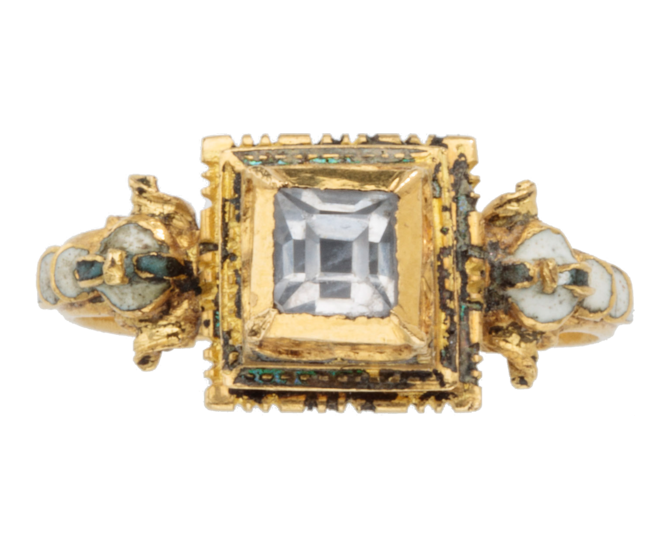
Everyone is different, fortunately. Some buyers wear their rings; Some keep them in boxes hidden from view. Some buyers like certain stones, or rings with signets or connected to historical persons (that evoke identities from yesteryear), or rings from their country of origin (like English rings), or rings from certain periods or cultures (like Merovingian rings or Byzantine rings). Budget is also an issue. The record price for a ring (not at auction) is probably around one million dollars. Not everyone has that kind of money to spend on a ring.But, I think it’s incredible that you can still buy a wearable piece of history for less than – $5,000 like a Renaissance Posy Ring, which has a Shakespearean inscription engraved on its interior. It’s magic.
What gave you the idea for this book about Byzantine wonders?
I bought two small collections of Byzantine rings, and to valorize them and bring them to the public’s attention, I decided to write this mini-catalogue. I was also inspired by the success of Byzantium and the West: Jewelry in the First Millennium, a catalogue written in 2012 by Jeffrey Spier, now chief curator of antiquities at the J. Paul Getty Museum. Jeffrey’s excellent catalogue, posted in full on his www.academia.edu page, has received 4000 amazing reviews. It is among the most-consulted book or article on this site. Golden Marvels is a kind of sequel to Byzantium and the West. I hope it will be just as successful..
I bought two small collections of Byzantine rings, and to valorize them and bring them to the attention of the public, I decided to write this mini-catalogue. I was also inspired by the success of Byzantium and the West: Jewelry in the First Millennium, a catalogue written for us in 2012 by Jeffrey Spier, now the Senior Curator of Antiquities at the J. Paul Getty Museum. Jeffrey’s excellent catalogue, posted in its entirety on his website, is available here. www.academia.edu The page has enjoyed an astonishing 4,000+ views. It is among the most consulted book or article on this site. Golden Marvels is a kind of sequel to Byzantium and the West. I hope it will be as successful.
Is there a particular ring that is the origin of this work?
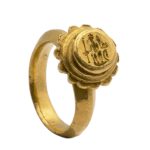
Early Byzantine, c. 500-600 AD © Les Enluminures
They are all extraordinary. But the Tyche of Constantinople is unique. It is a ring Massive, engraved with the personification of the city, and it was surely carried by a powerful person in the capital of the Byzantine Empire c. 500-600 AD.
They are all extraordinary. But, the Tyche of Constantinople is unique. It’s a massive ring, engraved with the personification of the city, and it was surely worn by a powerful person in the capital of the Byzantine Empire c. 500-600 AD.
Is there a particular stone that Byzantine rings are made of?
Not really. Apart from the emeralds that were used in the early Byzantine period (and there is an excellent example in our catalogue), the Byzantines seem to have preferred other stones. rings engraved in gold.
Not really. Apart from emeralds, which are used in Early Byzantium (and there is an excellent example in our catalogue), the Byzantines seem to have preferred engraved gold rings.
Did anyone know the goldsmiths of that era?
No. Jeffrey Spier suggested the existence of certain specialized workshops based on the evidence of the rings themselves, but we know very little about Byzantine or even Western goldsmiths.
No. Jeffrey Spier has proposed the existence of certain specialized workshops on the basis of evidence of the rings themselves, but we don’t know much that is concrete about Byzantine or even Western goldsmiths.

How long did it take you to complete this work?
The writing period is not long. But, by studying the rings, gathering the appropriate expertise, and putting the right person in touch for the introduction, all of this takes time. Thus, the design. I have the most amazing team in Paris that oversees the design and layout, two photographers in the United States who specialize in jewelry, and an excellent printing company in Italy with whom we have already worked on ring projects. The finished work always results from the collaboration of many people, working discreetly behind the scenes.
I bought the rings It started about a year ago, and I have been working on the book from time to time ever since. The actual period of writing is not long. But, studying the rings, Gathering the appropriate expertise, commissioning the “right” person for the introduction, all of this takes time. So does the design. I have the most amazing team in Paris who oversees design and layout, two photographers in the States who are skilled at jewelry shots, and an excellent printer in Italy, with whom we’ve worked on ring projects many times in the past. The finished work is always the result of the collaboration of many individuals, mostly working behind the scenes.
The meaning of Byzantine rings?
Diana Scarisbrick says it well, and I quote her introduction: «While civilization disappeared through Ottoman plunder and conquest, the current collection of rings brings it back to life again; in fact, they are «Byzantine golden wonders».».
Diana Scarisbrick says it well, and I quote her introduction: “Whereas the civilization has vanished through pillage and the Ottoman conquest, the present collection of rings brings so much of it to life again that they are indeed ‘Byzantine golden marvels’.”
Speaking of the wedding ring (XAPIC), what do we know about this couple?
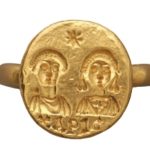
Early Byzantine, 7th century © Les Enluminures
Unfortunately, we know nothing about them. So we can assume that they were important people, perhaps even within the imperial circle, due to the quality of the gold, the weight of the ring, and the skill of the engraving. Not everyone could afford such an object.
Unfortunately, we know nothing about them. So, we can assume that they were important people, perhaps even in the imperial circle, because of the quality of the gold, the weight of the ring, and the skill of the engraving. Not everyone could afford such an object.
Where can I get this book?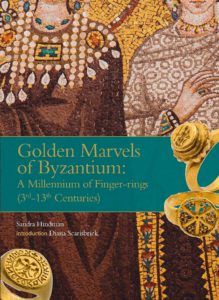
At Les Enluminures (info.lesenluminures.com) for 13.00 €.
At Les Enluminures (info.lesenluminures.com) for $15.00.
What will be the next «miracle» of the Illuminations?
The next «miracle» as you call it is close to my heart. Over the last fifteen years, I have bought pendants – reliquaries and amulets – and put them aside with the idea of making a book and mounting an exhibition on this little-studied field. We have about 45 objects, and the book is in progress.
The next “marvel” as you call it is dear to my heart. For the last fifteen years, I have been buying pendants – reliquaries and amulets – and putting them aside with the idea of commissioning a book and mounting an exhibition on this little-studied field. We now have about 45 objects, and the book is in progress.
Cynthia Hahn, one of the world’s most renowned scholars on reliquaries, writes the book’s narrative, and Beatriz Chadour-Sampson, a historian of jewelry of considerable note, contributes to the catalogue. This will be an exceptional work. Beautiful objects seen through the lens of a dazzling photograph. An animated text and numerous comparative photos bring the works to life in a new way. The objects will be featured in a special exhibition (with an extraordinary surprise display) mounted at TEFAF Maastricht in March 2018. I won’t say more. And above all, don’t miss it.
Cynthia Hahn, one of the world’s most renowned scholars on reliquaries, is writing the narrative of the book, and Beatriz Chadour-Sampson. A jewelry historian of considerable note, is contributing the catalogue. It will be an exceptional work. Beautiful objects seen through the lens of dazzling photography. A lively text, and many comparative photos bring the works to life in a new way. The objects will debut in a special exhibition (with an extraordinary surprise display) mounted at TEFAF Maastricht in March 2018. I won’t say more. Stay tuned. Don’t miss it.

Many thanks to Sandra for these wonderful pieces and the passion with which you take us on a journey through the world of antique jewelry.
See you soon for more medieval discoveries.
The Illuminations
1 rue Jean-Jacques Rousseau 75001 Paris
tel +33 1 42 60 15 58
My warm thanks to Fleur and Gaïa