






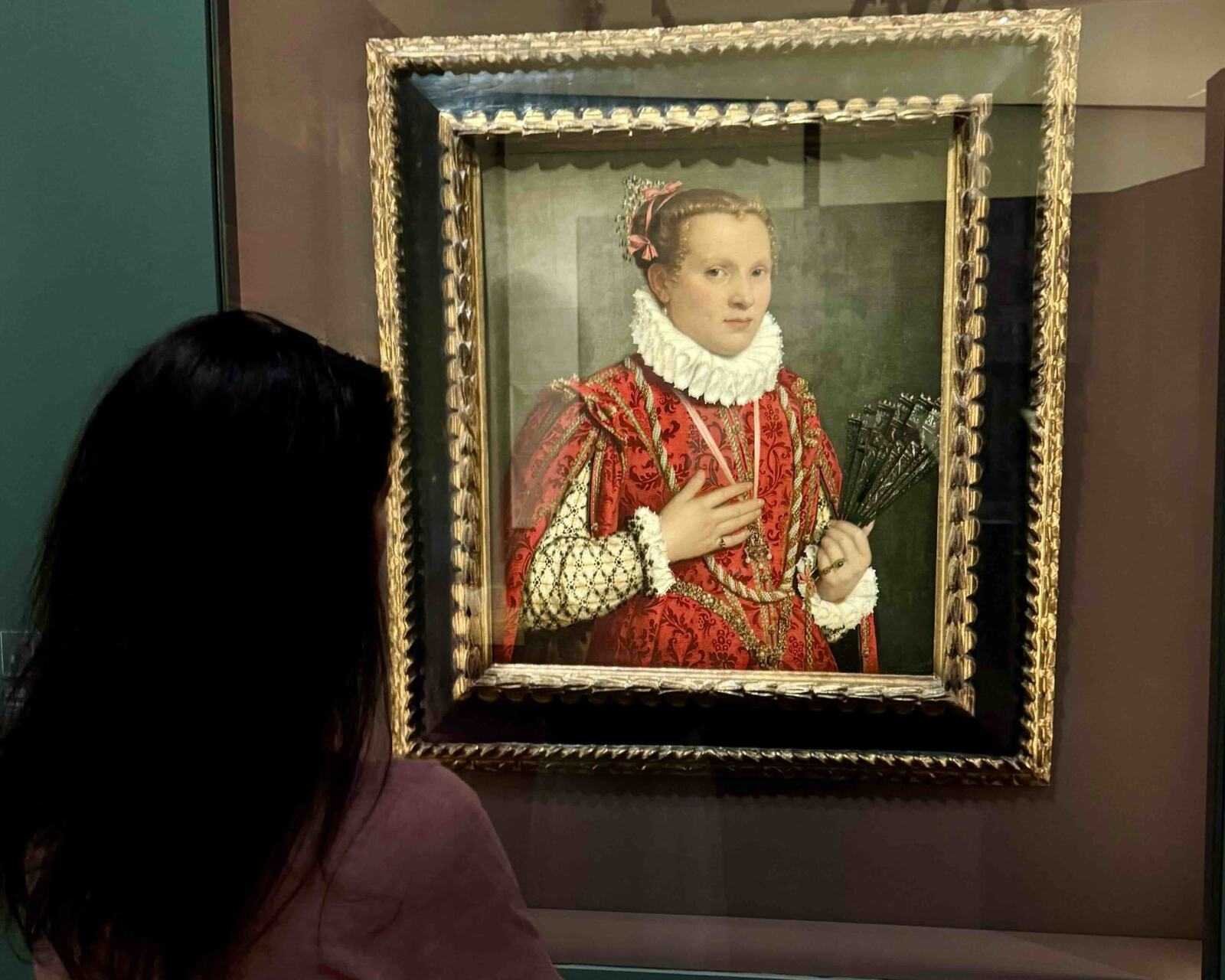
Renaissance of Gold and Brilliance, jewelry in light at the Bemberg Foundation
I would like to thank Ana Debenedetti, Director of the Bemberg Foundation and former curator at the Victoria and Albert Museum in London, for sharing with me the keys to this exhibition. Thanks to her availability, I was able to explore, piece by piece, what the jewel says about the Renaissance and perhaps about ourselves.
It is in Toulouse, within the Hôtel d’Assézat, that the Bemberg Foundation is celebrating a double event this year. On the one hand, the thirtieth anniversary of its renovated museum; on the other, an unprecedented dialogue with the National Museum of the Renaissance – Château d’Écouen. This encounter gives rise to a remarkable exhibition. Of gold and shine. The jewel of the Renaissance.
A title that sums up the essence without concealing the ambition of a rereading. Because here, the Renaissance jewel is not reduced to its sole decorative function. It becomes an object of study, set in a time when art, power, and commerce are intertwined.
In the Renaissance, every piece of jewelry is a sign. It signifies alliance, rank, and faith. It protects, nurtures, and connects. Each motif, each stone, and each enamel bear witness to a specific use, often laden with affects or supposed virtues. In an era still marked by the instability of beliefs and powers, the jewelry serves as a point of reference. Worn on oneself, it acts as a talisman as well as a declaration.
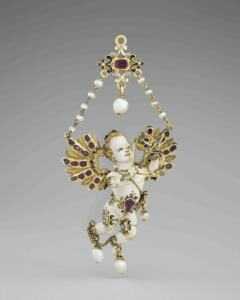
Netherlands or Germany, around 1590-1620
Embossed gold, ruby, diamonds, pearls, H. 8.6; l. 4 cm
Écouen, National Museum of the Renaissance – Écouen castle, inv. E.Cl. 20545
Photo © GrandPalaisRmn (Renaissance Museum, Château d’Ecouen) / Mathieu Rabeau
The exhibition highlights this polysemy. From entwined hands on a wedding ring to the mythological figures of a manmade pendant, we witness a genuine conversation between the arts. The jewel draws inspiration from the major plastic questions of its time: how to represent movement, how to incorporate humanity into matter, and how to make ornament and meaning dialogue.
Far from being a simple inventory of forgotten trinkets, the exhibition also highlights the echoes between yesterday and today. As early as the 19th century, artists and collectors rediscovered these ornaments and drew inspiration from them. At a time when contemporary jewelry is once again questioning its role, its scope, and its message, this exhibition resonates with a silent but persistent reality: that of the object inhabited.
The jewel, in its materiality as well as in its symbolism, is thus a testament to a profound intellectual shift. With the Renaissance, a new perspective on man and the world emerged. Humanists affirmed freedom of thought, valued the critical study of texts, and challenged established dogmas. In this climate of emancipation, the jewel became more than just an artifact: it was a fragment of thought carried to the very skin.
At the center of a ring, on the surface of a cameo, one glimpses an embodied thought, a subtle belief, a science in miniature. The jewelry-making expertise of the Renaissance thus testifies to this will to imbue beauty with intelligence, and intelligence with action.
By bringing these jewels of the Renaissance to life, the exhibition sheds light on a foundational moment when the jewel, the result of virtuoso craftsmanship, embodies a world in search of beauty, meaning, and emancipation.
Exhibition Of Gold and Splendour The Jewel in the Renaissance Until July 27, 2025
Bemberg Foundation, Hôtel d’Assézat, Toulouse