







The’Opificio Delle Pietre Dure, florentine savoir-faire.
Two steps from the Galleria dell’Accademia, The Museum of the Opificio delle pietre hard It still remains off the beaten tourist paths. Yet it houses one of the most unique know-hows of Florentine art. Founded in 1588 by Ferdinand I of Medici, this institution is the origin of a workshop dedicated to the marqueterie of hard stones, a refined technique that flourished during the Renaissance and which the Medici actively encouraged.
© ESPRIT JOAILLERIE
The artisans of the Opificio created compositions by embedding precious or hard stones (lapis-lazuli, jasper, agate, cornaline…) cut with precision and adjusted without any apparent joint. Unlike traditional mosaics, these works offer a pictorial reading based on textures, natural hues, and the effects of light created by the material itself.
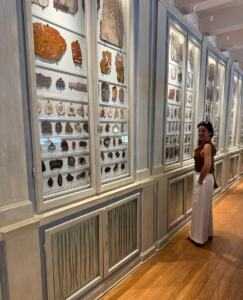
These works, often commissioned to adorn chapels, cabinets, or princely furniture, combine technical mastery and aesthetic exigency. The representation of flowers, fruits, birds, or landscapes lends itself with subtlety; each vein of stone is utilized to serve the motif. The museum houses a remarkable collection of these historical creations, as well as a particularly evocative collection of samples of hard stones, carefully classified according to their origins and visual properties.
From the 19th century onwards, the Opificio’s vocation expanded to include the restoration of works of art. This shift was driven by the need to preserve a fragile heritage, exposed to the effects of time, conflict, or natural disasters. The institution became one of the leading centers in this field, notably with its integration into the Central Institute of Restoration starting in 1932.
Today, the’Opificio delle pietre dure It brings together multidisciplinary teams working on projects in Italy and abroad. Paintings, sculptures, textiles or manuscripts are studied rigorously, in an applied research spirit. The museum reflects this dual identity: it offers the visitor a journey through ancient marquetry pieces, period tools, raw materials and educational presentations on current conservation methods.
A place of remembrance, but also of transmission, the Opificio delle pietre dure It illustrates how historical know-how can be renewed without renouncing its roots. Its daily activities remind us that art is not only an object to be contemplated, but also a heritage to be understood, preserved, and brought into dialogue with the present.
Opificio Delle Pietre Dure
Via Degli Alfani
Florence, Italy