







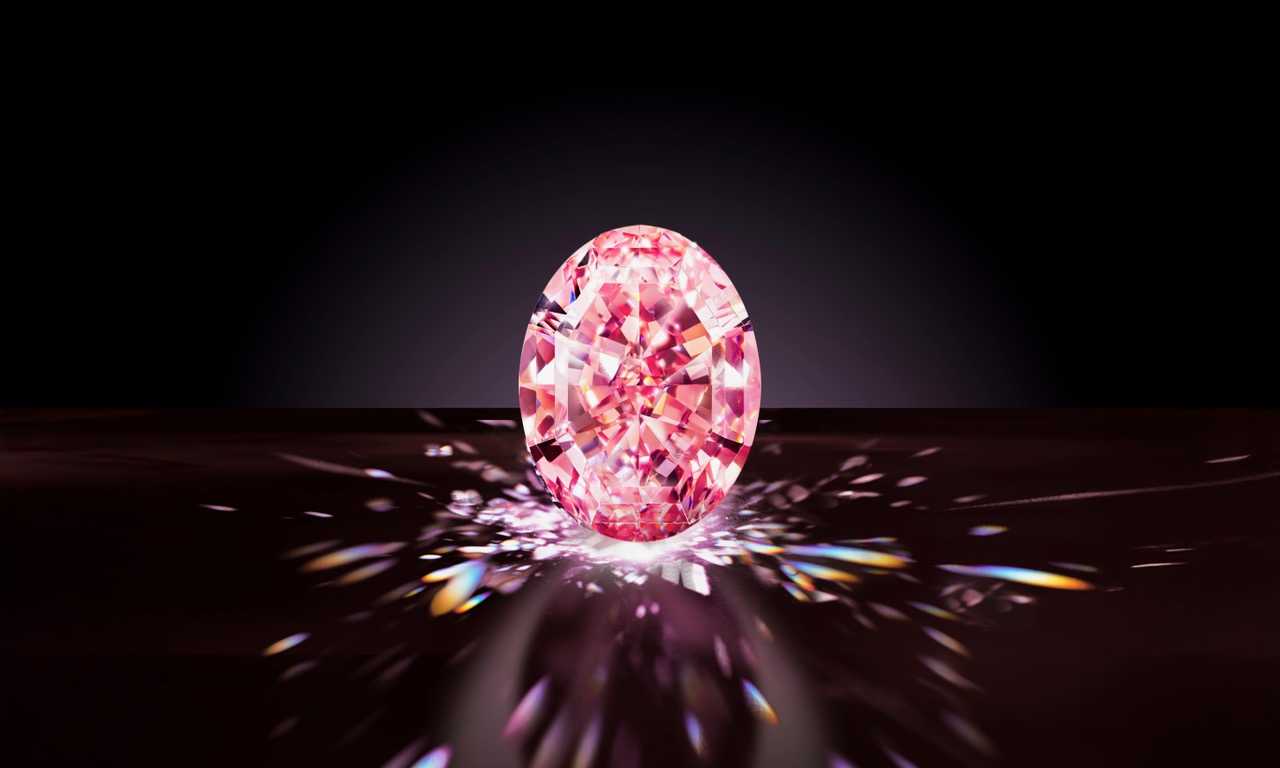
There are diamonds which go beyond the status of precious stones. Their size, history or rarity bring them into a different dimension, where geology meets heritage and where each discovery becomes an event. Carved in the depths of the Earth billions of years ago, these crystals are among the oldest natural formations known. Long before being cut or set, they already carry a story within them.
© NDC
The Natural Diamond Council dedicates a report to these exceptional diamonds that, for centuries, have fueled both scientific research and the history of jewelry. Some stones have changed our understanding of diamond-rich deposits, while others have become symbols of power or objects of fascination. All of them bear witness to the uniqueness of diamond.
The Cullinan remains the absolute benchmark. Discovered in South Africa in 1905, this gem-quality rough diamond weighed 3,106 carats, a record that has never been surpassed. Carved into several stones, it gave birth to some of the most famous and valuable diamonds in the world. diamonds the most famous in the world, inscribing their name in the history of jewelry.
More recently, Botswana has established itself as the scene of major discoveries. In 2015, the Lesedi La Rona, With its 1,109 carats, it revealed the still intact potential of some African mines. In 2024, the discovery of Motswedi, one diamond The 2,488-carat rough stone served as a reminder that the Earth continues to yield treasures whose dimensions defy all predictions.
These stones are not only distinguished by their weight; they are also carriers of stories that have endured through the centuries. Koh-i-Noor, One of the first monumental diamonds known, it has accompanied for generations the stories of kingdoms, conquests, and transmissions. diamond Hope, Famous for its blue hue and the legends surrounding it, it illustrates how some gems cross the boundaries between history, science, and the collective imagination.
The discovery of these crystals today relies on technologies capable of preserving their integrity. Thanks to X-ray detection systems (XRT), mines like Karowe in Botswana identify very large diamonds before they are damaged during extraction. This is a discreet but decisive evolution that allows intact stones whose every facet tells a story that is billions of years old to be preserved.
On a global scale, these diamonds There are still exceptions. They remind us that rarity is not solely determined by the size or purity of a stone, but also by the time it takes to form it. Before being included in the collections of the largest jewelry houses, these gems first belong to the history of the Earth. It is this origin, as well as their beauty, that continues to fuel their power of fascination.
Photo featured Credit NDC