





Literary Inspiration, Madame de...’s Earrings…
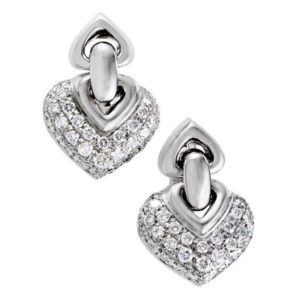
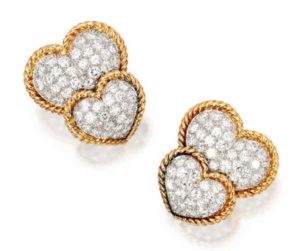
Louise de Vilmorin, a literary figure of the 20th century, weaves in Madame de The portrait of a brilliant and admired woman, whose lightness conceals a fragile financial situation. Refusing to confide her difficulties to a husband who was attentive, she decides to secretly sell a pair of earrings that he had given to her the day after their wedding. The gesture leads to a chain of concealments: to preserve appearances, Madame de abuses her entourage and stages a mock theft.
The story then unfolds in a succession of lies and obstacles, all revolving around an object that has become central: the earring loops.
«Madame de suddenly put her hands to her ears and, looking dazed, cried out:
-Oh my God! I don’t have my earrings anymore!
They must have fallen during the waltz.
-No, no, you didn’t have any tonight, all the people who were around him affirmed to him at that moment.
-Yes, I had them, I had them, I’m sure of it, she said, and, still hiding her ears in her palms, she ran to her husband:
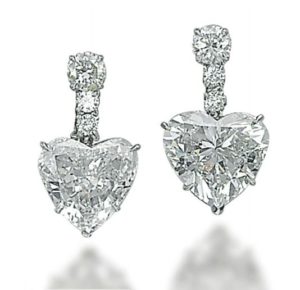
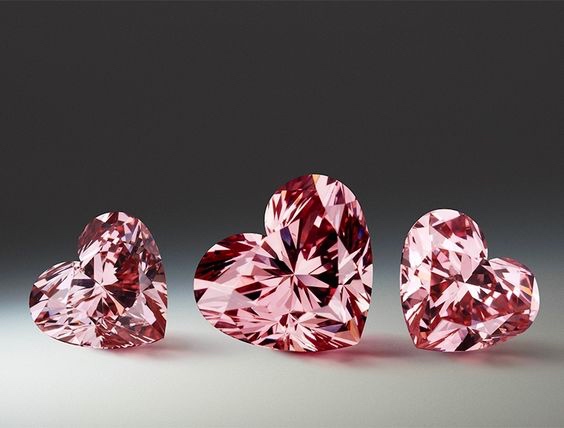
-My earrings! My two hearts! I lost them, they fell off!
-You weren’t wearing any earrings tonight, replied Mr de (…)»
The day after the articles in the morning newspapers commented on the incident of the previous day, suggesting that it was a robbery, and the jeweler woke up in the unpleasant position of being unable to publicly disclose the secret that made him the honest holder of a jewel that was said to have been stolen. After an hour of reflection, he placed the earrings in a box and announced his presence at the house of Mr. (…)
« You will understand my embarrassment when I read this morning in the newspapers that this jewel was suspected of having been stolen ».
Although it was sad to learn that his wife had been lying to him for a long time, that she was hiding debts from him and thus was damaging his credit and reputation (…) Mr. de showed no signs of the feelings that occupied him and thanked the jeweler for coming tonight. (…) After that, Mr. de bought back the earrings. (…) »
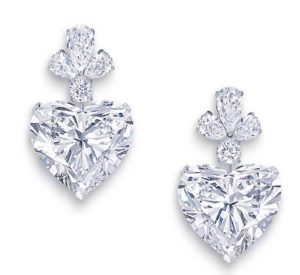
«Mr. de had a mistress, a beautiful Spanish woman whom he was beginning to dislike and who was leaving the same day for South America. Since, in selling her diamond hearts, Mme de had just proved to him that she cared little for them, he thought it opportune to present it to this beautiful mistress as a way of thanking her for leaving before he had forced her into the trouble of a breakup. The way she accepted this gift flattered Mr. de’s vanity…»
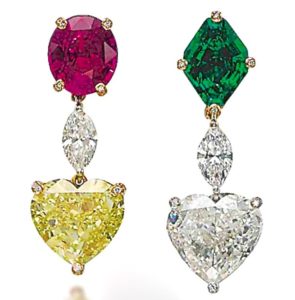
«Some time later, the beautiful Spanish woman arrived in South America. (…) The loneliness in a big city gave her the feelings of a lover; she began to love the memory of a man she had not loved and, in the evening, with a sad hand, threw the gold louis that he had given her on the gaming tables. (…) The beautiful Spanish woman sought her fortune at every table she could find in order to continue her pursuit; she was forced to sell the earrings that she kept from Mr. de.»
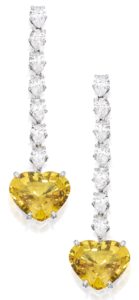
«The diamond hearts shone only for an hour on the display of a jeweler in this city. A wealthy diplomat from Europe, who had just been appointed ambassador to a neighboring country of his homeland, bought them for their beauty and set off the next day. He was a man whose family, intellectual, and financial reasons were evident. He joined his post with great éclat and, at the first dinner that one of his colleagues offered in his honor, he found himself seated next to Mme .»
He admired her; he did not get bored; she knew how to move him; he fell in love with her and showed it. Mme de n’was not insensitive; she felt violently the pleasure of pleasing; she loved to prolong that pleasure to the limits of impatience and the ambassador, from that first evening, gave her the opportunity and touched her vanity. (…)
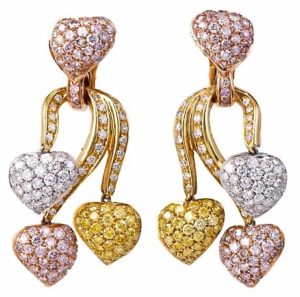
Mrs. de received a small note from the ambassador every morning; every day at the end of the afternoon he would appear at her house; and although she took great care to conceal her feelings, she remained for some time in ignorance of the feelings she felt for him.
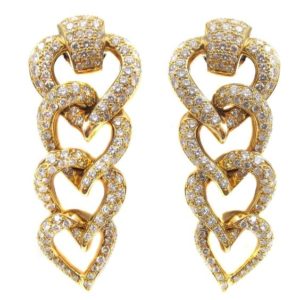
While speaking, he pulled an ornate box from his pocket and opened it:
«Look at these two hearts,« he continued, «they are ours. Keep them, hide them, confuse them especially, and know that I am happy to give you a jewel that you will only be able to wear when we are alone. Madame de could not believe what she was looking at; for a moment she lost her voice, and all sorts of thoughts crossed her mind. "Oh! that's impossible," she finally said, "oh, that's impossible. (…) Then she got up, ran to a mirror, and brought the diamonds close to her ears. (…) "
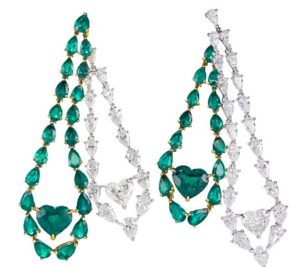
Madame de’s story of earrings does not end there. A first lie leads to another, then a third, while the diamonds continue their silent circulation. Their trajectory, which Louise de Vilmorin unfolds with finesse, extends from heart to heart, from desire to desire, reminding us that exceptional jewels carry within them several lives and as many adventures.